Overview
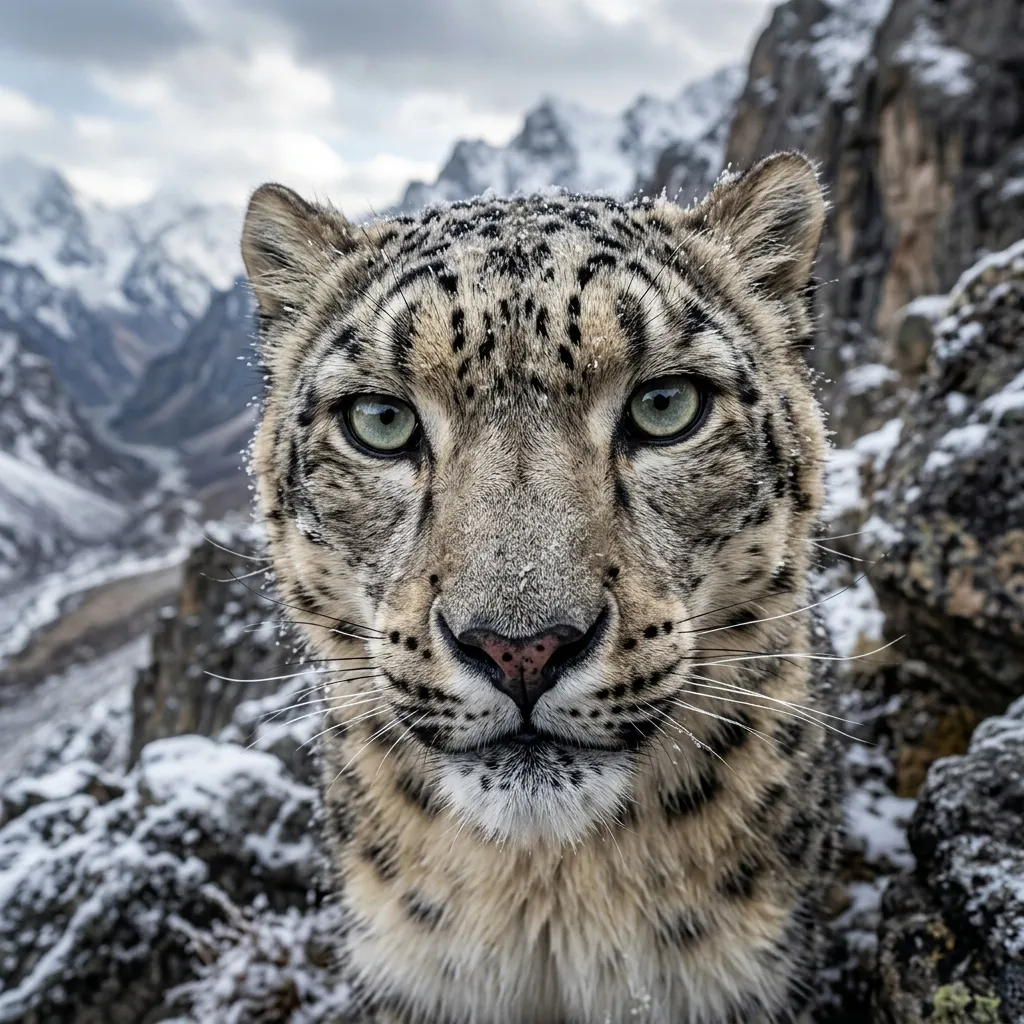
The snow leopard is a high-altitude big cat built for cliffs, cold, and thin air. Its dense coat, long balancing tail, and powerful hind legs allow it to hunt across broken mountain terrain where few large predators can live.
Habitat & Range
Snow leopards inhabit high mountains across Central and South Asia, including the Himalaya, Pamir, Tien Shan, Altai, and Tibetan Plateau. Their world is steep, cold, rocky, and thinly vegetated.
How to Identify It
A smoky gray coat with dark rosettes blends into rock and snow. The long, thick tail stores fat and aids balance, while broad fur-covered paws act like natural snowshoes on icy slopes.
Diet & Hunting
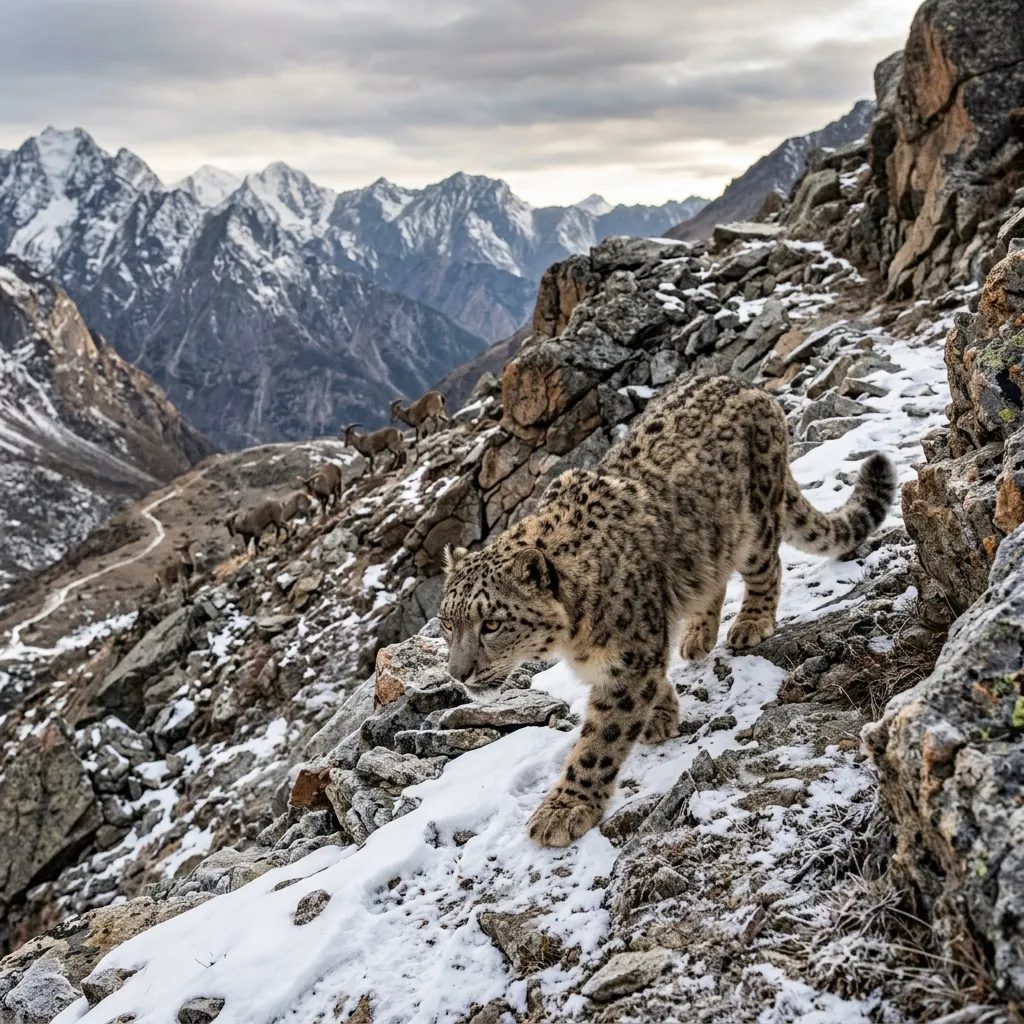
They hunt mountain felines such as blue sheep and ibex, but also take marmots, hares, birds, and smaller mammals. Where wild prey is depleted, they may attack livestock, which can trigger retaliatory killing.
Behavior
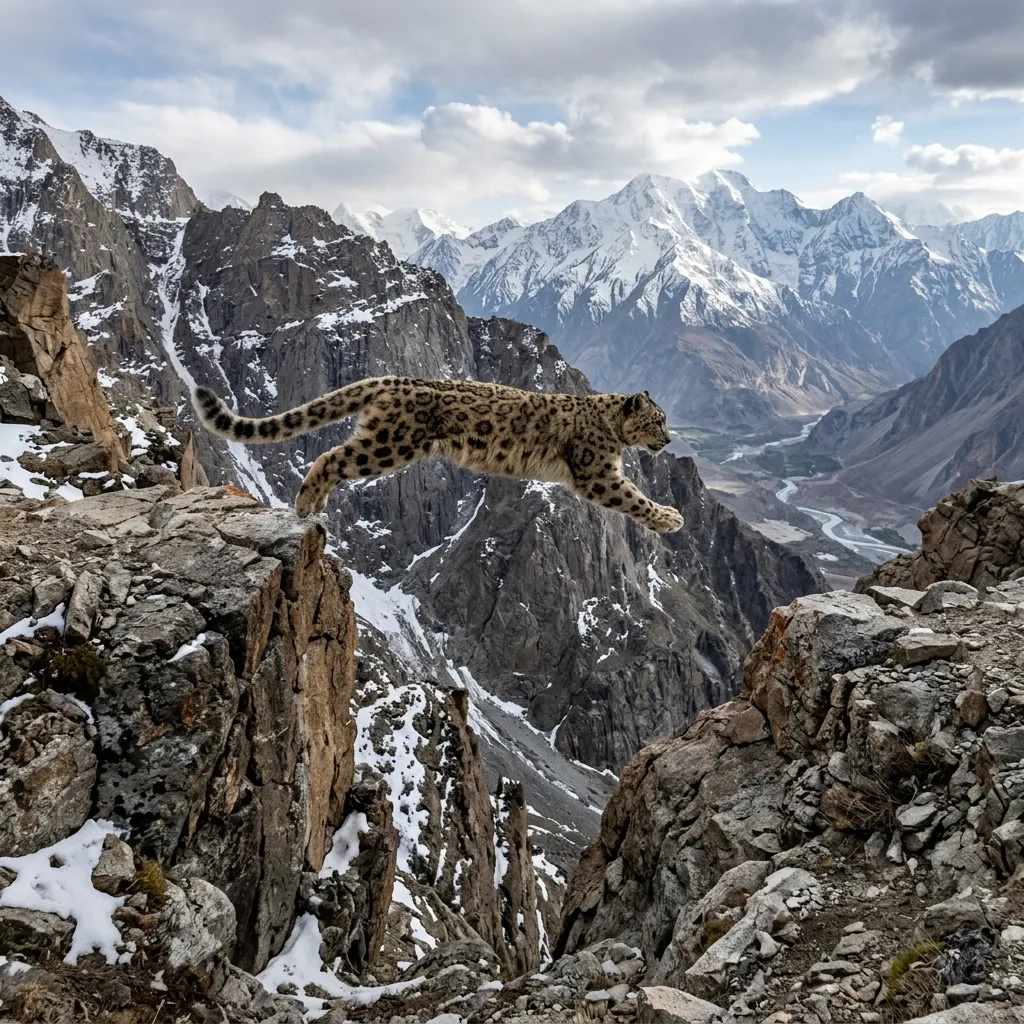
Snow leopards are elusive and usually solitary. They patrol ridgelines, scent-mark cliffs and passes, and use stealth and terrain rather than long chases to close the distance to felines.
Life Cycle
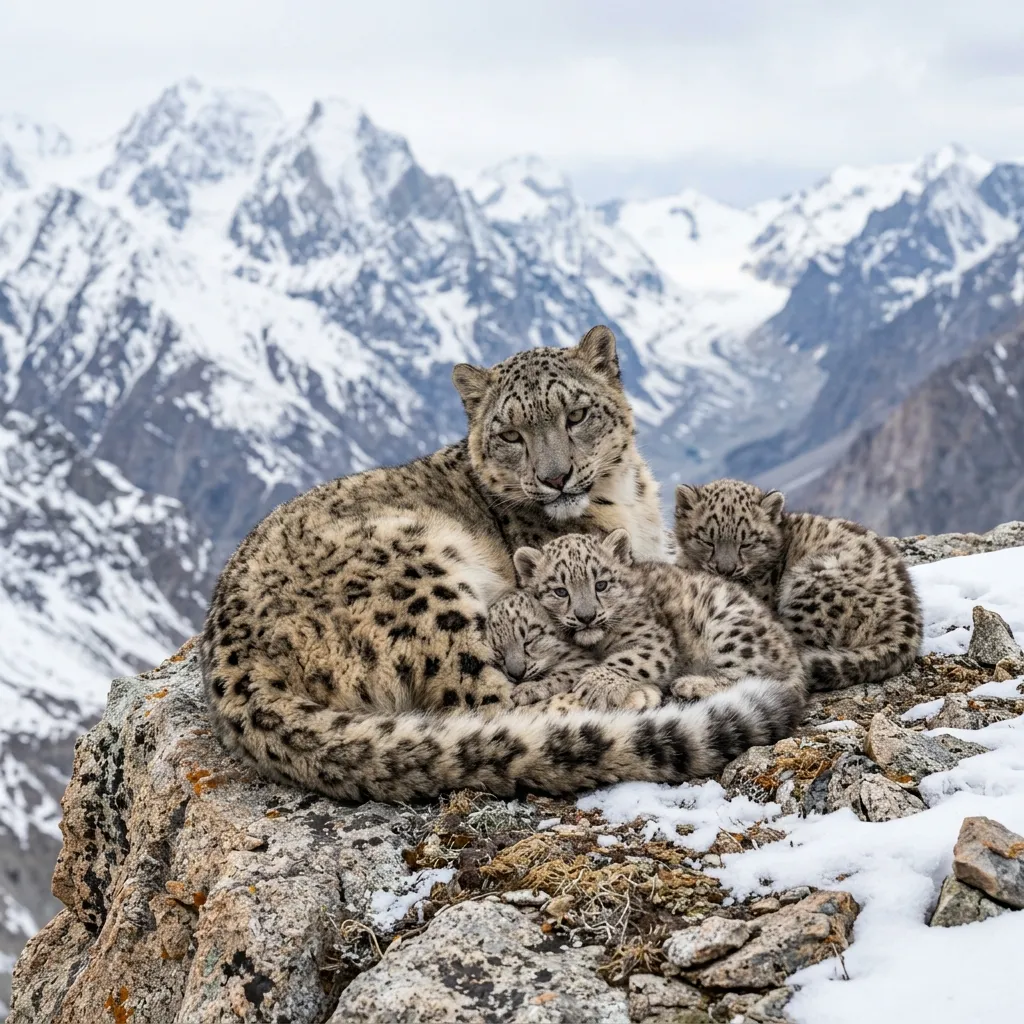
Mating usually occurs in late winter, and cubs are born in protected rocky dens. A mother raises the cubs alone, teaching them to travel through broken mountain terrain before they disperse.
Role in the Ecosystem
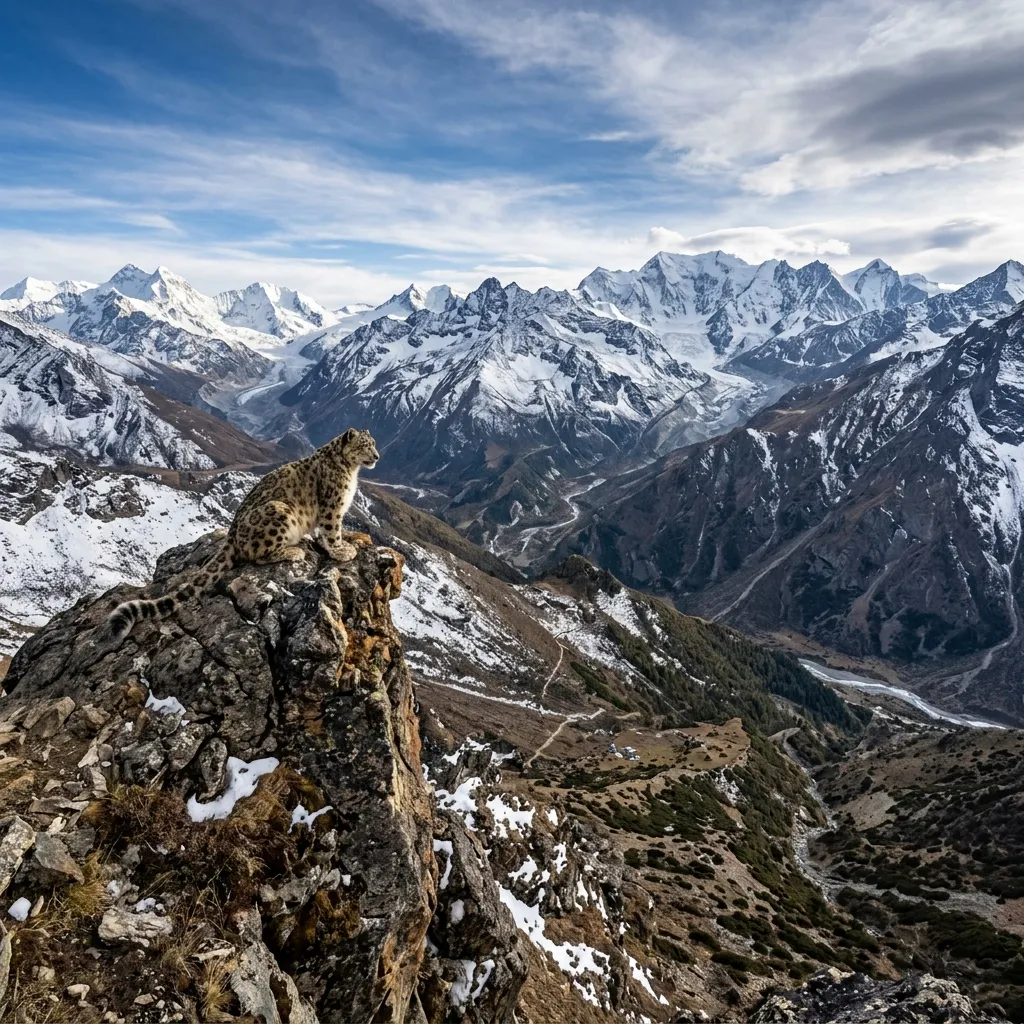
As a high-mountain predator, the snow leopard reflects the health of alpine grasslands and wild ungulate herds. Its presence can indicate that prey, cliffs, water sources, and low-disturbance corridors still function together.
Conservation Outlook
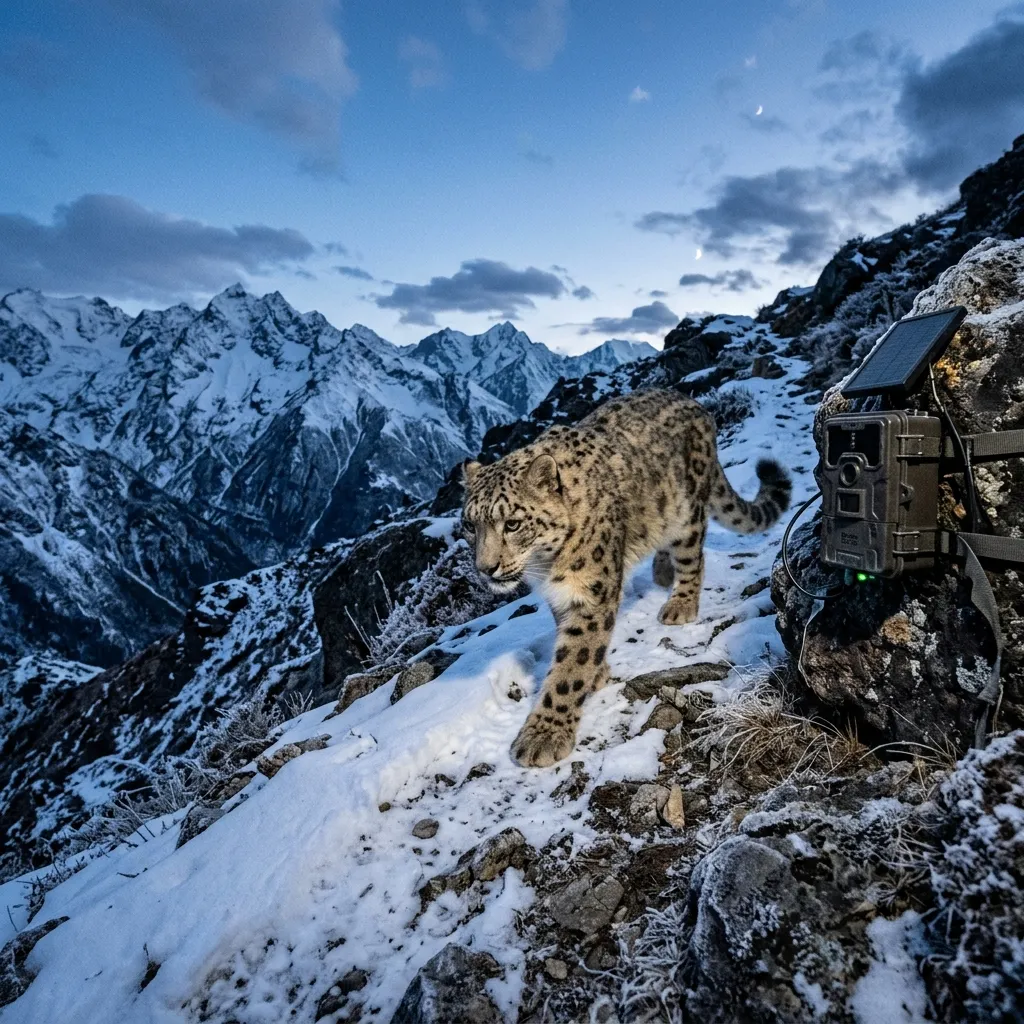
Protection requires community-based livestock programs, insurance or compensation, anti-poaching enforcement, prey recovery, climate-aware corridor planning, and cooperation among all range countries.