Giant Panda
Ailuropoda melanoleuca
The bamboo-eating mountain bear and global icon of wildlife conservation
Quick Read
UrsidaeOverview
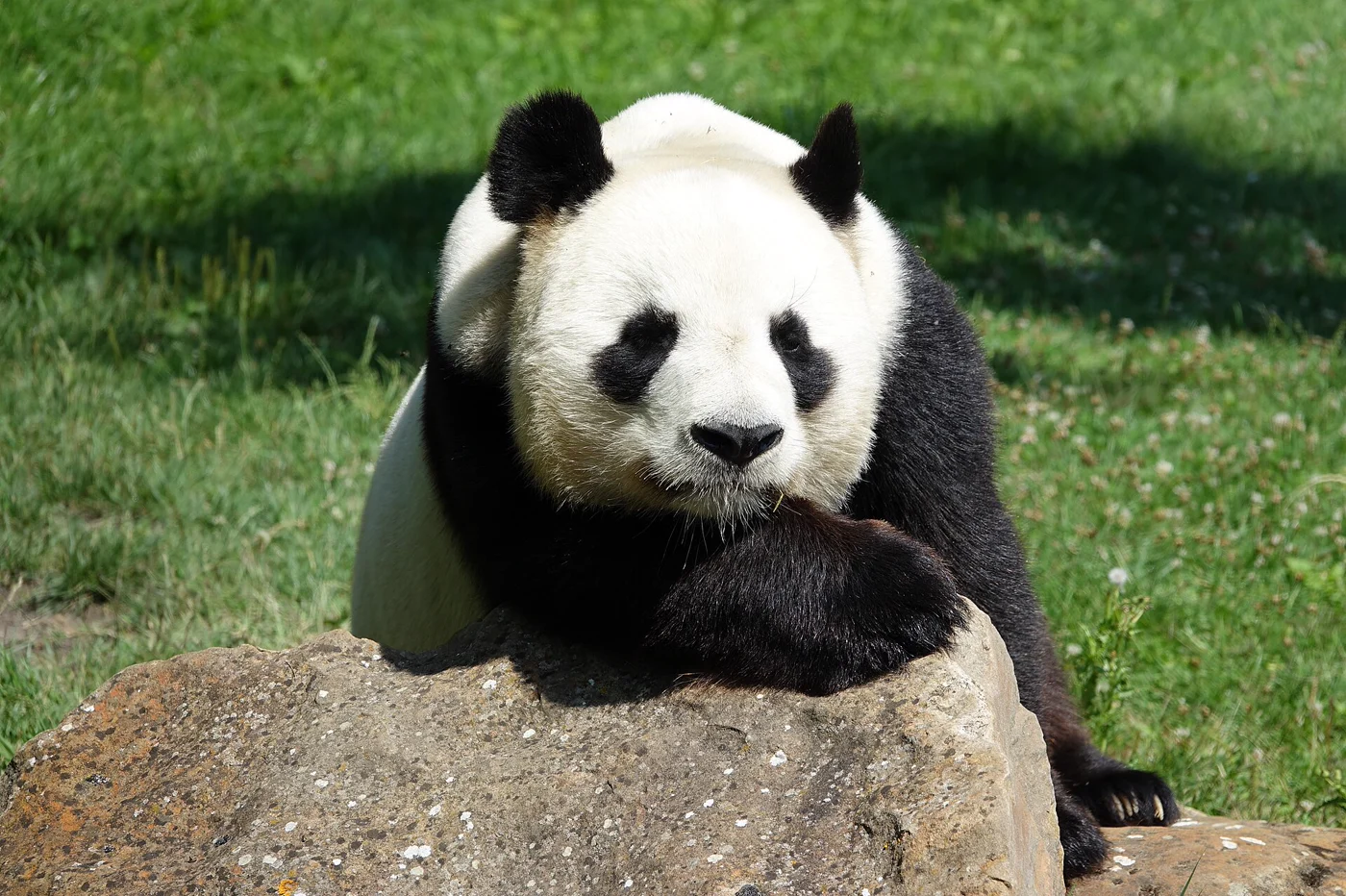
The giant panda is a specialized bamboo-feeding bear endemic to the high, mist-shrouded mountain forests of south-central China. With its unmistakable black-and-white coat, sixth 'pseudo-thumb' for gripping bamboo stems, and status as a flagship umbrella species, its recovery from Endangered to Vulnerable stands among modern conservation's greatest milestones.
Habitat & Range
Wild giant pandas are restricted to six cool, misty mountain ranges along the eastern edge of the Tibetan Plateau in south-central China—chiefly the Minshan, Qionglai, Qinling, Daxiangling, Xiaoxiangling, and Liangshan mountains across Sichuan, Shaanxi, and Gansu provinces. They inhabit temperate montane broadleaf and coniferous forests between 1,200 and 3,500 meters in elevation with dense bamboo understories.
How to Identify It
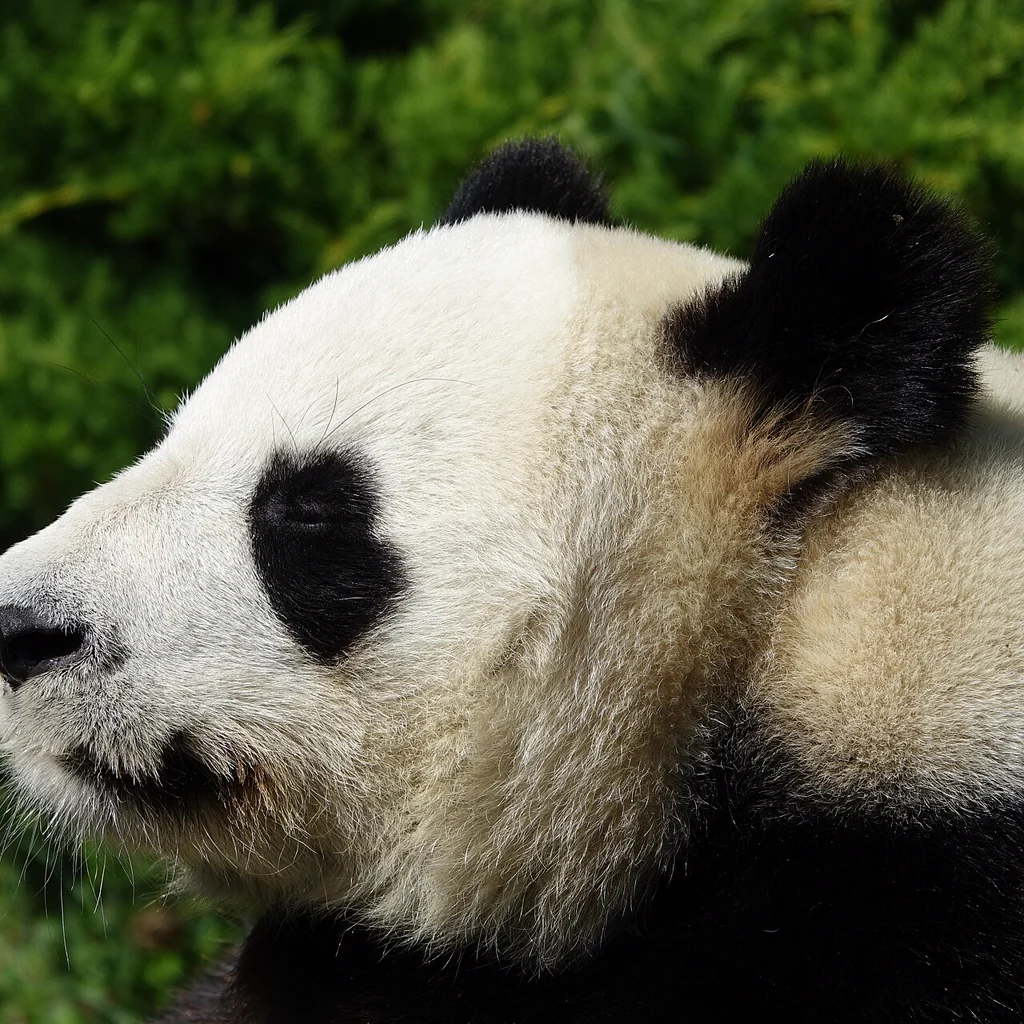
Immediately recognizable by its bold black-and-white coat, the giant panda has black fur on its ears, eye patches, muzzle, legs, and shoulder band contrasted against a thick, woolly white body that provides camouflage in both snow and dappled forest shade. It possesses massive skull crests, broad flat molars for crushing fibrous stems, and a modified wrist bone—the radial sesamoid or 'pseudo-thumb'—that works like an opposable thumb to grip bamboo culms.
Diet & Hunting
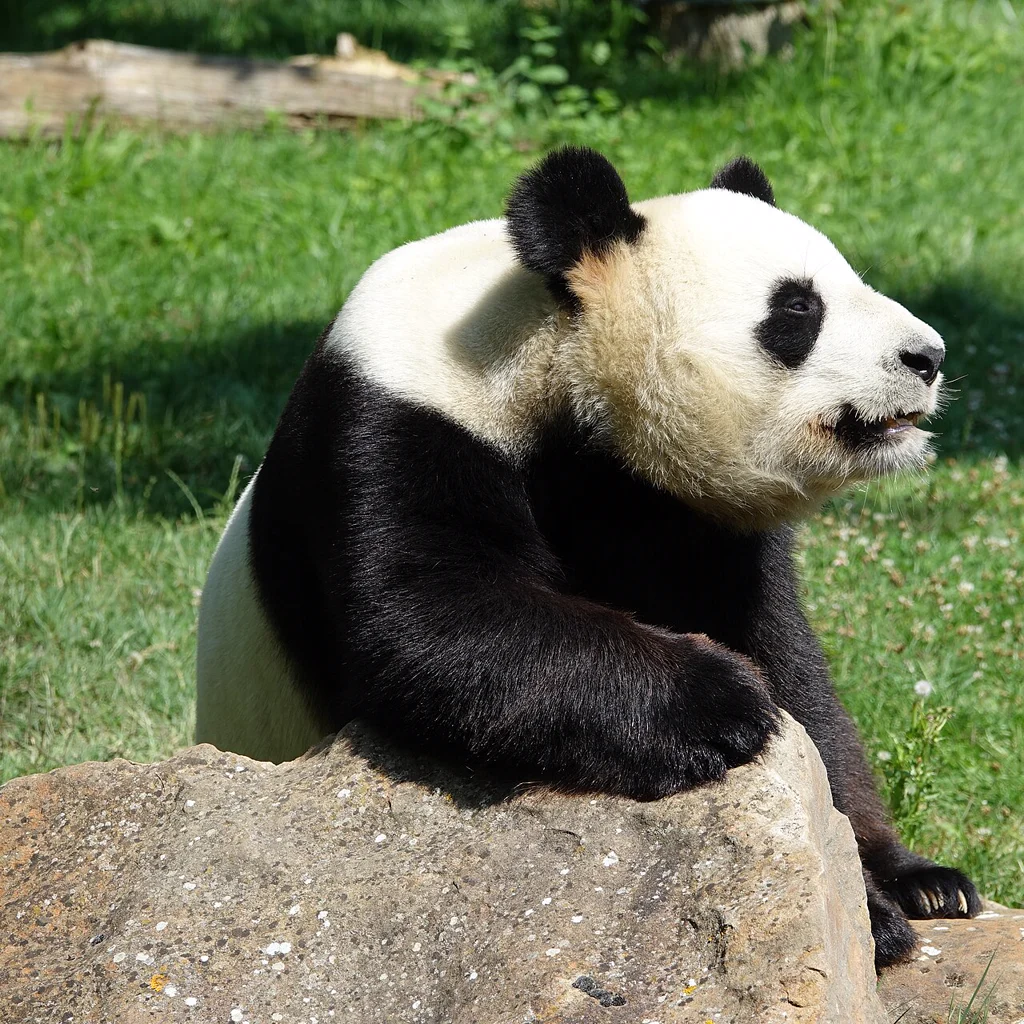
Although taxonomically a member of the order Carnivora with a short carnivore-style digestive tract, the giant panda derives roughly 99% of its diet from bamboo. Because it digests less than afifth of the fibrous plant matter it swallows, an adult panda must consume 12 to 38 kilograms of bamboo shoots, leaves, and stems every single day, shifting elevation seasonally to track fresh, nutrient-rich bamboo shoots.
Behavior
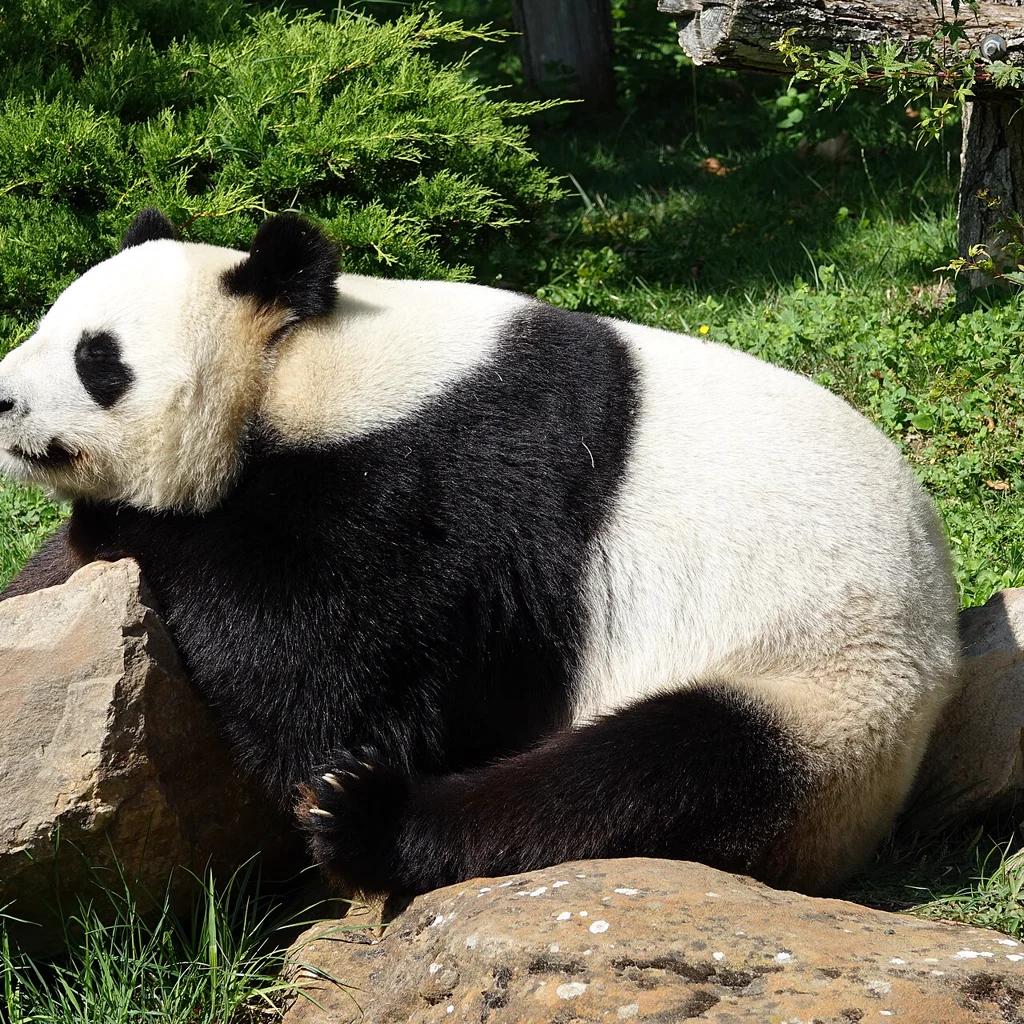
Adult giant pandas are solitary and maintain overlapping home ranges marked with scent from perianal glands and claw scrapes on trees. To conserve energy on a low-calorie bamboo diet, they avoid steep terrain when possible, do not hibernate in winter, and instead migrate downslope to warmer valleys. They are agile tree climbers and capable swimmers in mountain streams.
Life Cycle
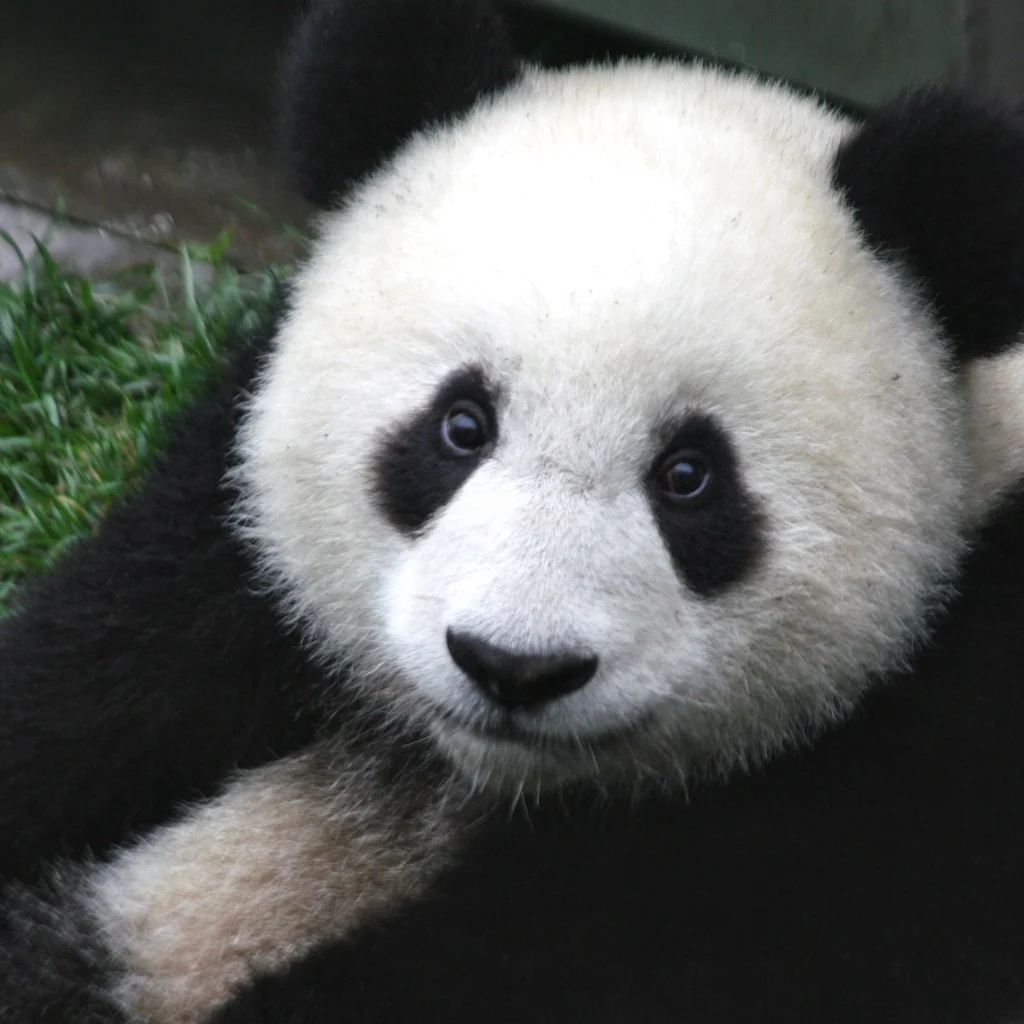
Females enter estrus only once a year in spring for a brief window of 24 to 72 hours. Following delayed implantation, gestation ranges from 95 to 160 days, producing one (or occasionally twin) pink, blind cubs weighing just 90 to 130 grams—roughly 1/900th of the mother's weight. Cubs open their eyes at 6-8 weeks and stay with their mothers for 18 to 24 months.
Role in the Ecosystem
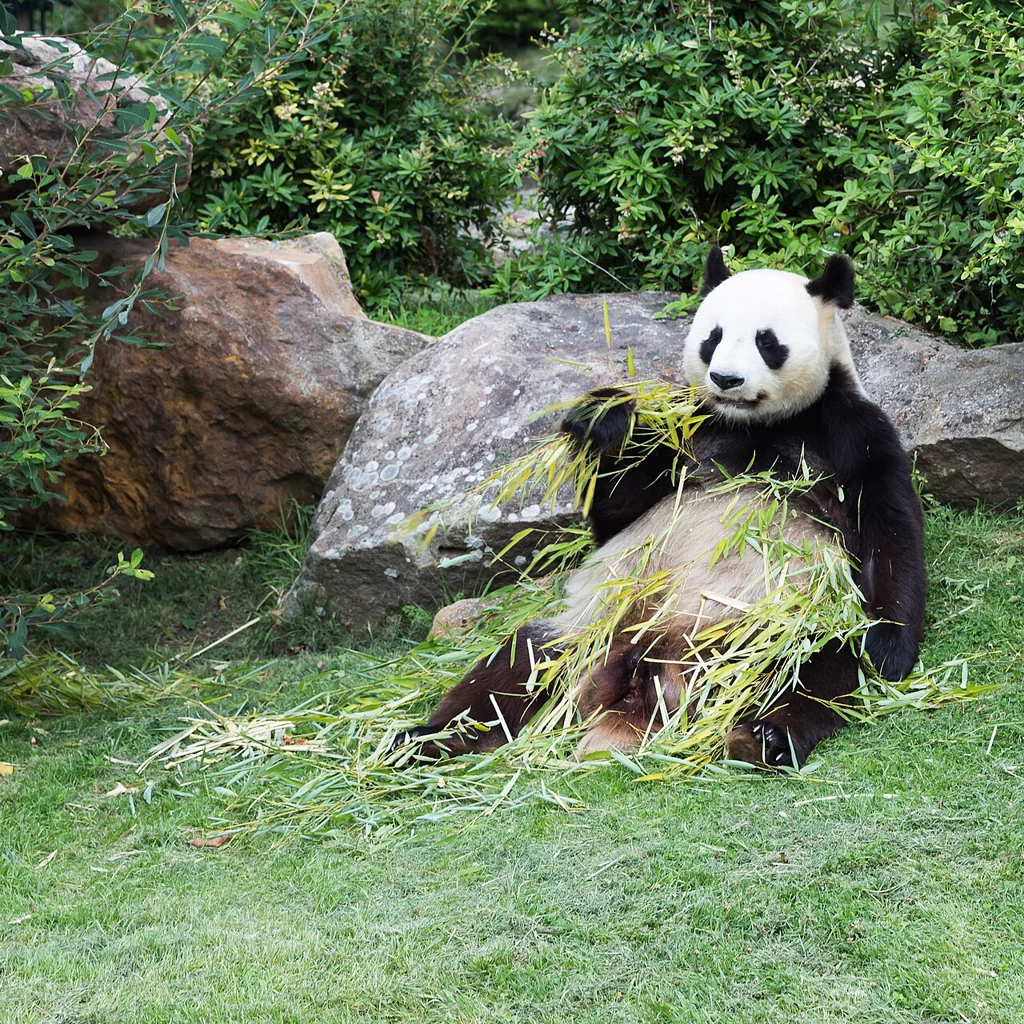
Giant pandas act as an umbrella species for China's temperate montane forests, which rank among the most biodiverse temperate ecosystems on Earth. By moving across elevations and thinning bamboo stands, pandas disperse seeds, open light gaps on the forest floor, and share protected habitat with golden snub-nosed monkeys, takin, red pandas, and crested ibises.
Conservation Outlook
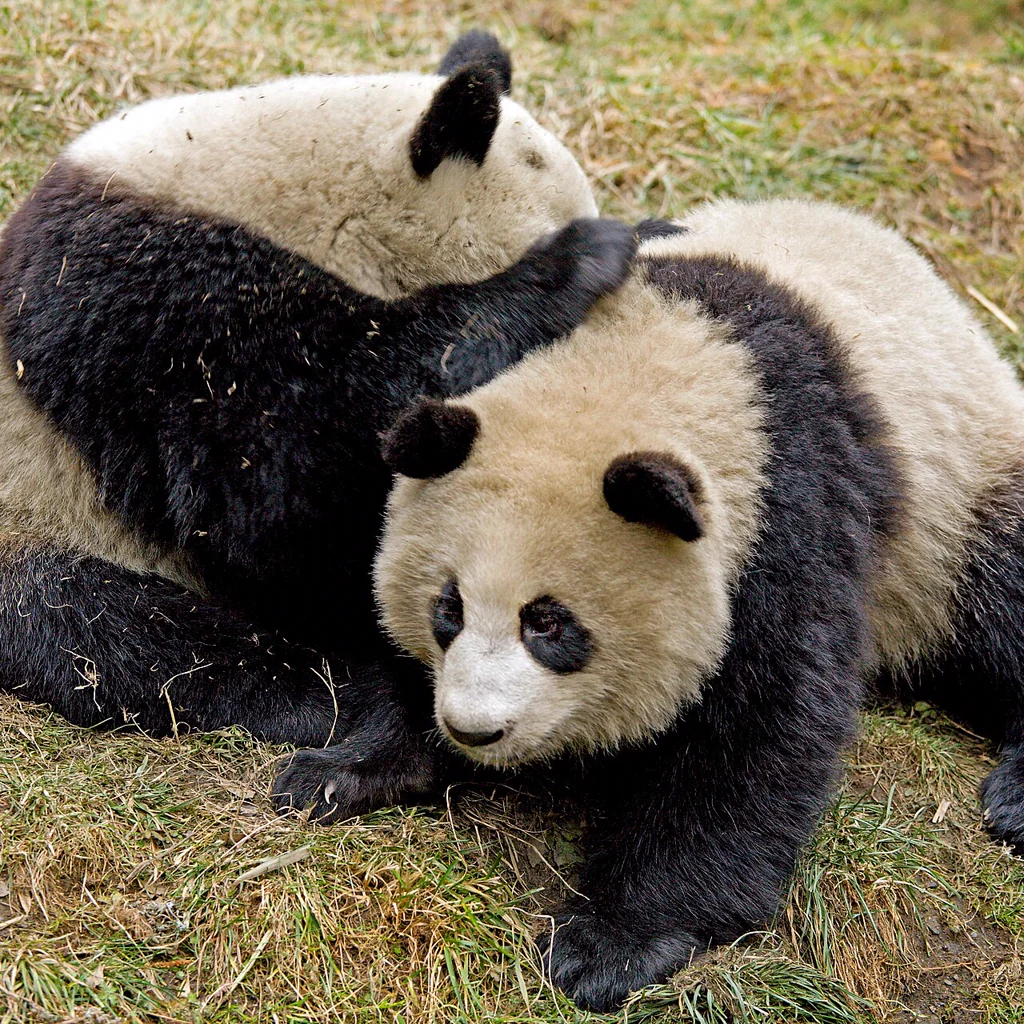
Decades of reforestation, logging bans, and the establishment of China's Giant Panda National Park (connecting 67 reserves across 27,134 square kilometers) helped upgrade the species from Endangered to Vulnerable on the IUCN Red List. However, fragmented subpopulations, infrastructure barriers, and climate-driven bamboo die-offs remain serious long-term threats.
Key Takeaways
- 1
A giant panda has a modified wrist bone that acts as a sixth 'pseudo-thumb' to hold and strip bamboo stalks.
- 2
Newborn panda cubs weigh only about 100 grams—roughly the weight of an apple and 1/900th the size of their mother.
- 3
An adult panda spends up to 16 hours a day eating 12 to 38 kilograms of bamboo to meet its daily energy needs.