Komodo Dragon
Varanus komodoensis
Armored island giant and venomous apex lizard of Indonesia's Lesser Sundas
Quick Read
VaranidaeOverview
The Komodo dragon is Earth's largest living lizard, surviving in the wild on just five volcanic islands in eastern Indonesia. Clad in chainmail-like osteoderm bone armor and armed with 60 iron-coated serrated teeth plus anticoagulant venom glands, it reigns as the undisputed apex predator of its sun-baked island savannas.
Habitat & Range
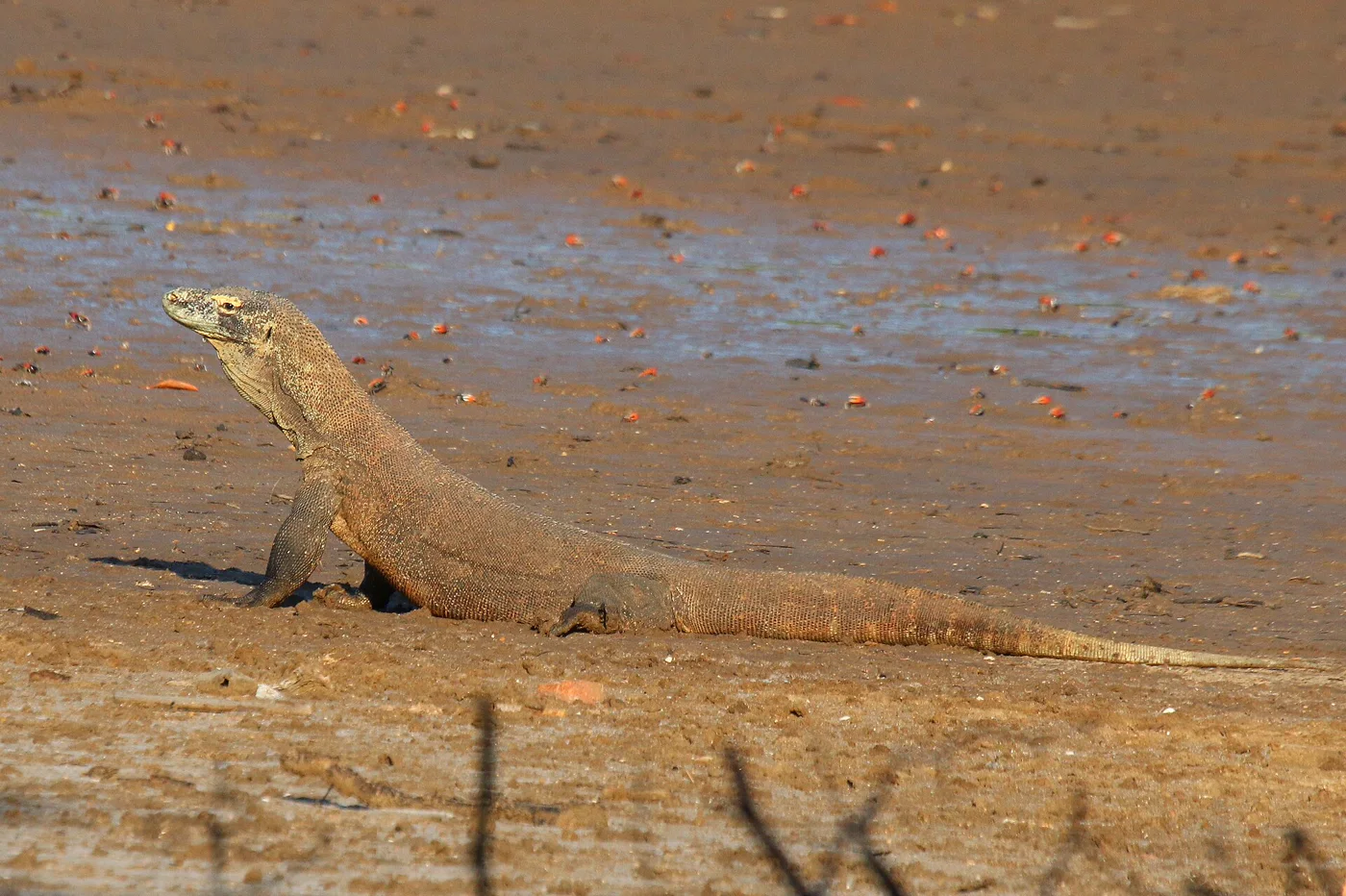
The Komodo dragon (Varanus komodoensis) has the smallest natural distribution of any large carnivore on Earth, restricted exclusively to five rugged volcanic islands in Indonesia's Lesser Sunda archipelago (East Nusa Tenggara province): Komodo, Rinca, Gili Motang, and Nusa Kode (Gili Dasami) within UNESCO-listed Komodo National Park, alongside small fragmented coastal populations in northern and western Flores (such as Wae Wuul Nature Reserve). Lying within the biogeographical crossroads of Wallacea between Asia and Sahul, these rain-shadowed islands experience scorching dry seasons up to 40°C. Dragons occupy lowland monsoon deciduous forests, palm-dotted Lontar savannas, dry riverbeds, and mangrove fringes from sea level to roughly 700–800 meters elevation.
How to Identify It
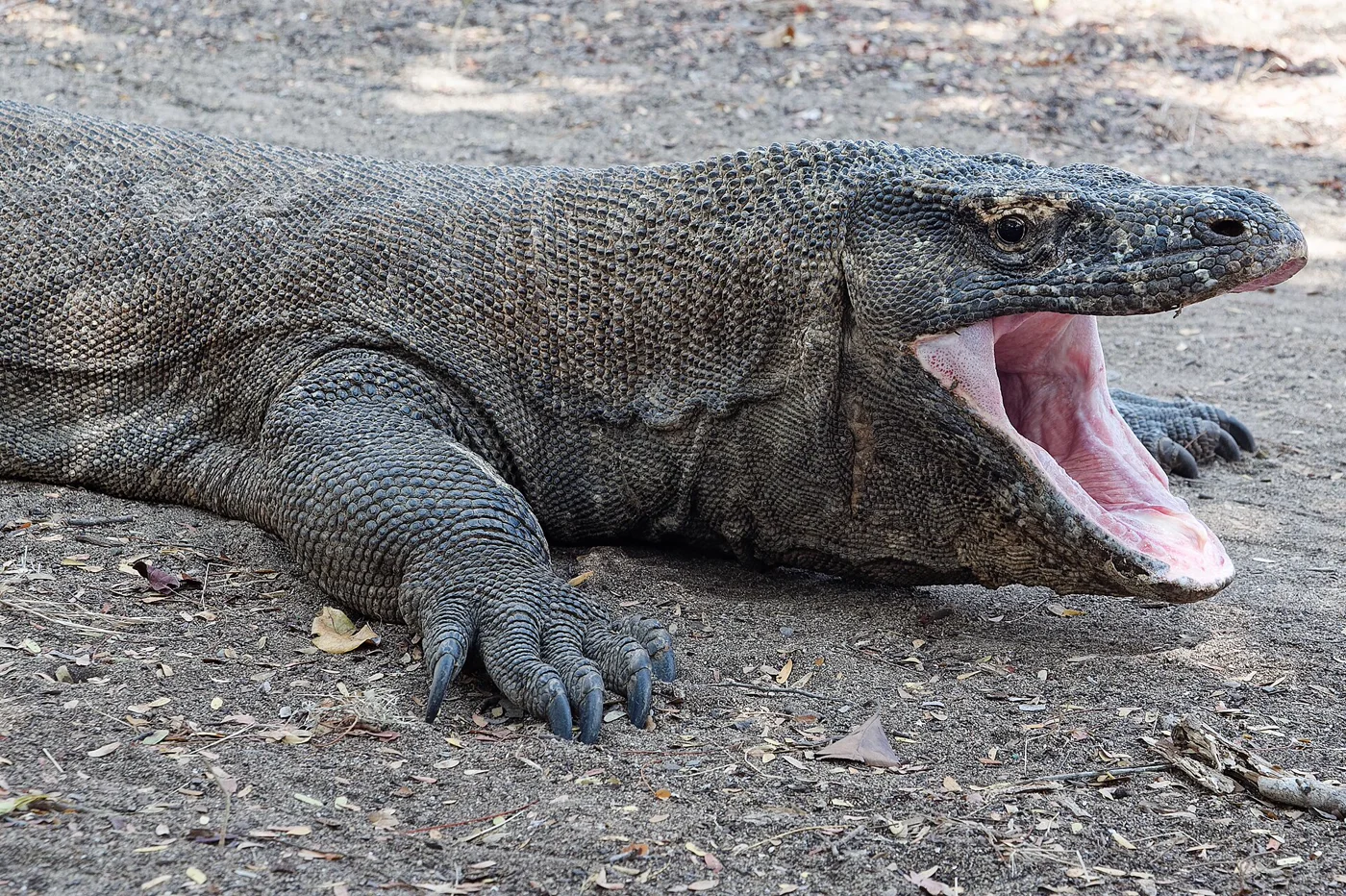
Recognized as the world's largest living lizard, wild adult male Komodo dragons typically measure 2.2 to 2.6 meters and weigh 79 to 91 kg—with the largest verified wild specimen reaching 3.13 meters and 166 kg including undigested prey—while mature females average 1.8 to 2.2 meters and 68 to 73 kg. Beneath their rough gray-brown skin lies an intricate subdermal armor of tiny interlocking bones called osteoderms that grow denser with age like medieval chainmail. A broad, flattened snout houses 60 laterally compressed, backward-curving serrated teeth up to 2.5 cm long—whose cutting edges are reinforced by a microscopic orange-tinted iron coating—paired with bowed muscular limbs, heavy curved claws, and a whip-like tail as long as the head and body.
Diet & Hunting
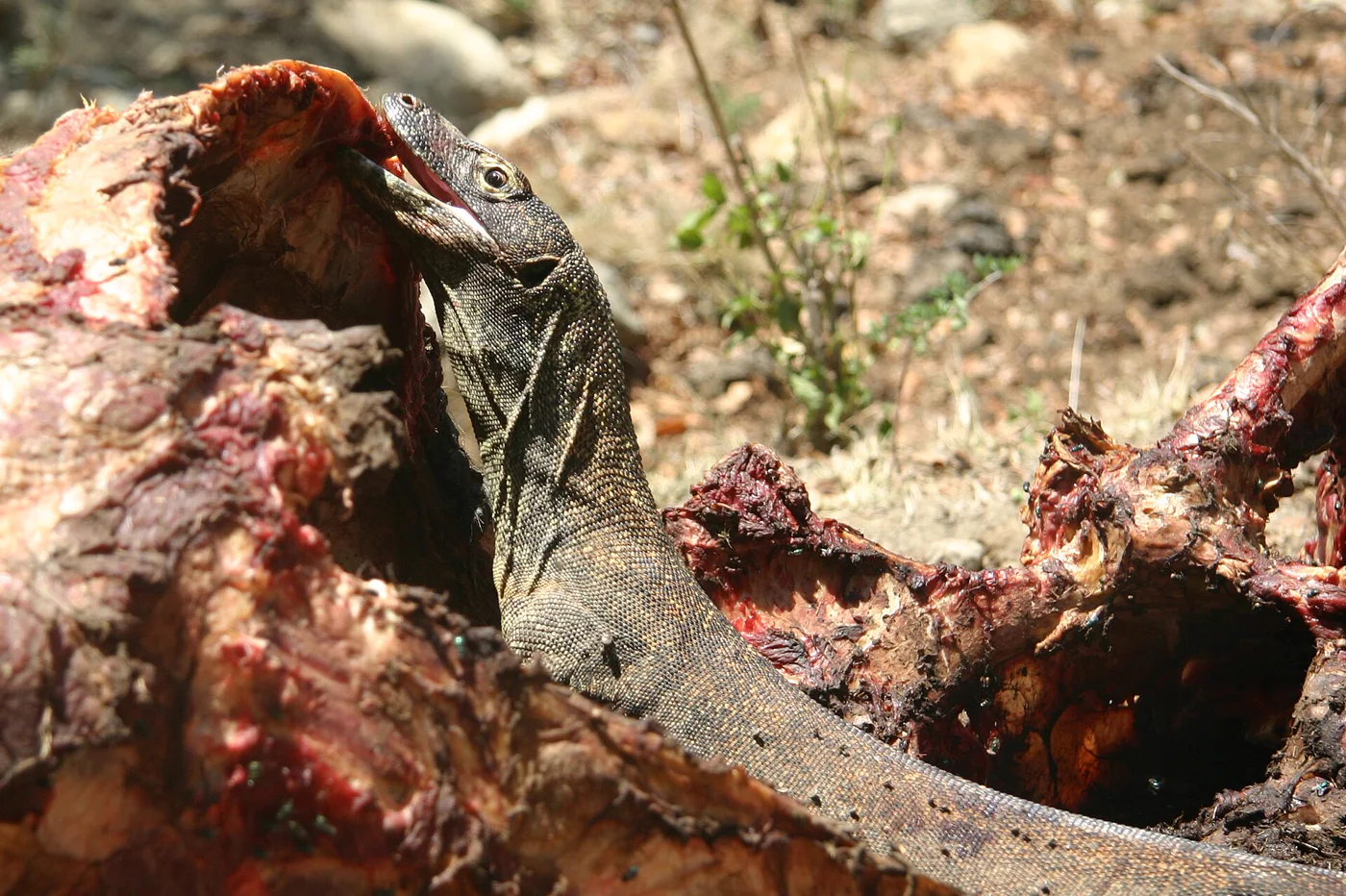
Adult Komodo dragons are ambush apex predators and dominant scavengers capable of bringing down prey far heavier than themselves, notably introduced Javan rusa deer (Rusa timorensis), wild boar, feral goats, macaques, palm civets, and even 500 kg water buffalo. Concealed along game trails, a dragon lunges at up to 20 km/h to slash prey legs or throats with ziphodont teeth while paired venom glands along the lower jaw inject anticoagulant and blood-pressure-dropping toxins that accelerate shock and blood loss. Swinging its head from side to side as it walks, a dragon uses its long yellow forked tongue and roof-of-mouth Jacobson's organ to pinpoint carrion from 4 to 9.5 km downwind, swallowing whole hooves, hides, and bones—up to 80% of its body weight in one meal—before regurgitating indigestible hair balls called gastric pellets.
Behavior
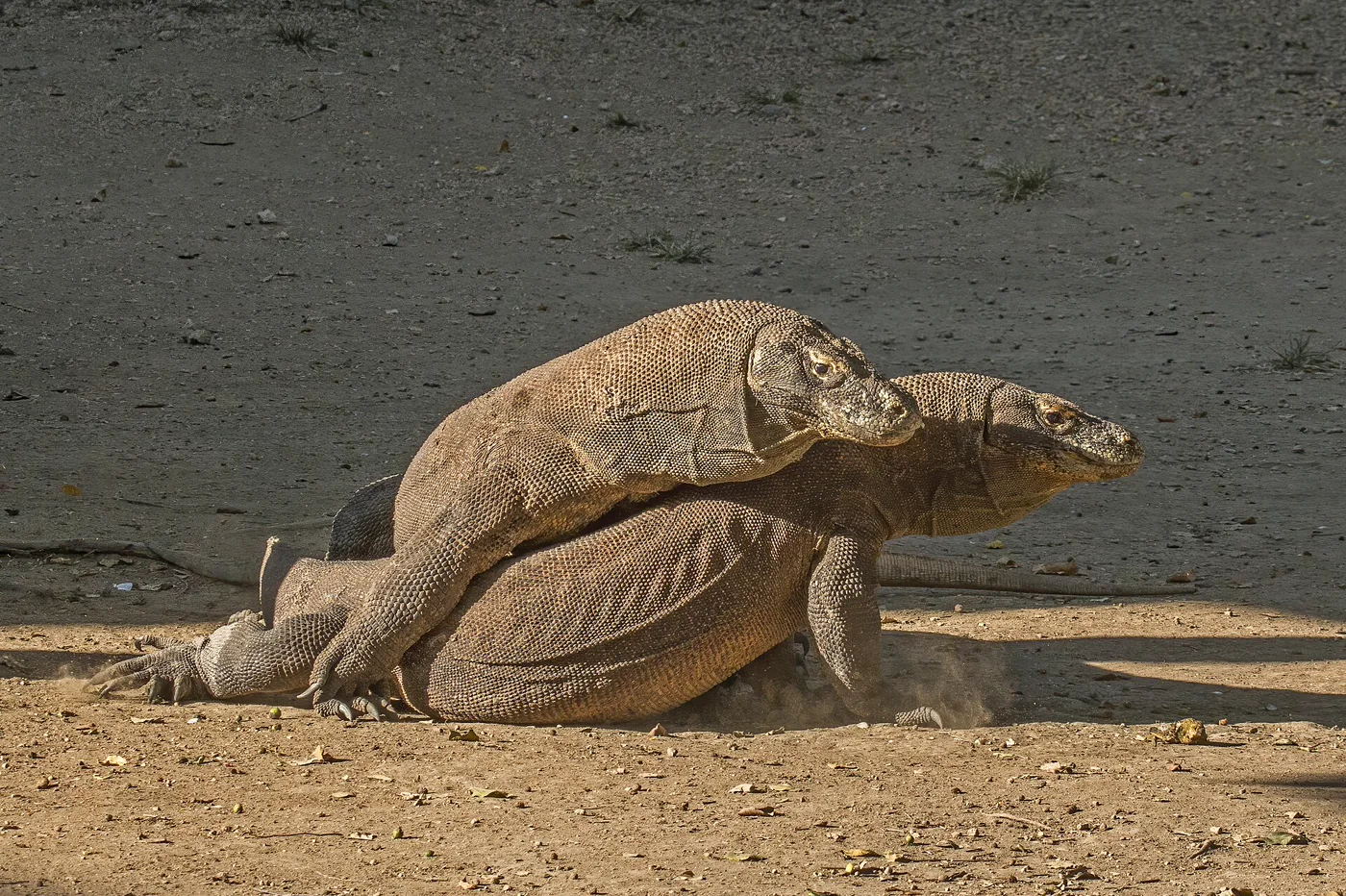
Ectothermic and strictly diurnal, Komodo dragons regulate body temperature around 35–40°C through behavioral routines: emerging at dawn from night burrows (1 to 3 meters deep, excavated with powerful foreclaws) to bask on sunlit slopes, hunting during mid-morning, retreating into deep monsoon-forest shade or coastal breezes through brutal midday heat, and foraging again in late afternoon. Although solitary across overlapping home ranges of 2 to 50 square kilometers, up to a dozen dragons gather around a large deer or buffalo carcass under a strict size-based hierarchy signaled by head bobbing, tail lashing, hissing, and body inflation. When two evenly matched males clash over territory or mates, they rear upright onto hind legs braced by muscular tails and wrestle violently until the loser is pinned.
Life Cycle
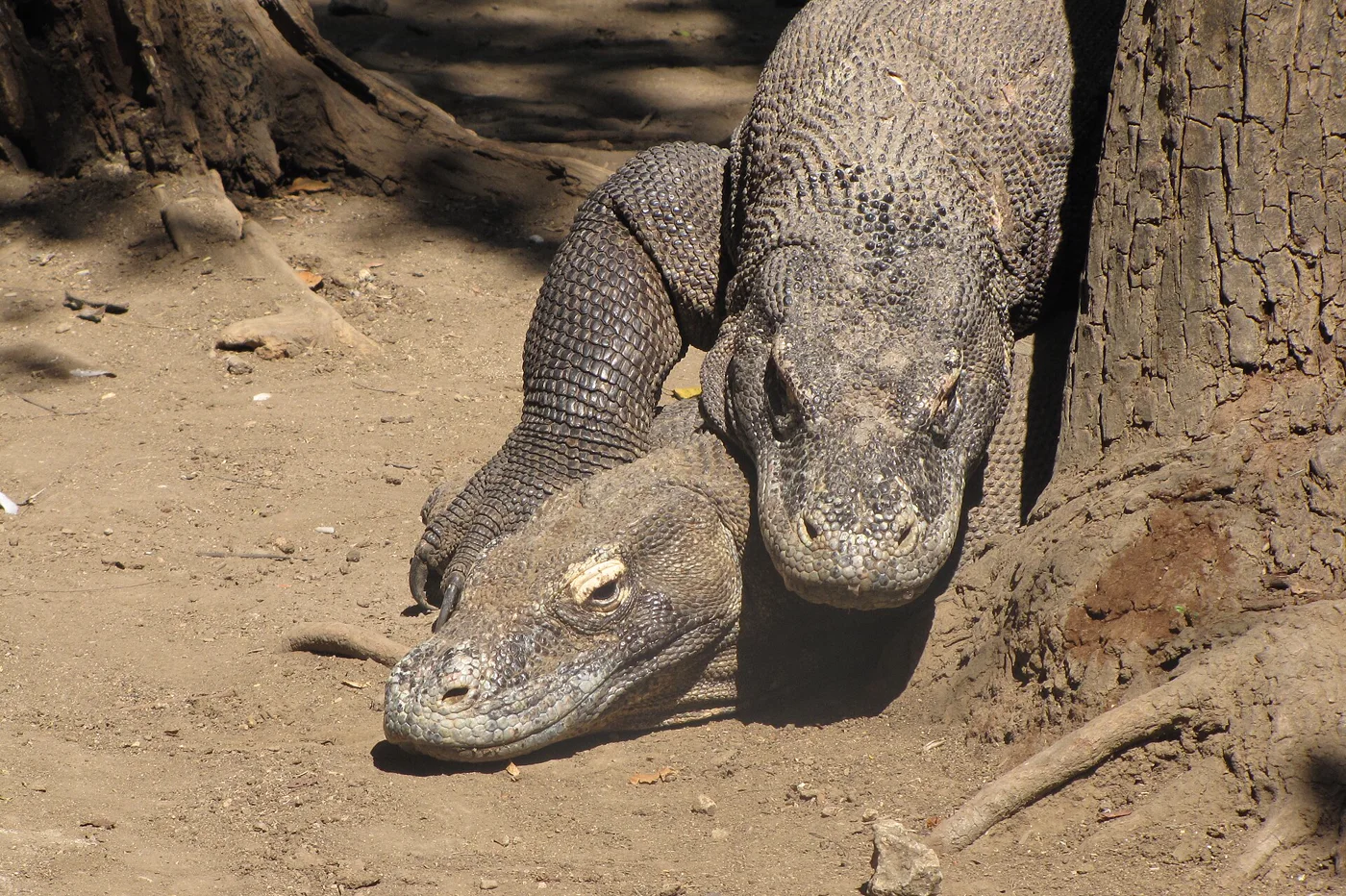
Mating occurs during the dry season between May and August, when dominant males guard receptive females and flick their tongues across the female's snout and back in courtship. In August or September, gravid females dig elaborate nesting burrows—frequently commandeering the giant 1.5-meter-tall earthen incubation mounds built by orange-footed scrubfowl (Megapodius reinwardt)—and excavate several false decoy chambers alongside the true nest to fool egg-raiding boars and rival dragons. Clutches average 15 to 30 leathery grapefruit-sized eggs that the mother guards from above for up to three months before rainy-season soil heat finishes a 7-to-8-month incubation. Hatchlings (~40 cm, ~100 g) dig out in March or April when insects abound, immediately sprinting up trees where they live for 3 to 4 years before maturing around age 8 to 10.
Role in the Ecosystem
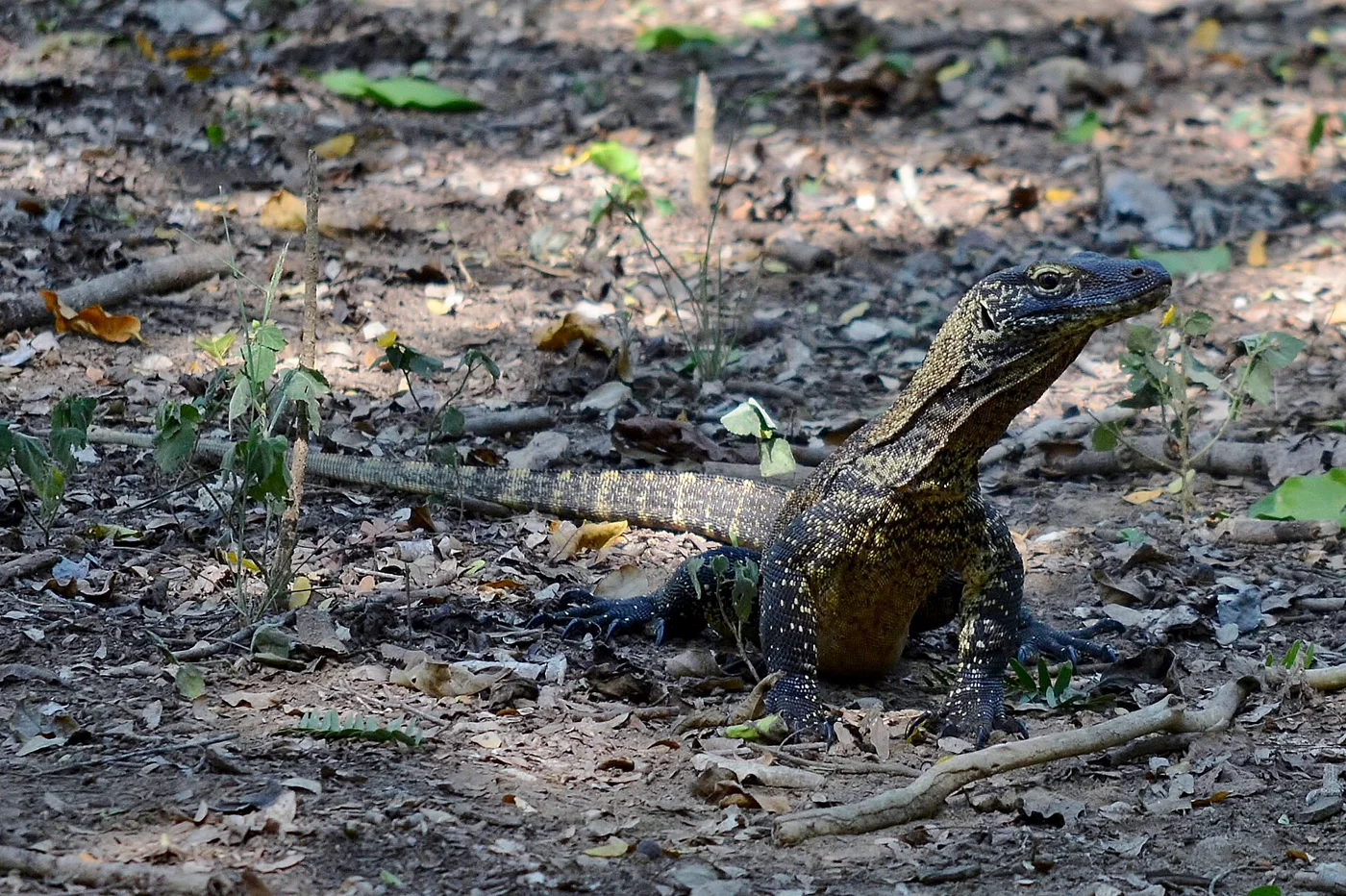
Unchallenged by placental mammalian carnivores on the isolated islands of Komodo and Rinca—an evolutionary legacy of island megafaunal dynamics where ancestors once hunted pygmy Stegodon elephants—Varanus komodoensis single-handedly governs terrestrial herbivore numbers, vegetation browsing pressure, and island carrion recycling. Remarkably, the species fills multiple trophic niches across its own lifespan (ontogenetic niche shift): arboreal hatchlings control katydids, beetles, geckos, and bird eggs; mid-sized subadults hunt ground rodents, snakes, and ground-nesting birds; and armored adults regulate deer and wild pigs. Because cannibalistic adults account for roughly 10% of juvenile mortality, young dragons even roll inside gut contents of carcasses to mask their scent from giant elders.
Conservation Outlook
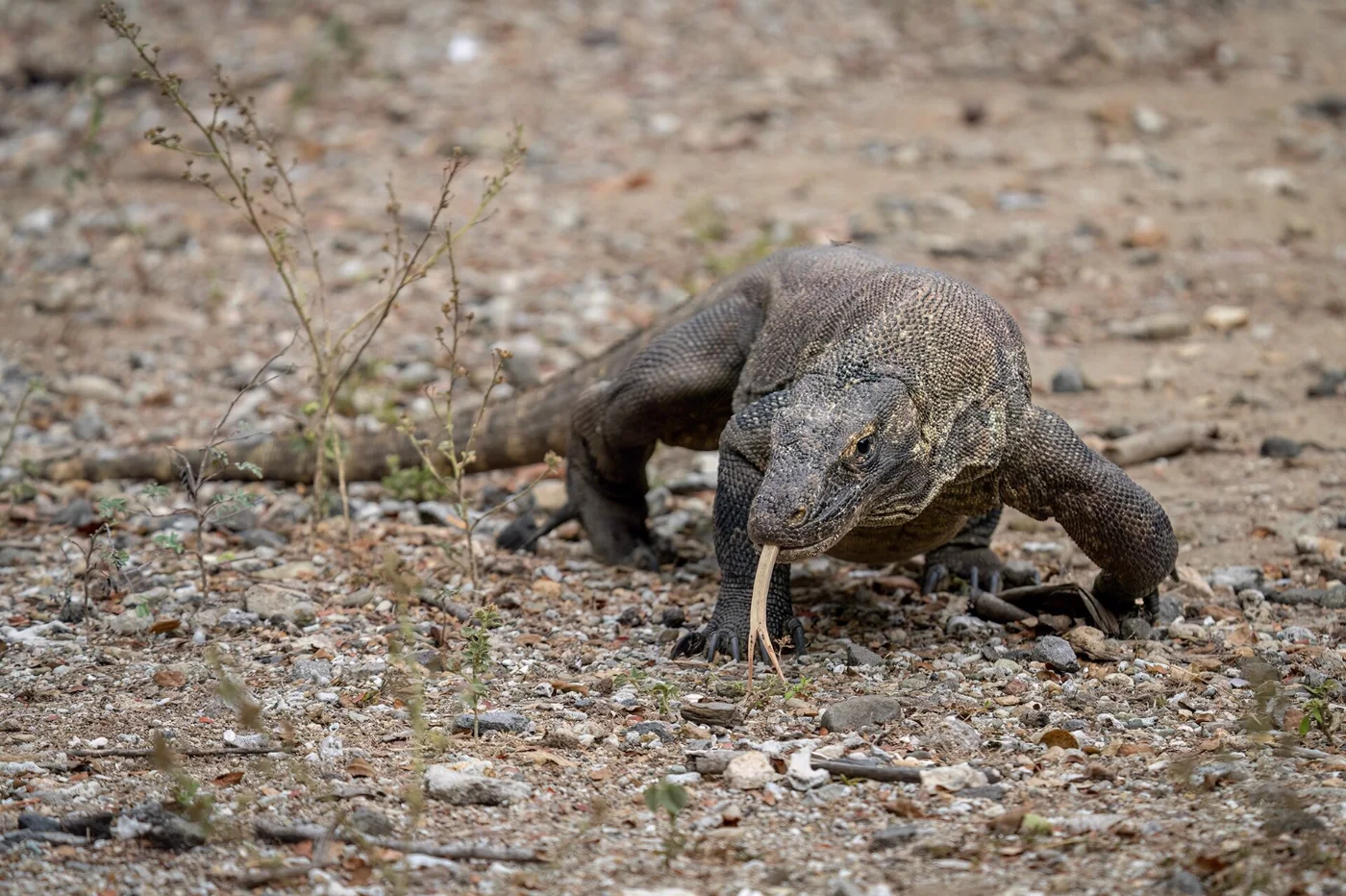
In September 2021, the IUCN Red List uplisted the Komodo dragon from Vulnerable to Endangered (EN), estimating roughly 1,383 mature adults (~3,300–3,500 total wild individuals) confined to fewer than 1,000 square kilometers of occupied habitat, with extinction already recorded on nearby Padar Island in the late 1970s after deer poaching collapsed its prey base. Modeling projects that rising global temperatures and a 30–70 cm sea-level rise over the next 45 years will inundate or degrade at least 30% of the low-lying coastal valleys where dragons hunt and nest. Outside Komodo National Park, subpopulations on Flores suffer severe monsoon-forest clearance, agricultural burning, feral dog predation on juveniles, and illegal bushmeat snaring of Timor deer. Long-term survival depends on strict marine-and-terrestrial enforcement within Komodo National Park, community-led protection of Wae Wuul and Riung corridors on Flores, camera-trap mark-recapture monitoring by the Komodo Survival Program, and strictly regulated visitor quotas.
Key Takeaways
- 1
Adult Komodo dragons have 60 curved serrated teeth whose cutting edges are reinforced by a microscopic orange-tinted coating of concentrated iron.
- 2
By swinging its head side to side and sampling air with its forked yellow tongue, a dragon can locate carrion up to 9.5 km downwind.
- 3
Female Komodo dragons can reproduce without males via parthenogenesis, producing viable homozygous male offspring.