African Lion
Panthera leo
The cooperative apex predator and social monarch of Africa's savannas
Quick Read
FelidaeOverview
The African lion is the only truly social big cat on Earth, living in family prides that rule open savannas and woodlands across sub-Saharan Africa. Famous for the male's powerful mane and a thunderous roar heard up to eight kilometers away, lions are keystone predators that shape entire grassland ecosystems.
Habitat & Range
African lions once roamed across most of Africa, southern Europe, and Southwest Asia, but today they occupy less than 8% of their historic range. Their largest strongholds lie in East and Southern Africa—including the Serengeti-Mara ecosystem, Ngorongoro Crater, Ruaha-Selous, Okavango-Chobe, and Kruger National Park—where open savannas, acacia woodlands, and seasonal floodplains support abundant ungulate herds.
How to Identify It
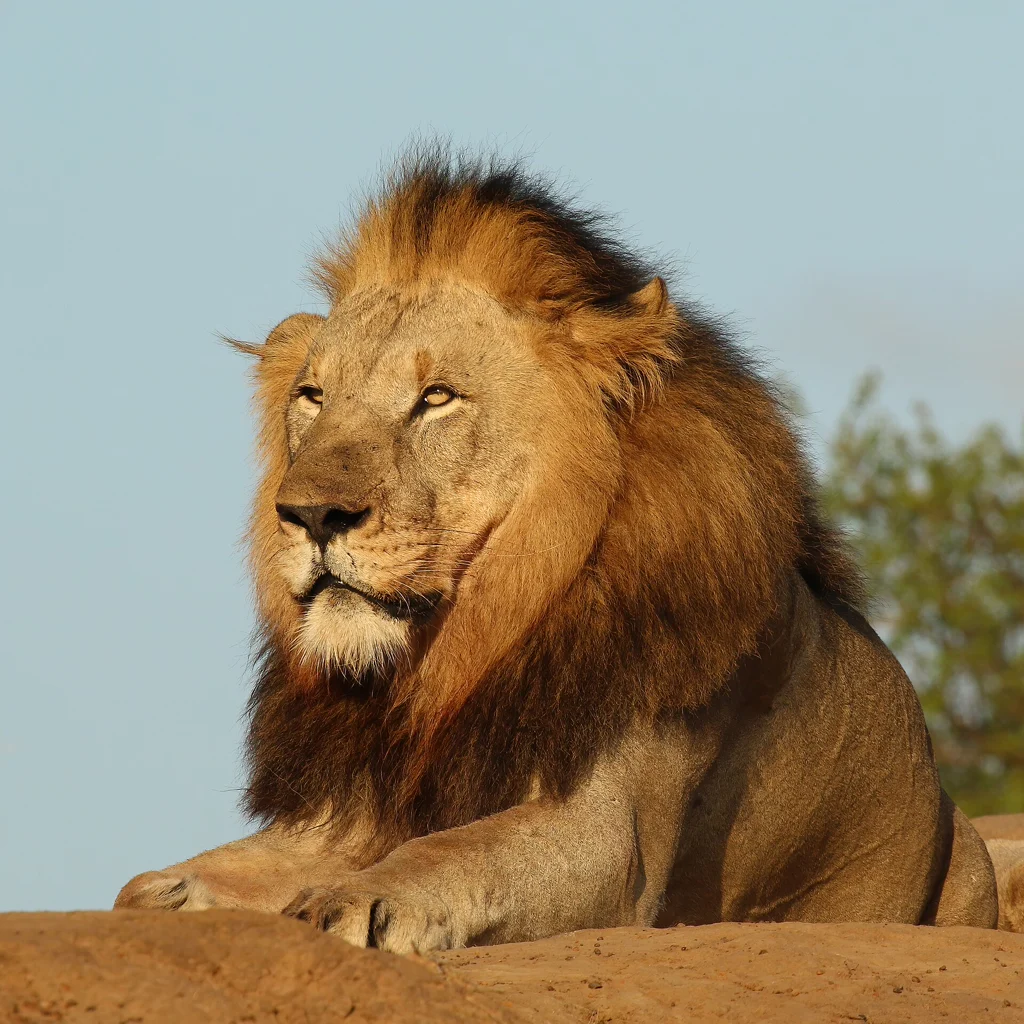
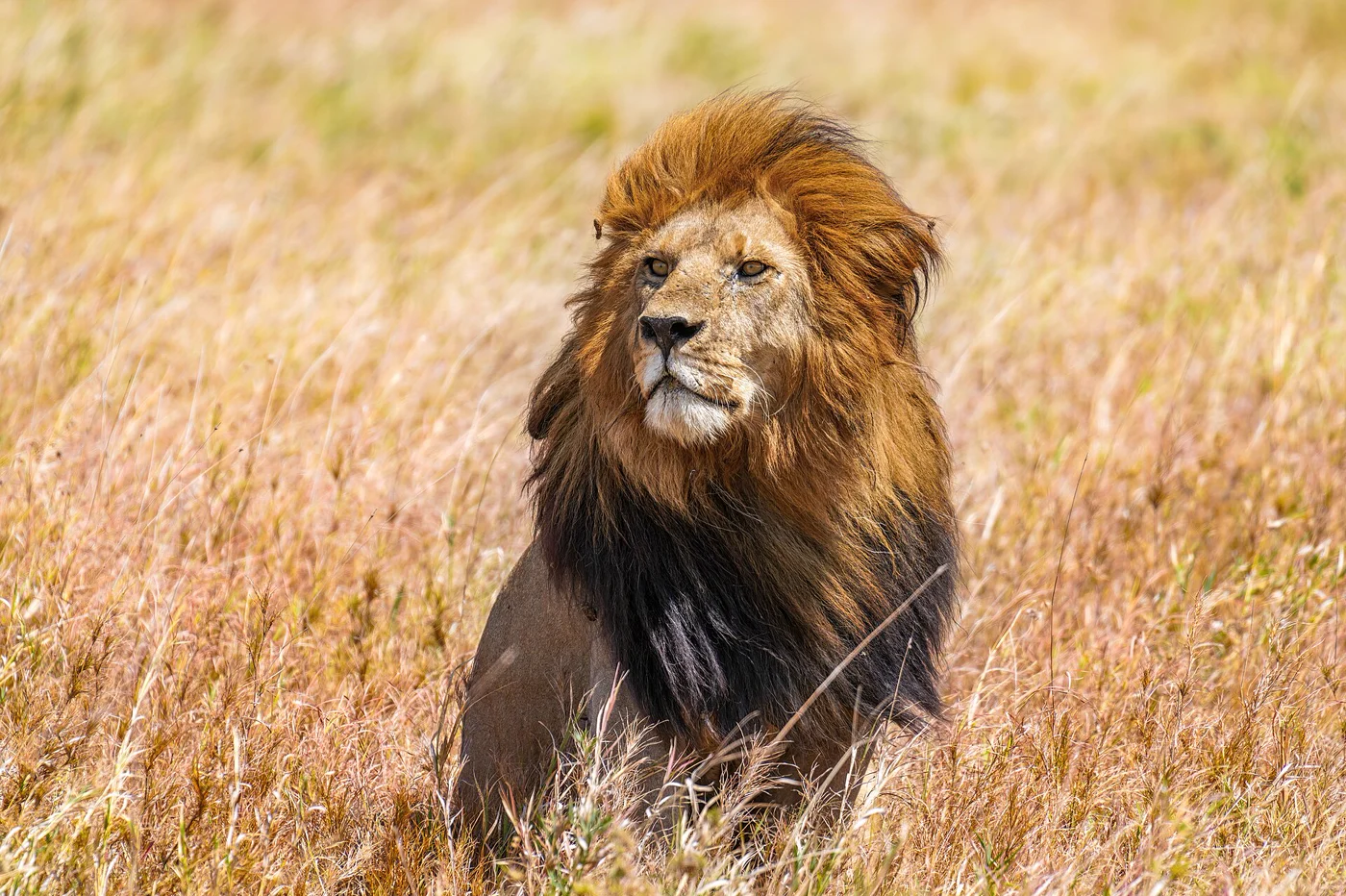
The lion is a muscular, deep-chested big cat with a tawny-gold coat, rounded ears with black backs, and a dark tuft at the tip of the tail. It is the only felid with pronounced visual sexual dimorphism: adult males grow a thick mane ranging from blond to black that frames the head, neck, and chest, signaling hormone health and shielding the throat during territorial fights.
Diet & Hunting
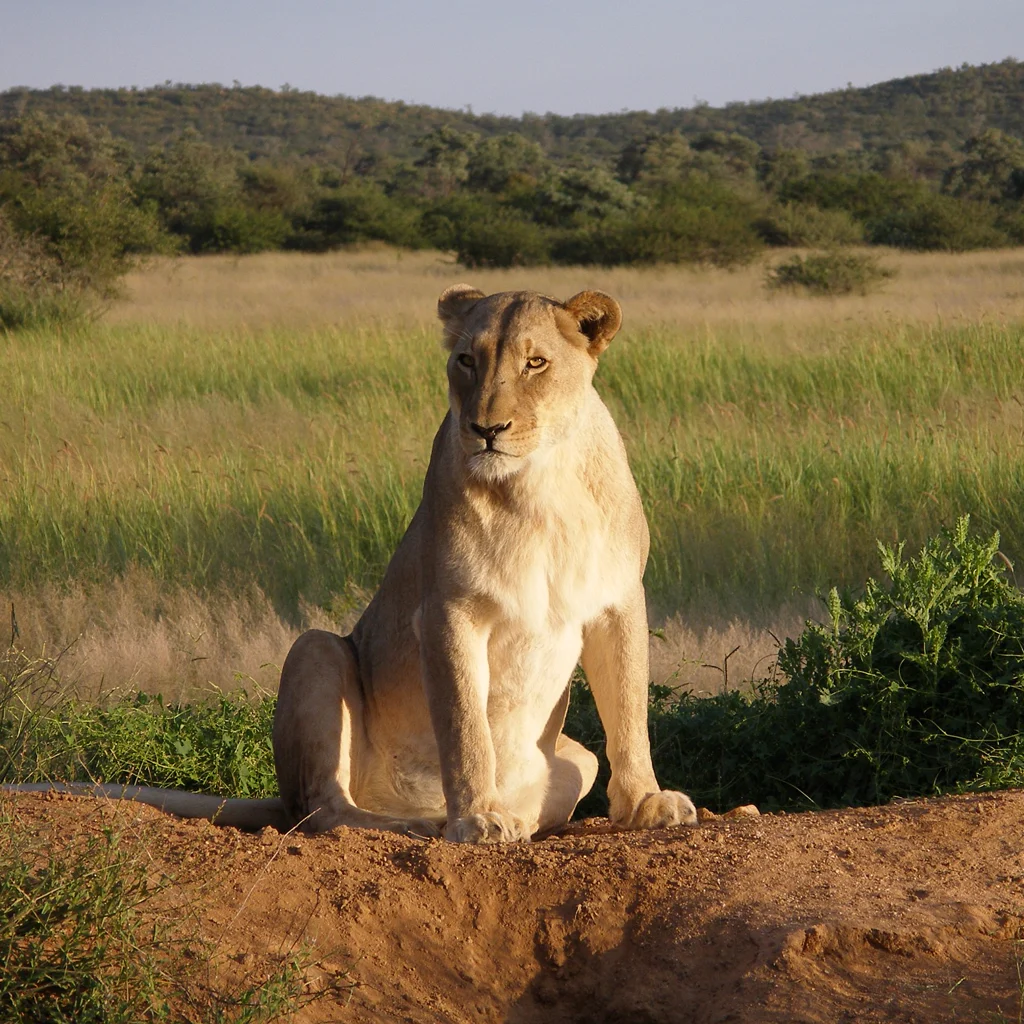
As apex hypercarnivores, lions target medium-to-large ungulates weighing 50 to 550 kg, especially blue wildebeest, plains zebra, Cape buffalo, gemsbok, and kob. Lionesses perform the majority of cooperative stalks, fanning out into ambush positions and using short bursts of up to 60 km/h to pull down quarry, while heavier coalition males help overpower formidable prey such as adult buffalo or giraffes.
Behavior
Unlike all other wild cats, lions are intensely social and live in fission-fusion prides consisting of 3 to 30 related females, their cubs, and a coalition of 1 to 4 adult males. Prides defend territory through coordinated roaring choruses audible up to 8 km away across the night savanna, scent marking along boundary trails, and collective patrols.
Life Cycle
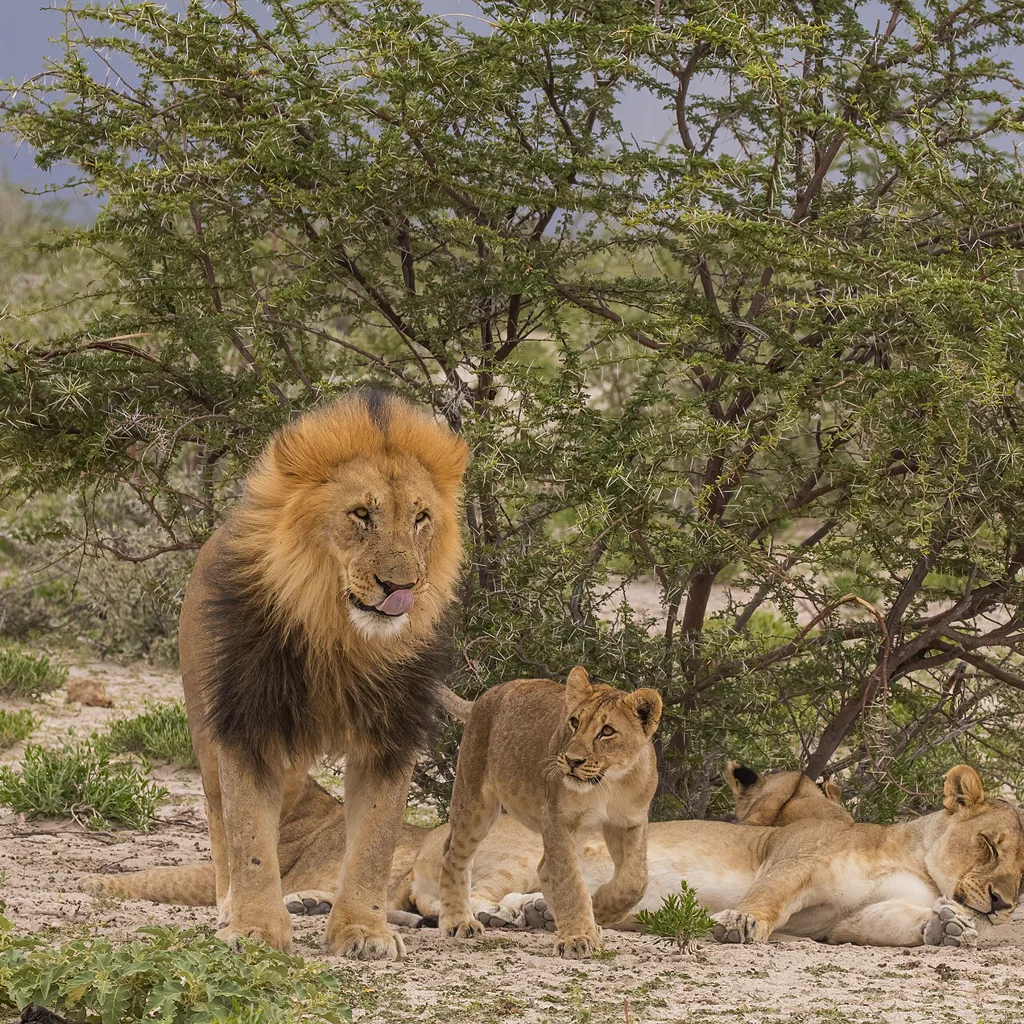
Lions breed year-round, often synchronizing births within a pride after a gestation of roughly 108-110 days. Lionesses give birth to 1-4 spotted cubs in dense thicket or kopje dens and rear them communally in a crèche, nursing one another's offspring. Cubs face high mortality from starvation and infanticide when rival male coalitions take over a pride.
Role in the Ecosystem
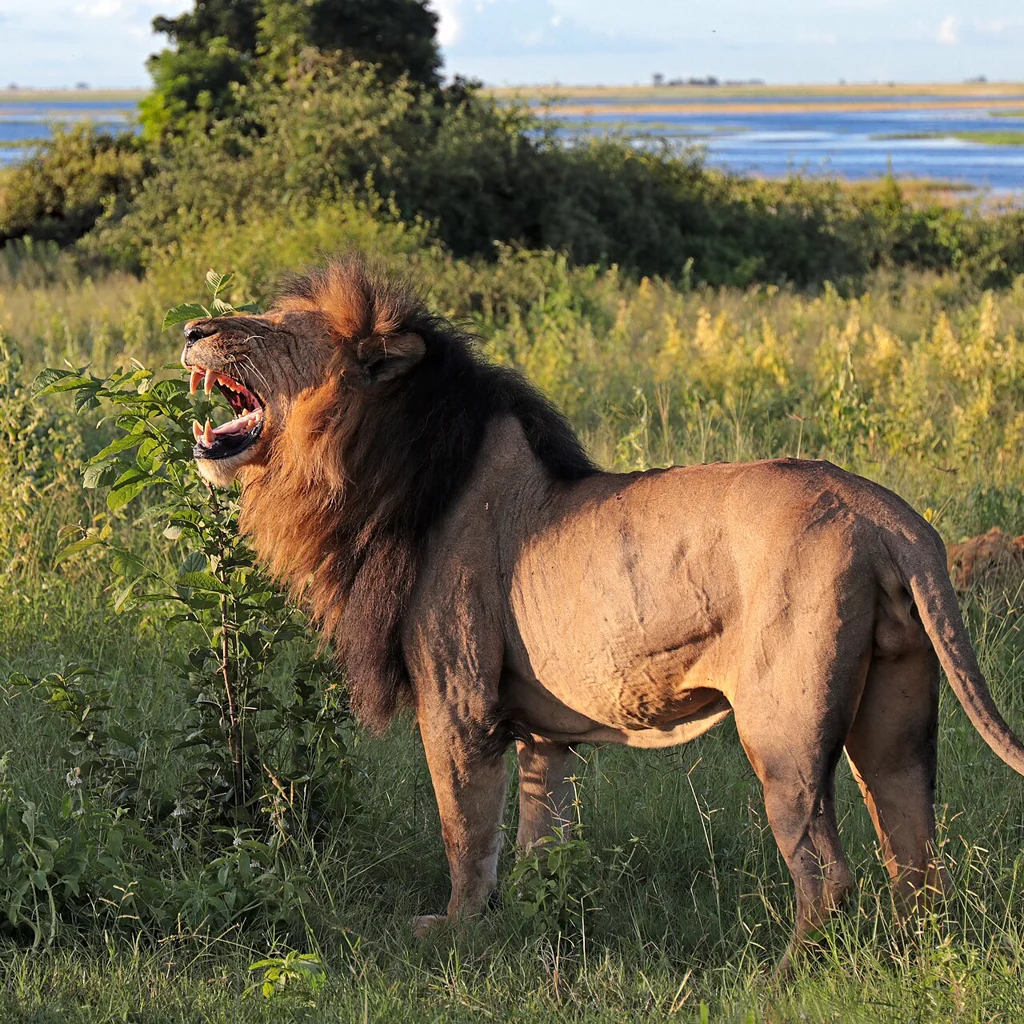
By regulating populations of dominant grazers like zebra, wildebeest, and buffalo, lions prevent overgrazing and alter where herbivores forage across waterholes and woodlands. Their kills also sustain a rich guild of scavengers, including spotted hyenas, jackals, vultures, and carrion insects.
Conservation Outlook
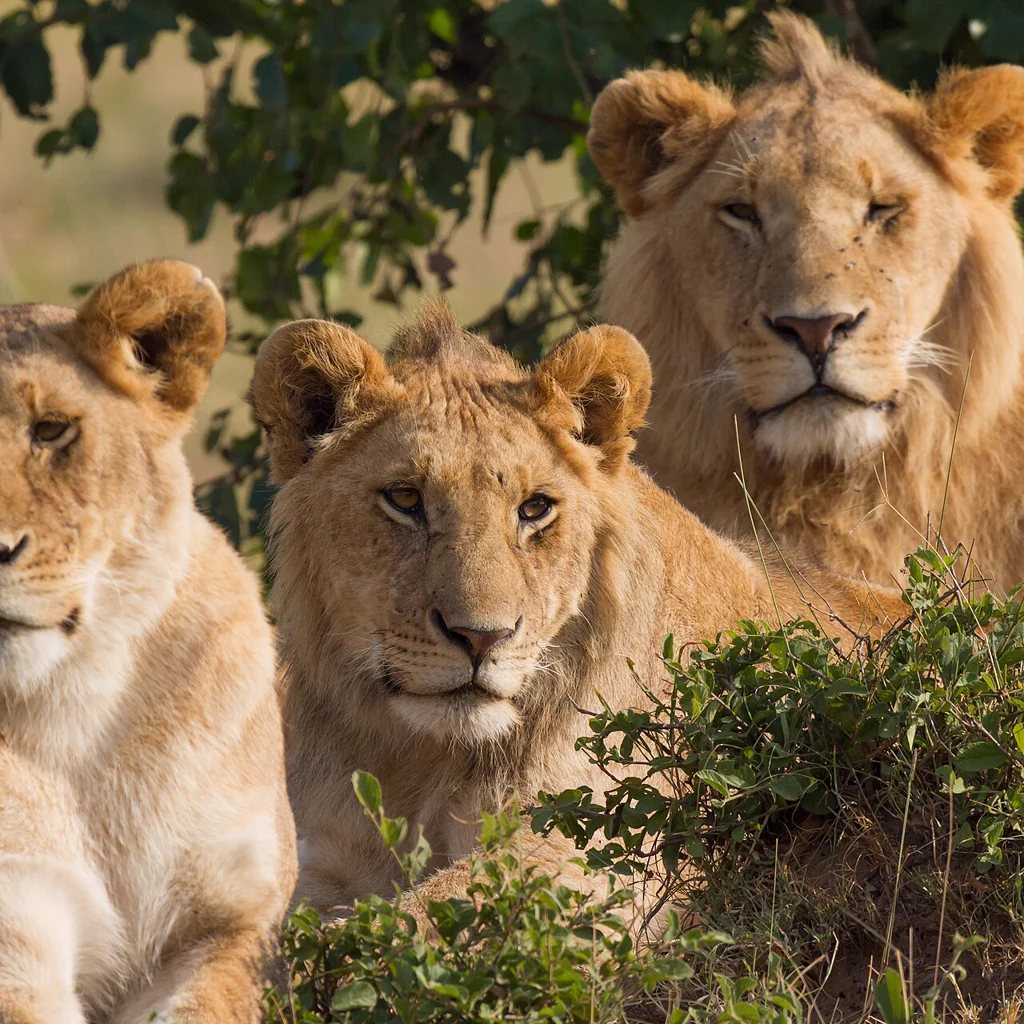
Listed as Vulnerable on the IUCN Red List, African lion populations have declined by roughly 43% over three generations due to habitat conversion, bushmeat snaring that depletes prey, retaliatory poisoning over livestock losses, and trophy or bone-trade pressures. Conservation relies on predator-proof bomas, community conservancies, corridor protection, and anti-snaring patrols.
Key Takeaways
- 1
A lion's roar can reach 114 decibels and carry up to 8 kilometers across open savanna at night.
- 2
Lionesses in the same pride synchronize births and raise their cubs together in communal nurseries called crèches.
- 3
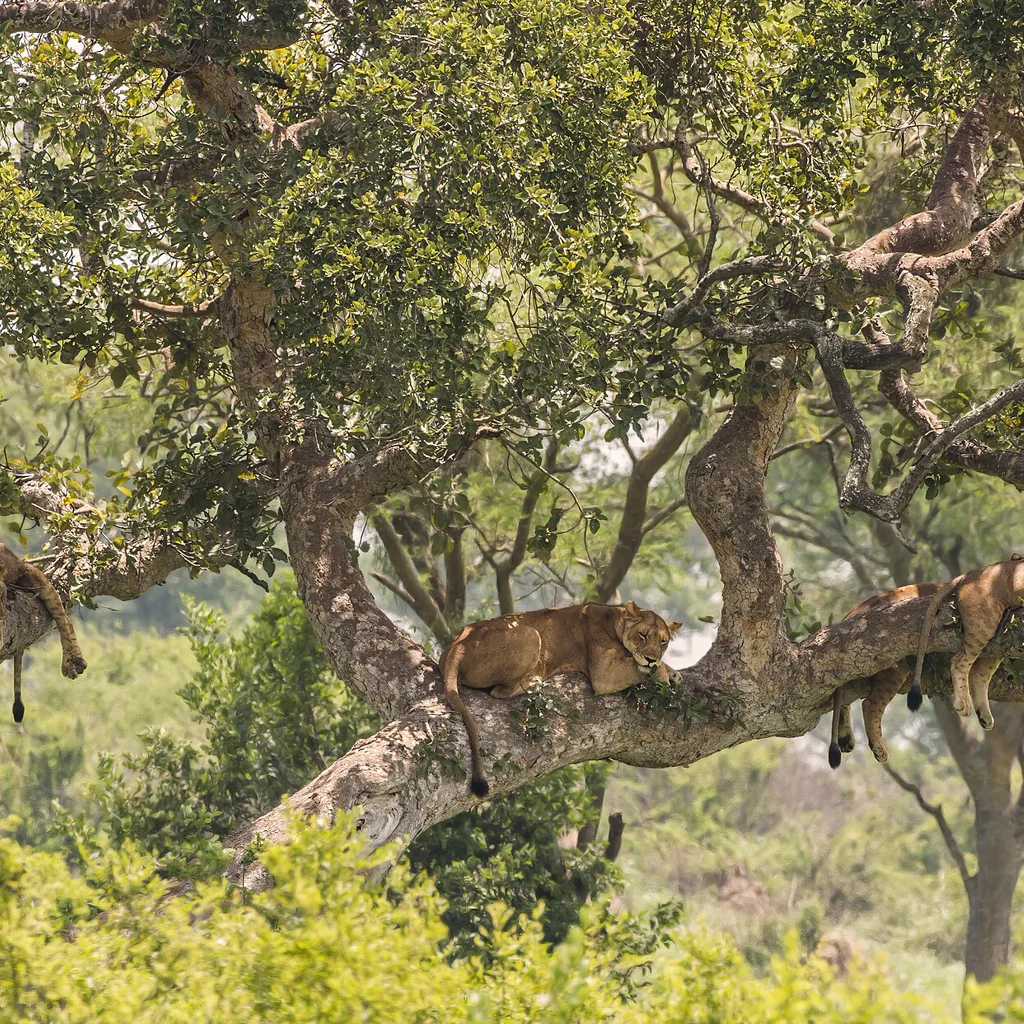
In East African parks such as Queen Elizabeth and Lake Manyara, entire prides regularly climb acacia and fig trees to escape heat and biting flies.