Mountain Gorilla
Gorilla beringei beringei
Gentle silverback guardian of the misty Virunga volcanoes and Bwindi cloud forests
Quick Read
HominidaeOverview
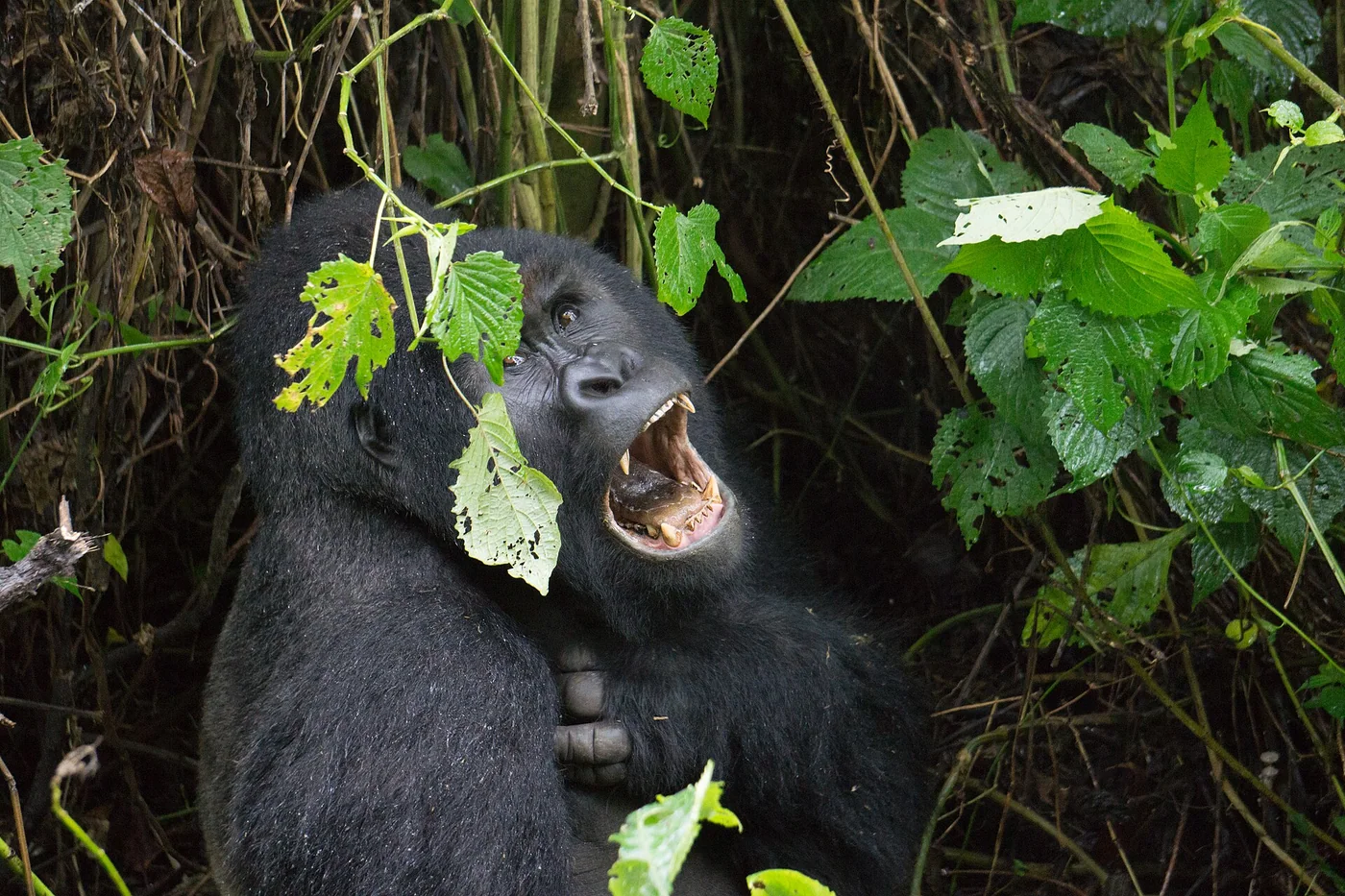
The mountain gorilla is a powerful yet gentle great ape cloaked in thick jet-black fur to endure the cold mists of East-Central Africa's Virunga volcanoes and Bwindi Impenetrable Forest. Living in close-knit family troops led by a protective silverback, it is the only great ape on Earth whose wild population is steadily rising thanks to intensive conservation.
Habitat & Range
The mountain gorilla—one of two subspecies of the eastern gorilla (Gorilla beringei)—survives exclusively in two isolated high-altitude Afromontane cloud forest islands in East-Central Africa's Albertine Rift, separated by roughly 45 km of densely settled farmland. Slightly more than half of the population inhabits the Virunga Volcanic Massif (elevations of 2,200 to 4,300 meters) spanning three contiguous transboundary parks: Rwanda's Volcanoes National Park, Uganda's Mgahinga Gorilla National Park, and the Mikeno sector of Virunga National Park in the Democratic Republic of the Congo. The remaining ~459 individuals inhabit Uganda's UNESCO-listed Bwindi Impenetrable National Park and adjoining Sarambwe Nature Reserve (1,100 to 2,600 meters).
How to Identify It
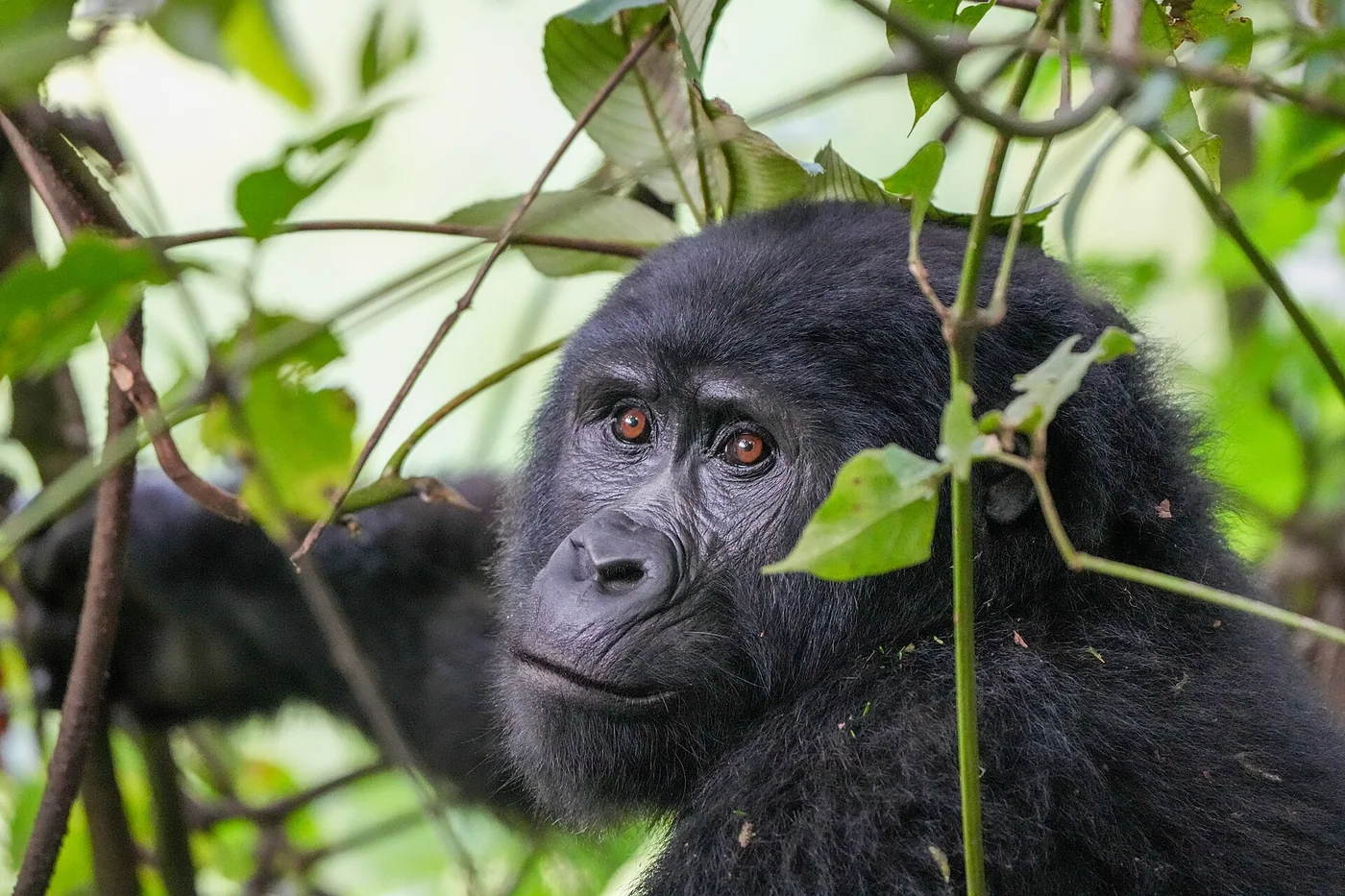
Adapted to chilly, mist-shrouded volcanic slopes where nighttime temperatures can drop near freezing, the mountain gorilla wears noticeably longer, shaggier, silkier jet-black hair than any lowland gorilla, which prevents it from surviving in warm lowland humidity. Adult males feature a towering bony sagittal crest along the midline of the skull anchoring powerful chewing muscles, a broad bare chest, and a striking saddle of silvery-gray hair across the back and hips that develops around age 12 to 13—earning them the title 'silverback.' Compared with western lowland gorillas, mountain gorillas have broader jaws, larger nostrils with uniquely wrinkled 'nose prints' used by researchers like human fingerprints, shorter arms, and somewhat stockier trunks.
Diet & Hunting
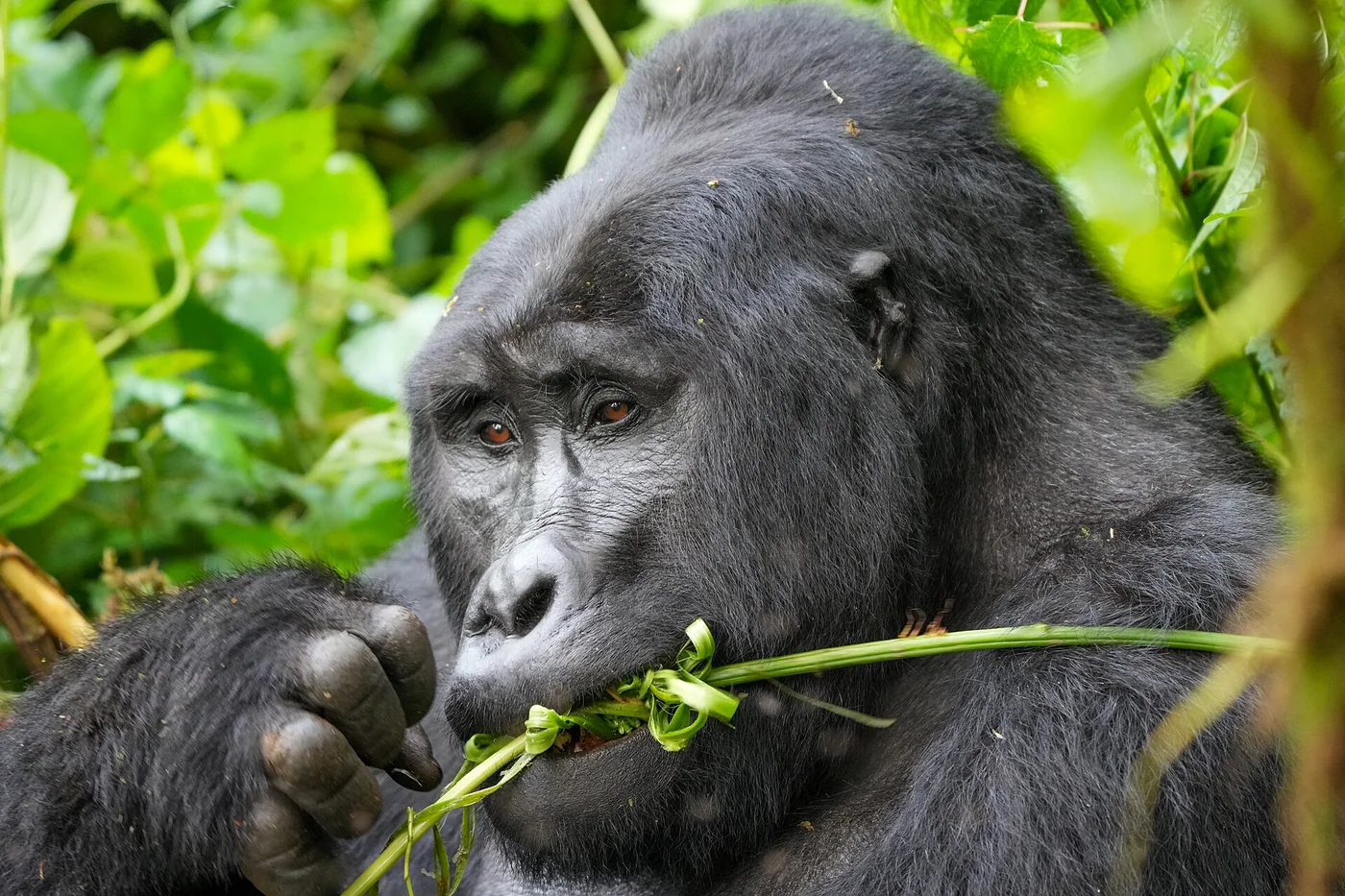
Despite their immense strength and intimidating canine teeth, mountain gorillas are peaceful bulk-feeding herbivores—primarily folivores—foraging across 142 plant species. Leaves, shoots, pith, and stems make up roughly 85% of their diet, dominated by wild celery (Peucedanum linderi), bedstraw (Galium vines), thistles, stinging nettles—which they deftly roll into bundles with calloused fingers to neutralize stinging hairs—and seasonal protein-rich bamboo shoots. Bwindi's lower-elevation troops climb trees more frequently than Virunga troops to harvest seasonal wild figs and fruits, while both populations occasionally ingest bark, roots, rotting wood, soil for minerals, and tiny invertebrates such as ants and snails. An adult silverback eats up to 30–34 kg of vegetation daily and rarely needs to drink free-standing water because morning dew and succulent stems supply ample moisture.
Behavior
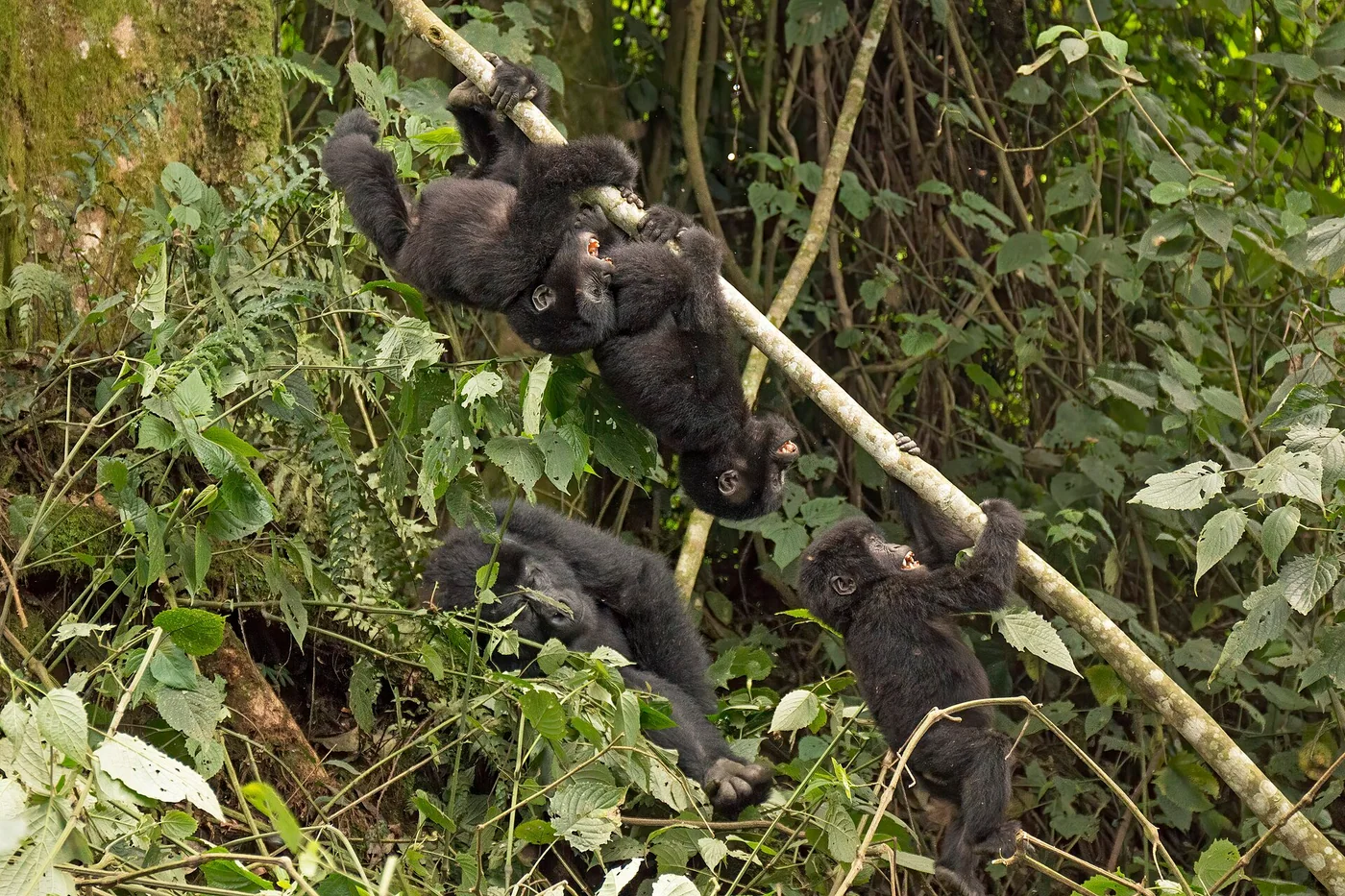
Mountain gorillas are diurnal, predominantly terrestrial knuckle-walkers living in cohesive, stable family troops typically numbering 10 to 30 individuals (and occasionally exceeding 40–60). Each troop is led by a dominant alpha silverback—though roughly 36% to 40% of Virunga groups contain multiple related silverbacks—who decides daily foraging routes, mediates intragroup squabbles, plays gently with infants, and defends the family to the death against leopards, poachers, or rival outsider males. Their daily rhythm alternates between morning foraging, a midday rest and social grooming session where juveniles wrestle on vines, afternoon feeding, and weaving fresh bowl-shaped sleeping nests of bent branches and foliage every dusk. At least 16 to 25 distinct vocalizations—from soft 'belch vocalizations' signaling contentment during meals to booming chest-beating displays and hoot series—coordinate troop life.
Life Cycle
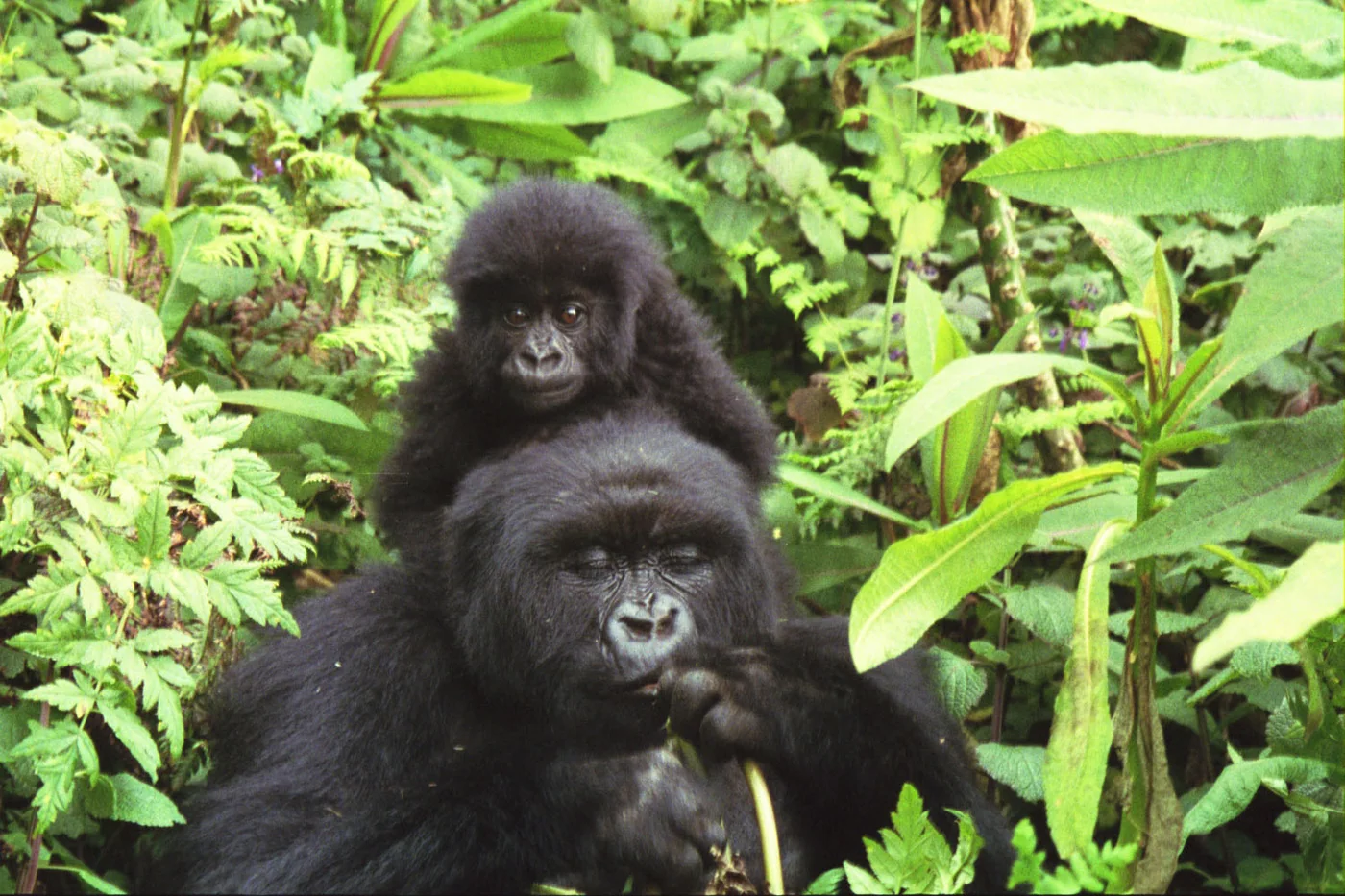
Mountain gorillas have one of the slowest reproductive rates of any mammal, making population recovery painstakingly gradual. Females reach sexual maturity around 8 to 9 years of age and typically give birth for the first time at age 10, emigrating from their natal troop or transferring to another silverback to avoid inbreeding. After an 8.5-month (255–260 day) gestation—nearly identical to humans—a mother gives birth to a single helpless infant weighing just 1.8 to 2 kg (twins are rare). The newborn clings to its mother's chest hair for the first four months before riding dorsally on her back, nurses for 3 to 4 years, and sleeps in her nightly nest until weaned, resulting in a 4-to-5-year interbirth interval.
Role in the Ecosystem
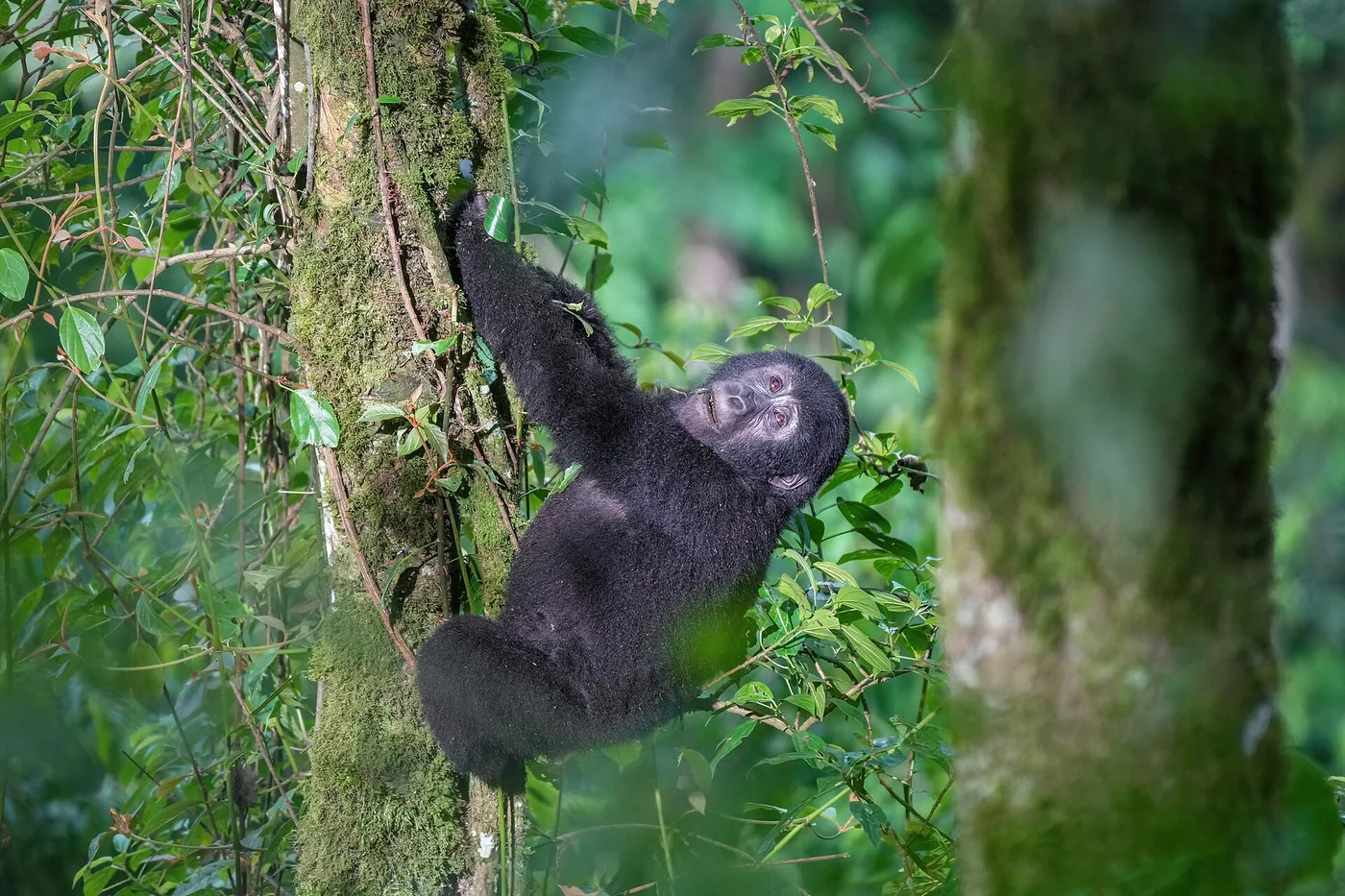
Often called the mega-gardeners of the Albertine Rift, mountain gorillas shape montane forest dynamics through heavy daily herbivory, trampling, and nest construction. By consuming vast quantities of fast-growing herbaceous vines and shrubs, troops open sunlit gaps on the forest floor that allow slower-growing hardwood tree seedlings to establish. In Bwindi Impenetrable Forest, seasonal fruit consumption makes gorillas indispensable long-distance dispersers of large-seeded canopy trees across steep mountain ridges, sustaining watershed forests that regulate freshwater supplies for millions of people downstream.
Conservation Outlook
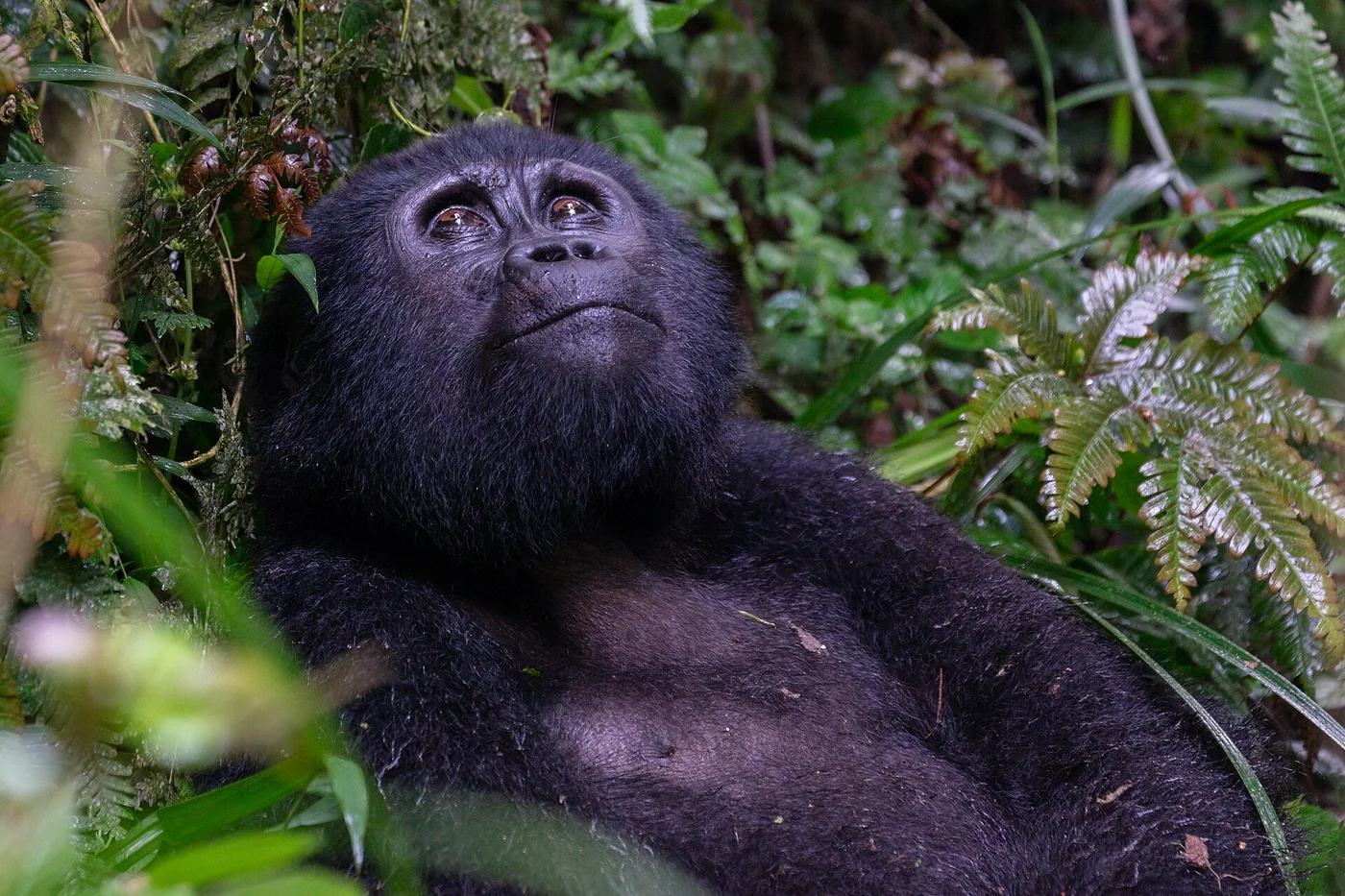
In November 2018, the IUCN Red List downlisted the mountain gorilla from Critically Endangered (CR) to Endangered (EN)—one of modern conservation's rarest triumphs. Driven to an estimated low of roughly 250 individuals in the Virunga volcanoes by the late 1970s when Dian Fossey pioneered field protection at Karisoke, their global wild census surpassed 1,063 individuals through intensive 'extreme conservation': daily anti-snare ranger patrols across Rwanda, Uganda, and DRC, emergency field veterinary care by Gorilla Doctors, strictly regulated high-value trekking permits that share revenue with surrounding communities, and strict 7-meter masking protocols to prevent fatal human respiratory viruses (such as human metapneumovirus and influenza) from jumping to gorillas, who share ~98% of human DNA. Severe risks nevertheless persist from wire bushmeat snares set for antelope, civil instability in eastern DRC, zero room for agricultural habitat expansion, and climate-driven shifts in montane vegetation zones.
Key Takeaways
- 1
Sharing roughly 98% of human DNA, mountain gorillas are so susceptible to human colds and flu that visitors must wear masks and stay at least 7 meters away.
- 2
Every mountain gorilla has a unique pattern of wrinkles above its nostrils—a 'nose print' used by scientists just like a human fingerprint.
- 3
It is the only great ape subspecies in the world whose wild population is increasing, rising from ~250 in the Virungas in the late 1970s to over 1,063 globally.