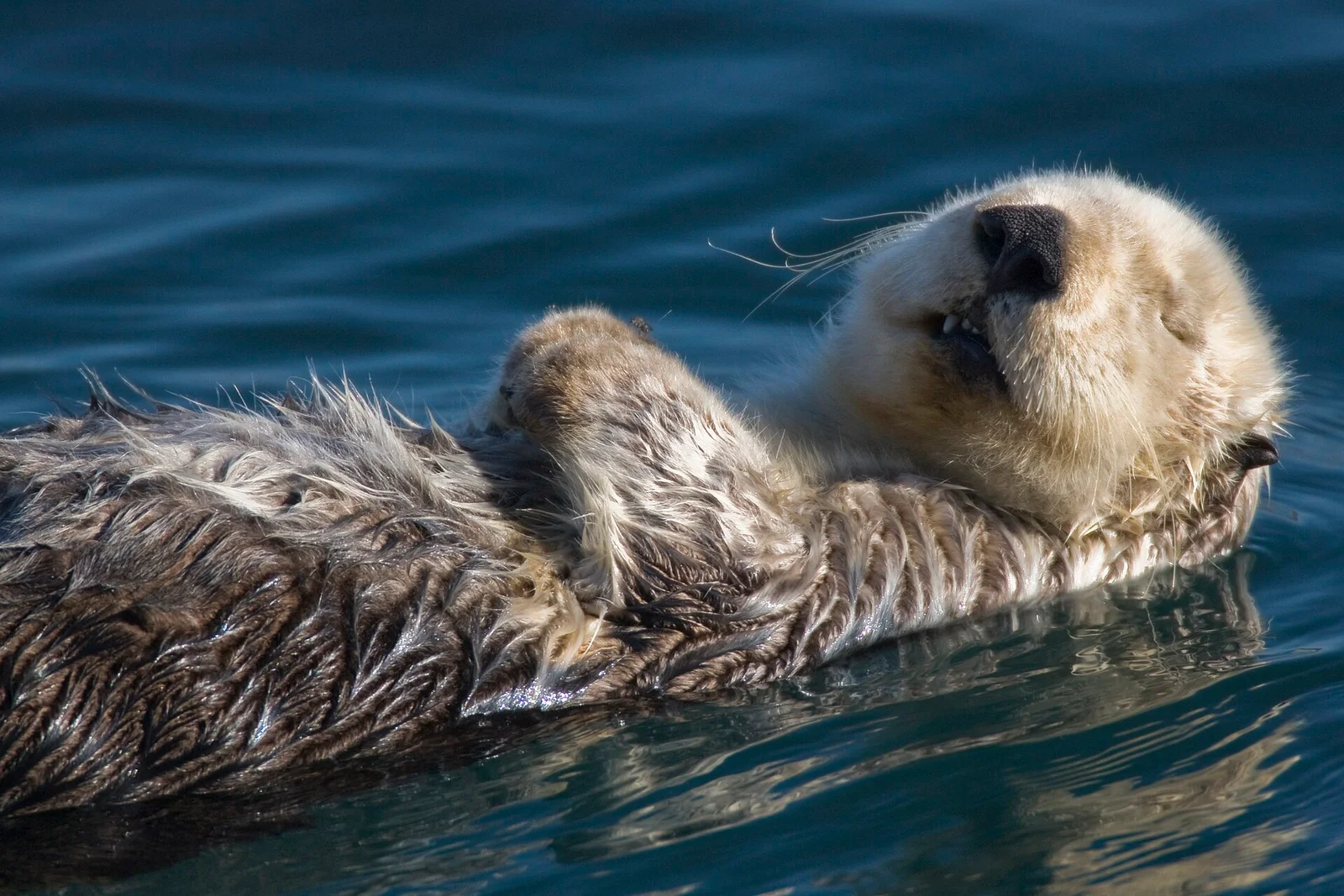
Sea Otter
Enhydra lutris
The tool-using kelp forest guardian with the densest fur on Earth
Quick Read
MustelidaeOverview
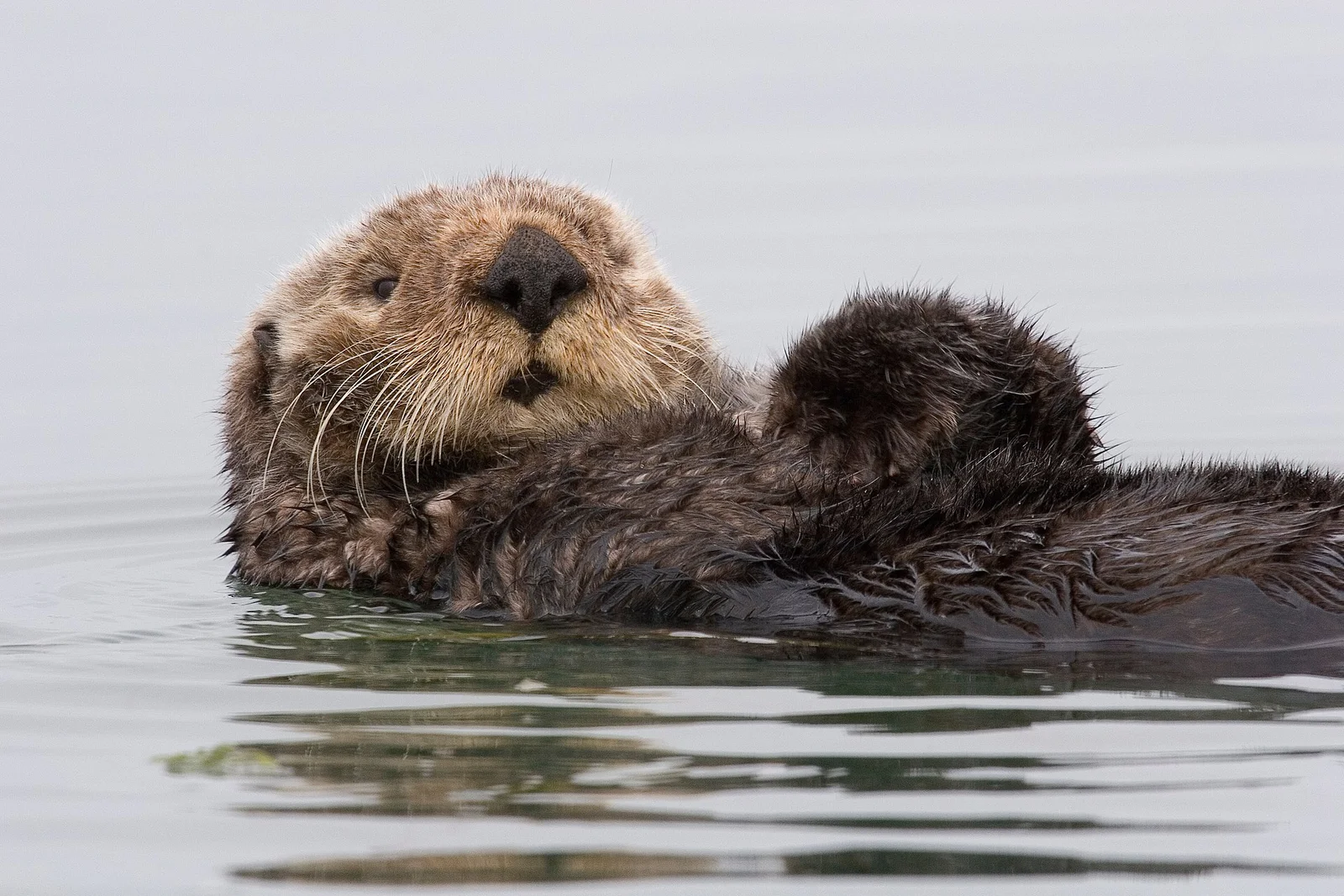
The sea otter is a keystone marine mammal of the North Pacific coast that relies on record-breaking fur density rather than blubber to survive cold ocean waters. Floating on its back to crack shellfish with stone tools and cradling its pup on its chest, it safeguards underwater kelp forests by keeping sea urchin populations in check.
Habitat & Range
Sea otters inhabit shallow coastal waters and kelp forest belts along the northern and eastern North Pacific Rim. Three subspecies are recognized: the Asian sea otter (Enhydra lutris lutris) in the Kuril Islands, Kamchatka, and Commander Islands; the northern sea otter (E. l. kenyoni) across the Aleutian Islands, southern Alaska, British Columbia, and Washington; and the southern or California sea otter (E. l. nereis) along central California from Half Moon Bay to Point Conception, including Monterey Bay, Big Sur, Elkhorn Slough, and Morro Bay.
How to Identify It
Although the smallest marine mammal in North America, the sea otter is the heaviest member of the weasel family (Mustelidae). Unlike seals and whales, it lacks an insulating blubber layer and instead relies on the densest fur in the animal kingdom—up to 150,000 hairs per square centimeter (nearly 1 million hairs per square inch). A dark brown undercoat traps a dry layer of air against the skin, while grizzled silver-buff guard hairs shed water across the head and chest. Its hind feet are flattened into broad, webbed flippers for propulsion, while its sensitive front paws have retractable claws and loose underarm skin pouches used to store rocks and prey during dives.
Diet & Hunting
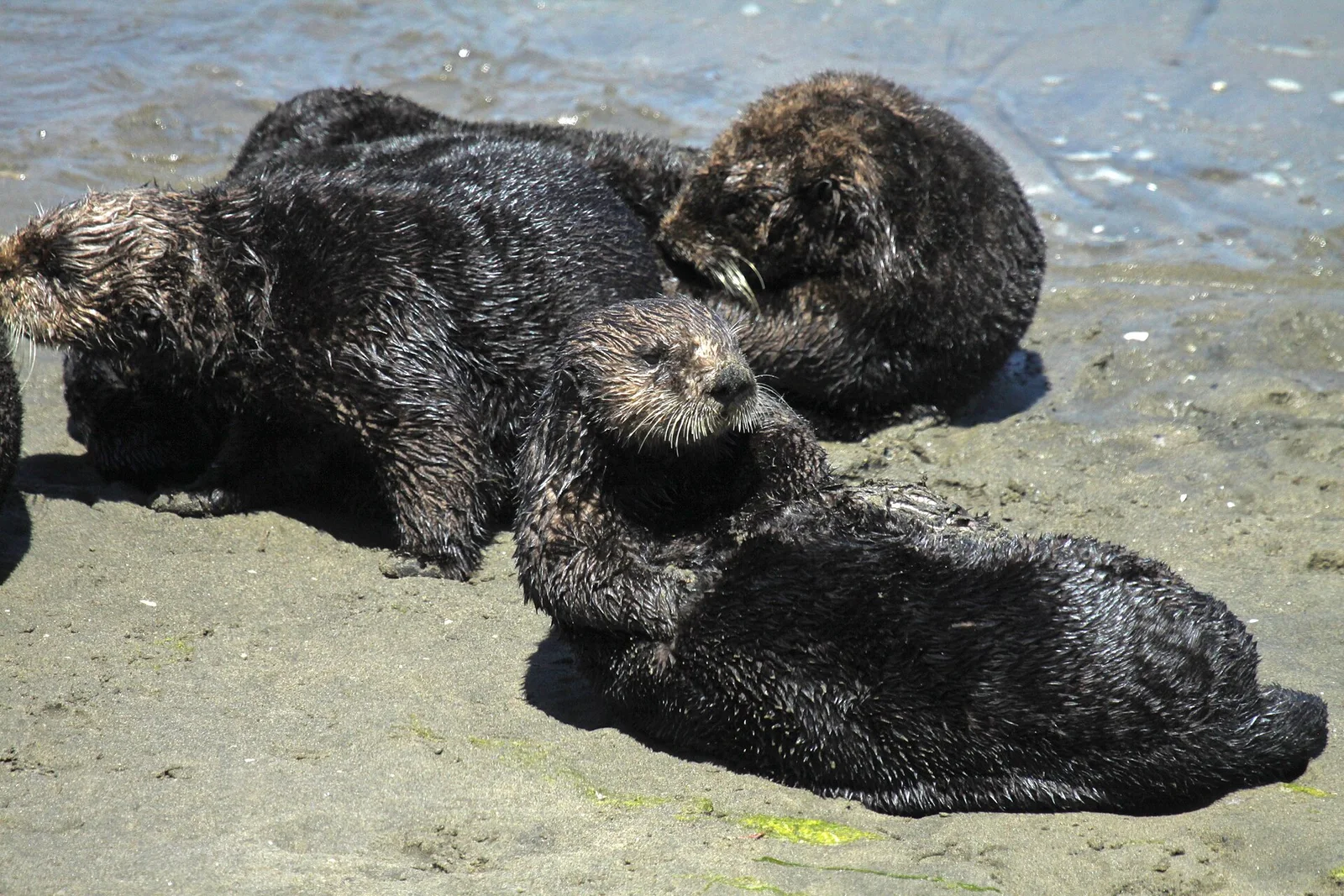
Because maintaining a 38°C core temperature in frigid Pacific waters demands an metabolic rate two to three times higher than land mammals of similar size, a sea otter must consume 25% to 30% of its body weight every single day. It dives to depths of 15 to 45 meters (recording maximum dives near 100 meters) to forage on benthic invertebrates including purple and red sea urchins, abalones, Dungeness and kelp crabs, clams, mussels, chitons, and octopuses.
Behavior
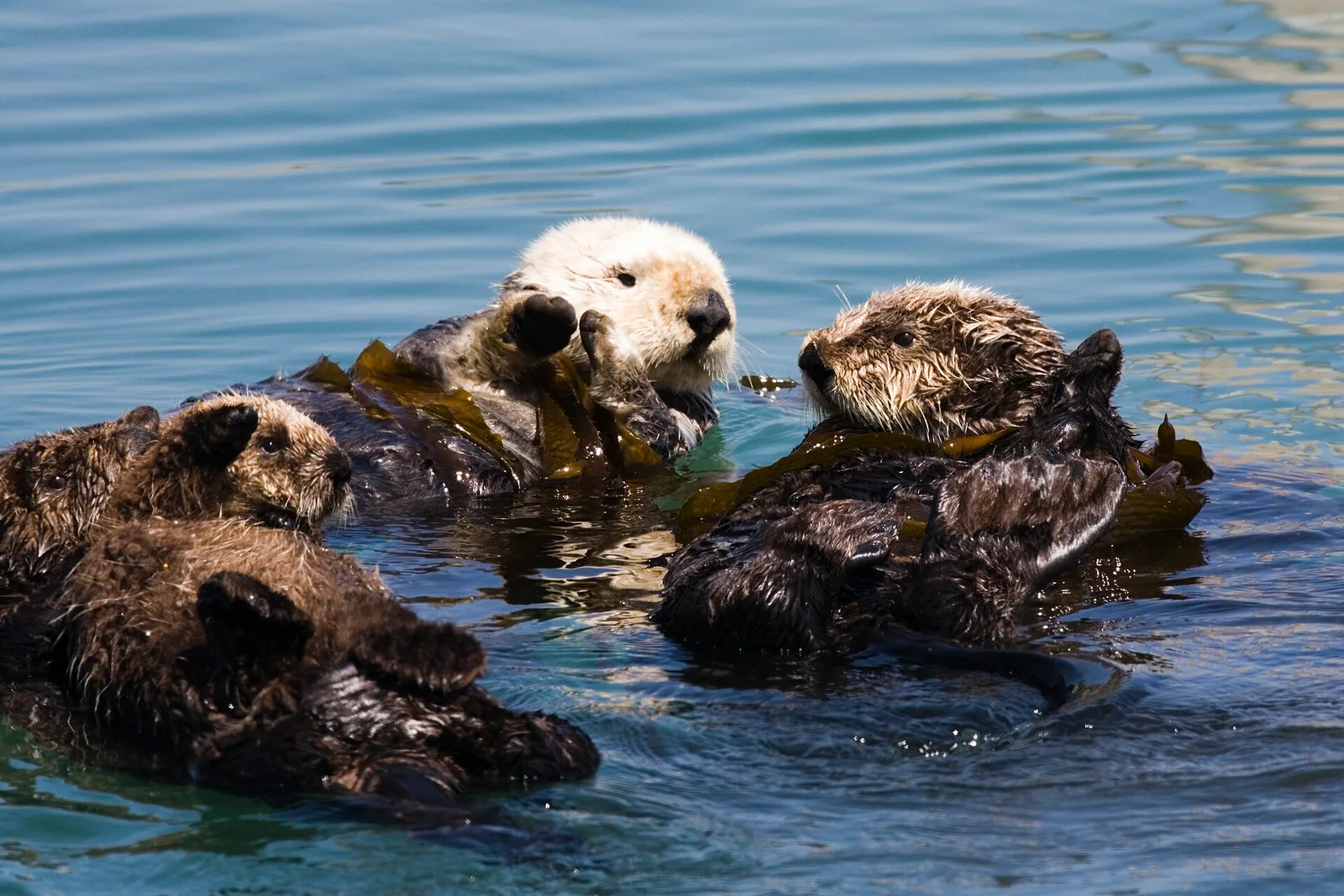
Sea otters are one of the very few non-primate mammals to routinely use tools. Floating on its back at the surface, an otter places a flat anvil stone on its chest to hammer open thick-shelled clams and snails, or uses a rock underwater to pry abalone off reefs. To avoid drifting out to sea while sleeping or grooming, sea otters wrap themselves in giant kelp fronds and gather in single-sex floating groups called 'rafts' ranging from a dozen individuals in California to several hundred in Alaska.
Life Cycle
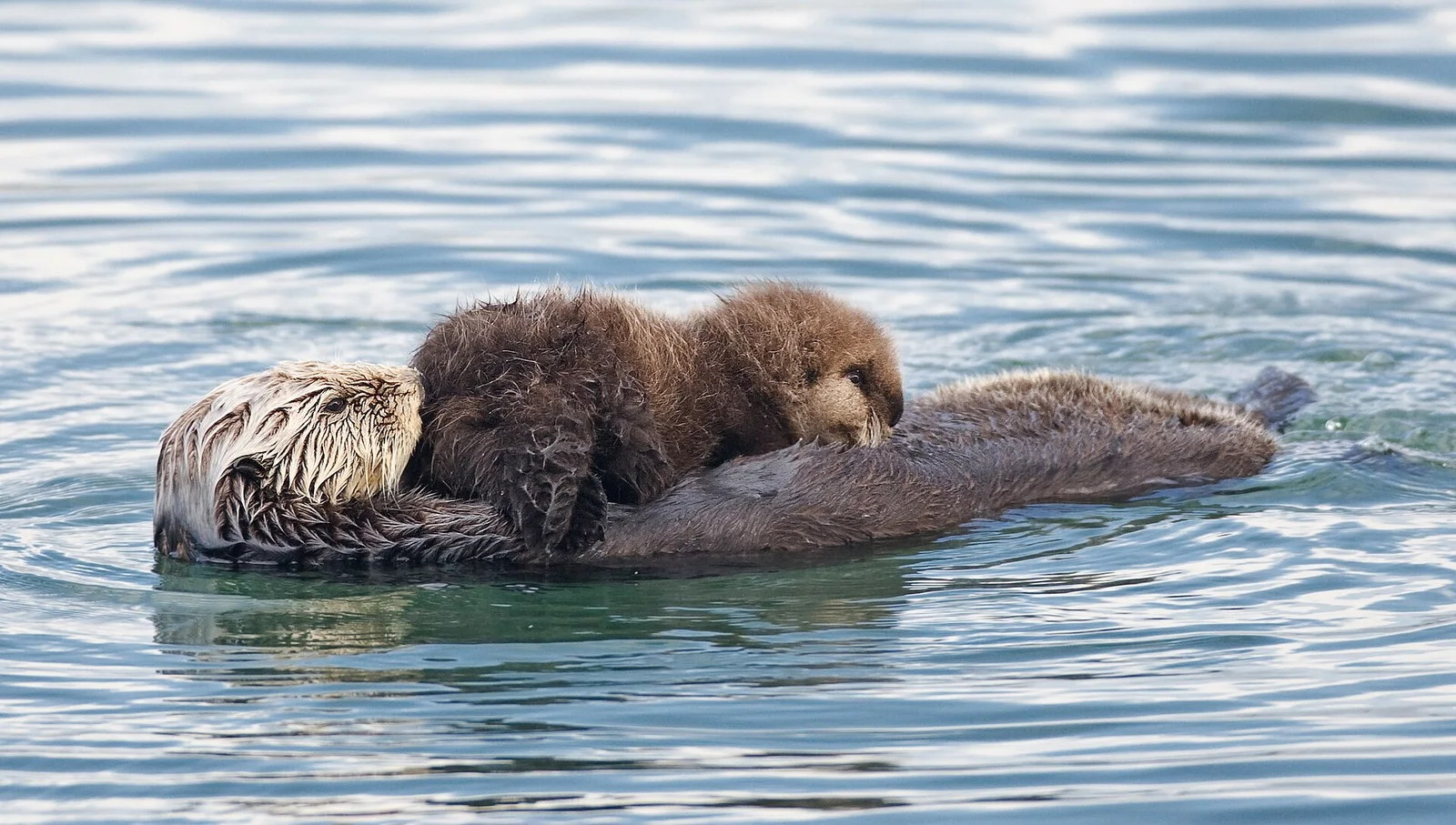
Sea otters breed year-round and exhibit delayed embryonic implantation, resulting in a total gestation of about 6 months. Females give birth in the water to a single pup weighing 1.8 to 2.3 kg, born with eyes open and a buoyant coat of baby fur so dense that the pup cannot sink. For 6 to 8 months, the mother carries the pup on her chest, grooming its coat for hours and wrapping it in kelp at the surface while she dives for food—an exhausting investment that can double her daily energy expenditure.
Role in the Ecosystem
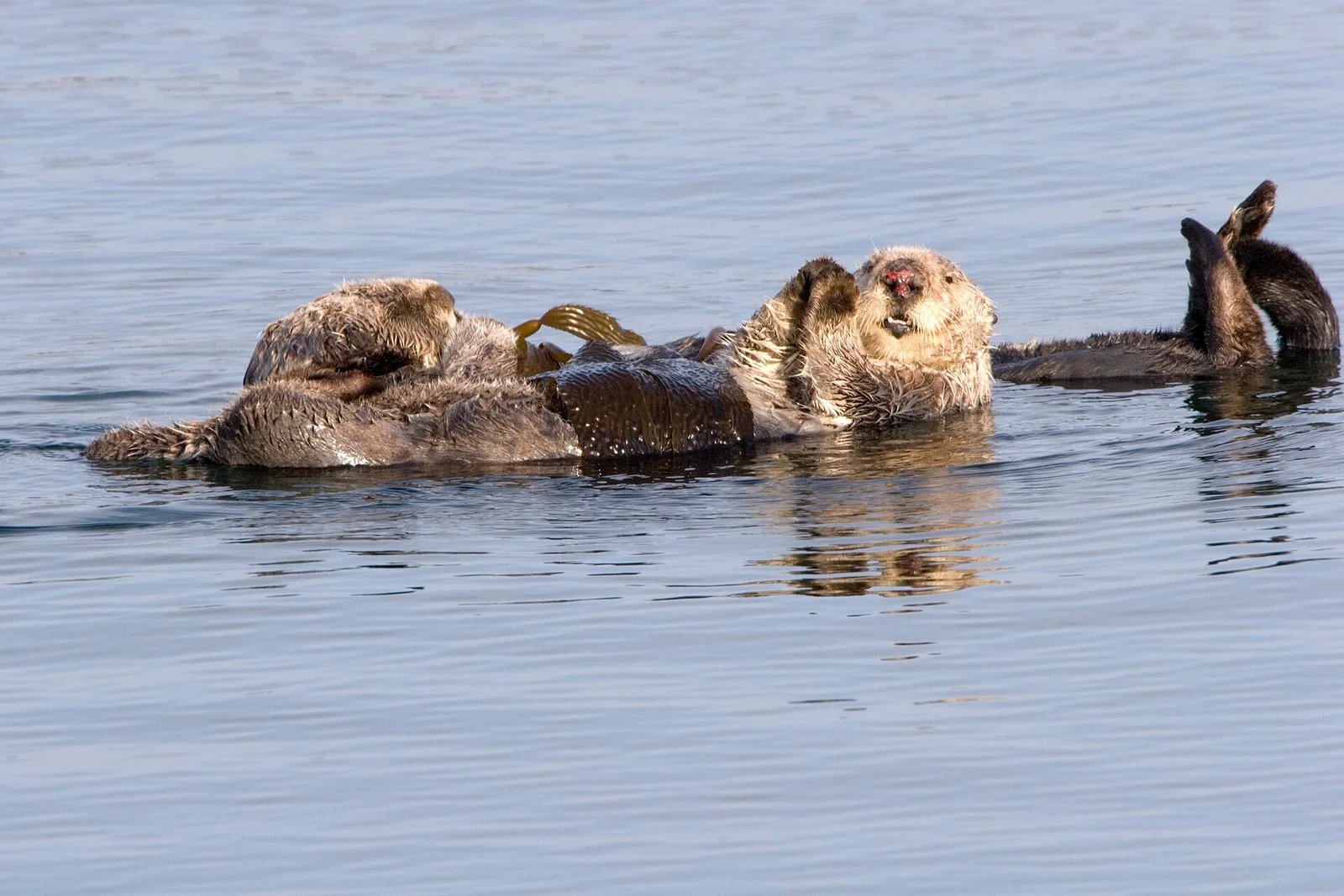
The sea otter is the textbook 'keystone species' of coastal marine ecology. By preying heavily on herbivorous sea urchins, otters prevent 'urchin barrens' from clear-cutting giant kelp forests (Macrocystis pyrifera). Where sea otters thrive, underwater kelp canopies flourish, Sequestering millions of tons of atmospheric carbon, buffering shorelines against storm surge, and providing nursery habitat for rockfish, sea bass, abalone, and harbor seals. In estuaries like Elkhorn Slough, sea otters also protect eelgrass beds by eating crabs, allowing sea slugs to keep seagrass blades clean of smothering algae.
Conservation Outlook
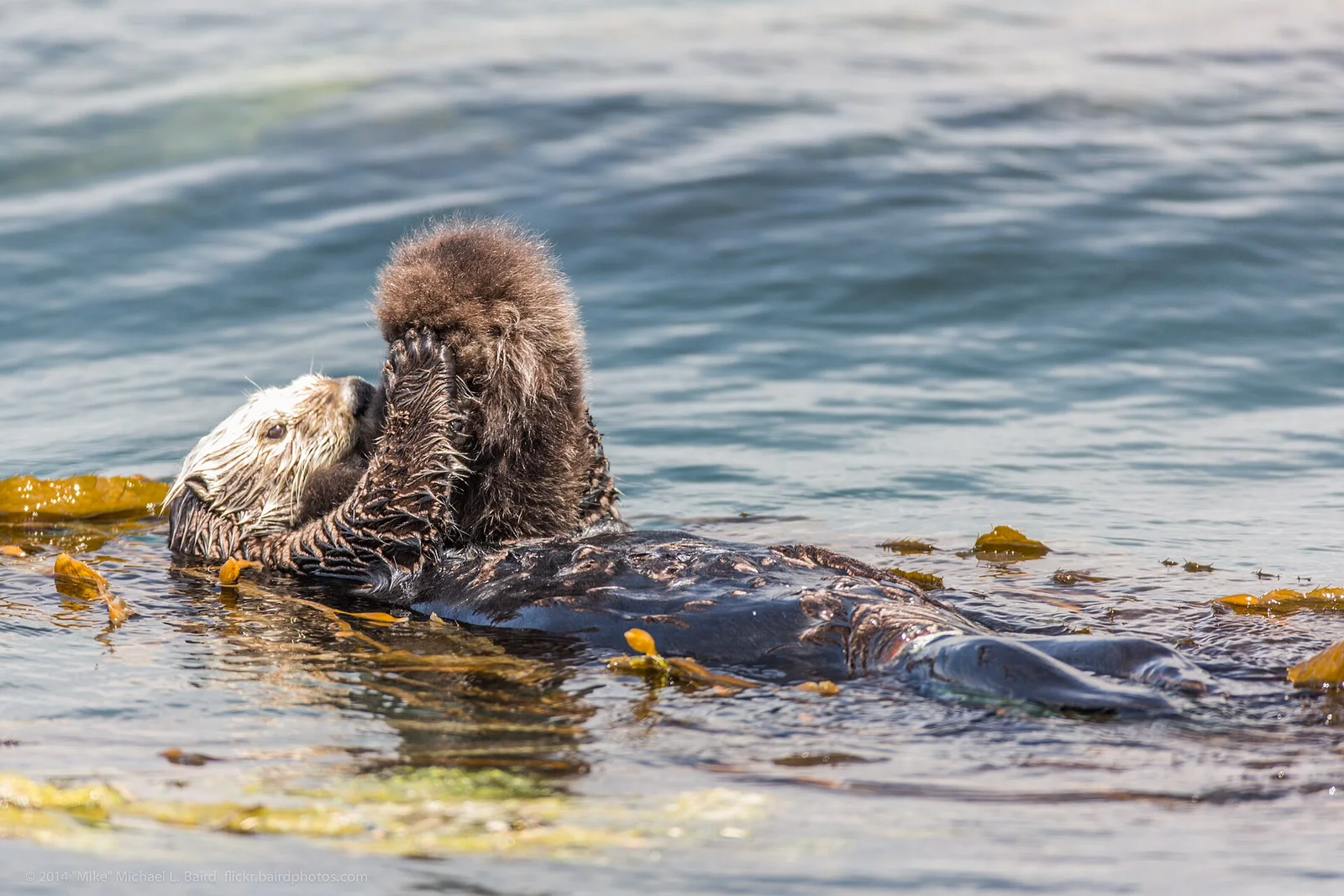
Between 1741 and 1911, commercial maritime fur traders slaughtered nearly one million sea otters, reducing the global population to fewer than 2,000 survivors in 13 remnant colonies—and just 50 individuals off Big Sur, California. Protected by the 1911 International Fur Seal Treaty and the U.S. Marine Mammal Protection Act, populations rebounded to around 125,000, yet the species remains Endangered (EN) on the IUCN Red List. Major threats include catastrophic oil spills (which mat their fur and cause fatal hypothermia), great white shark bites, killer whale predation in the Aleutian Islands, harmful algal toxins (domoic acid), and protozoal parasites from coastal runoff.
Key Takeaways
- 1
Sea otters possess the densest fur of any animal on Earth, with up to 150,000 hairs per square centimeter.
- 2
They keep a favorite rock tucked in a loose pouch of skin under their armpit to hammer open clams and sea urchins.
- 3
To keep from drifting apart while sleeping, sea otters wrap themselves in giant kelp fronds or hold paws in floating rafts.