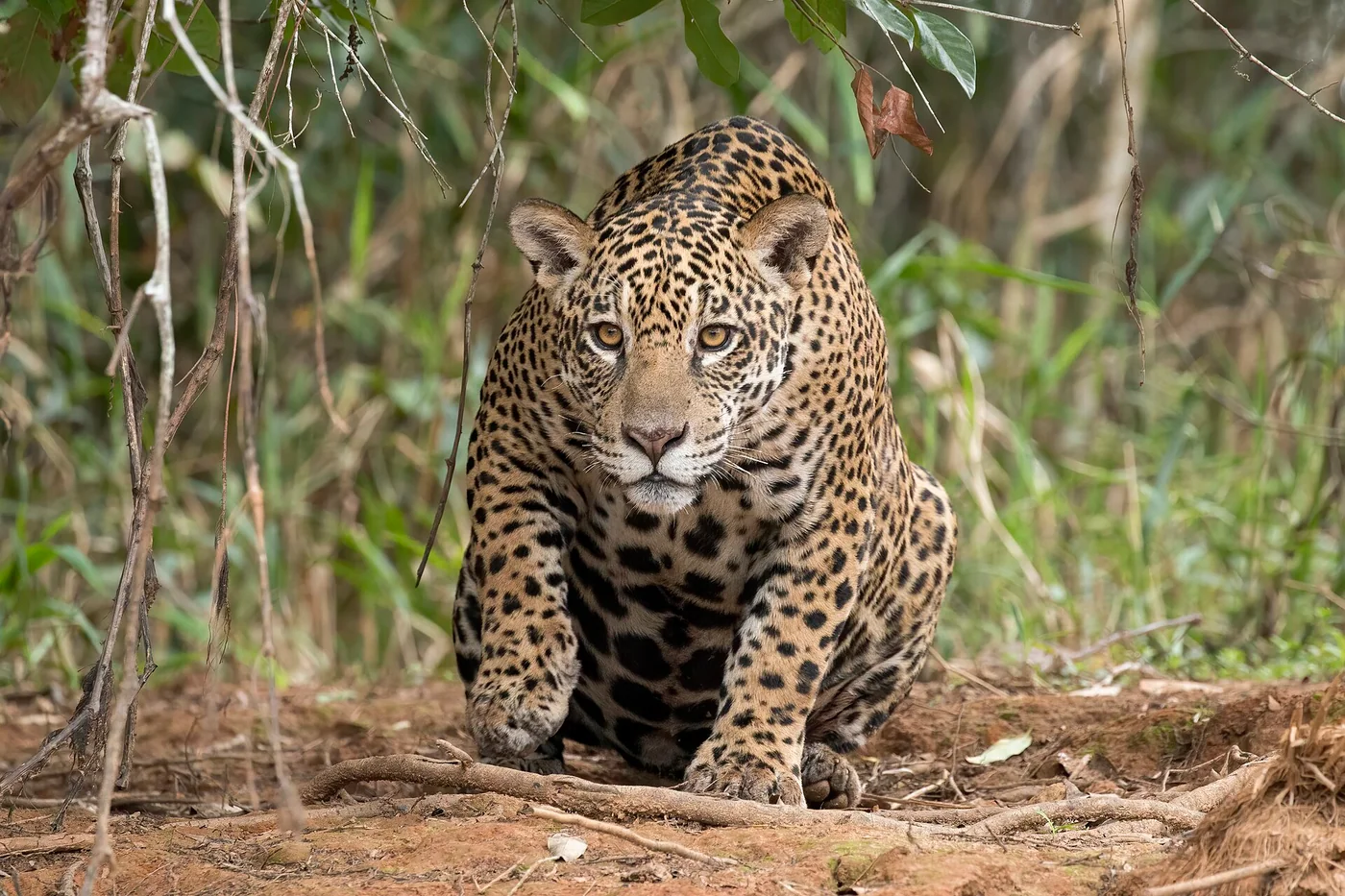
Jaguar
Panthera onca
Apex roaring cat of the Americas with a skull-piercing bite and river-hunting mastery
Quick Read
FelidaeOverview
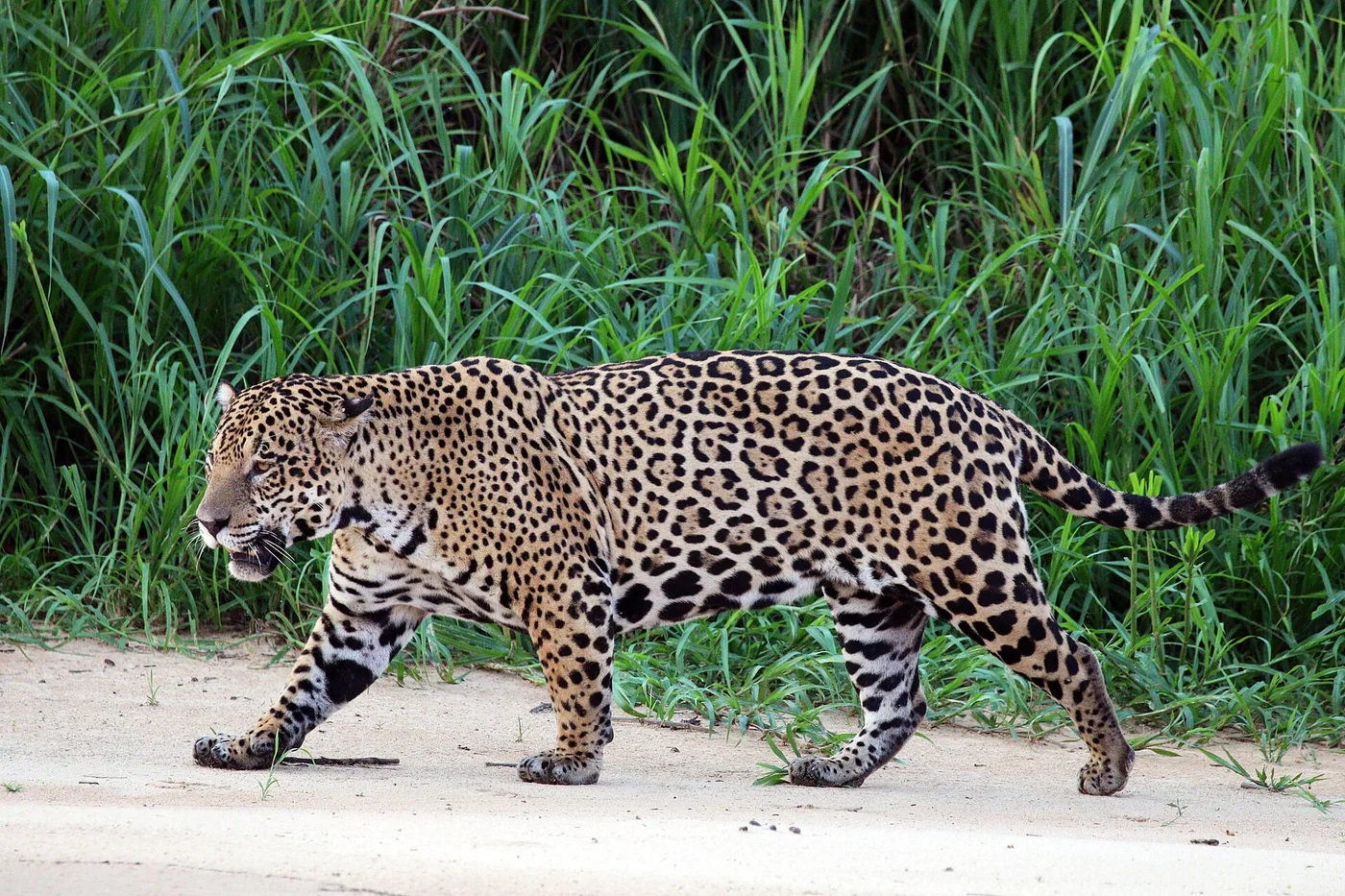
The jaguar is the largest wild cat of the Americas—a stocky, water-loving ambush predator crowned by polygonal black rosettes with central dots. Equipped with the strongest bite force relative to size among big cats, it rules Amazonian rainforests and Pantanal rivers by preying on capybaras, peccaries, and armored caimans.
Habitat & Range
The jaguar is the largest native felid of the Americas and the third-largest big cat on Earth after the tiger and lion. Historically ranging from the southwestern United States (Arizona, New Mexico, and Texas) to central Argentina, it now occupies roughly half of its former distribution across 18 Latin American countries—with occasional wandering males still photographed on camera traps in southern Arizona's borderlands. The Amazon Basin holds nearly 80% of the global population, complemented by premier strongholds in Brazil's Pantanal wetlands, the Mayan Forest of Mexico, Guatemala, and Belize, the Orinoco Llanos of Colombia and Venezuela, and rewilded wetlands in Argentina's Iberá National Park.
How to Identify It
Built for explosive power rather than marathon pursuit, the jaguar has a compact, heavily muscled torso, relatively short thick legs, large paws, and a disproportionately broad, rounded head housing massive jaw muscles. Coat color ranges from pale gold to rich rufous-tan on the back and white on the throat and belly, patterned with large polygonal black rosettes that almost always enclose one to several smaller central black dots—the quickest field mark distinguishing a jaguar from an Old World leopard (Panthera pardus), whose smaller rosettes lack interior spots. Around 6% to 10% of jaguars exhibit melanism—a dominant MC1R gene mutation producing 'black panthers' whose underlying rosettes remain visible in bright sunlight. Pantanal floodplains host the largest individuals, where big males routinely exceed 115–135 kg.
Diet & Hunting
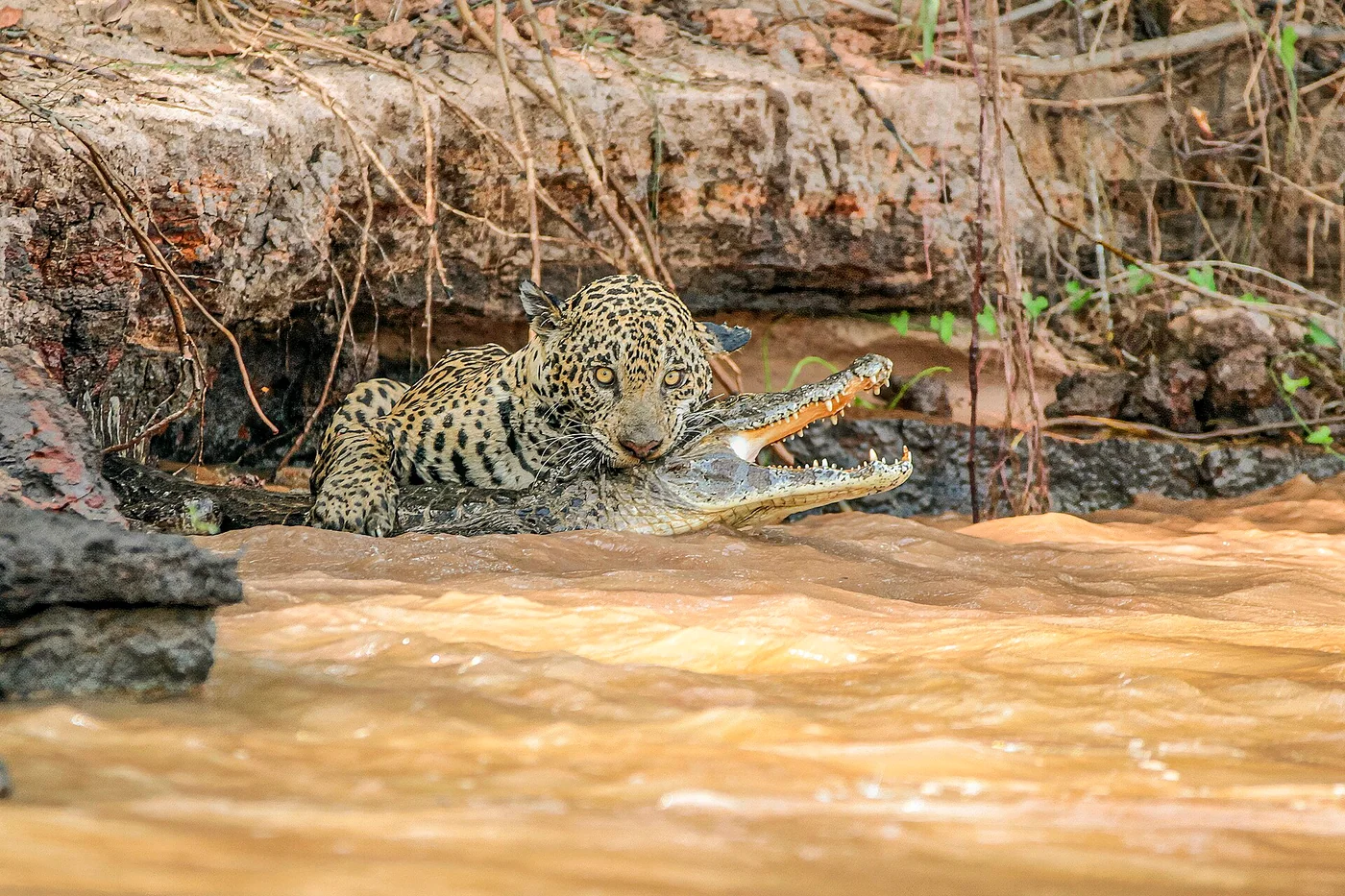
An opportunistic obligate carnivore documented feeding on more than 85 prey species, the jaguar possesses the strongest bite force relative to body size of any living felid—capable of exerting roughly 6,000 to 6,800 newtons at the carnassial and canine teeth. Whereas lions, tigers, and leopards typically kill large prey via throat or muzzle suffocation, the jaguar frequently dispatches mammalian and reptilian quarry—such as yacare and spectacled caimans, capybaras, collared and white-lipped peccaries, marsh deer, giant anteaters, and tapirs—by driving its thick canines directly through the temporal bones of the skull between the ears to pierce the brain. Its jaw strength also enables it to crack open the heavily armored shells of yellow-spotted river turtles and land tortoises.
Behavior
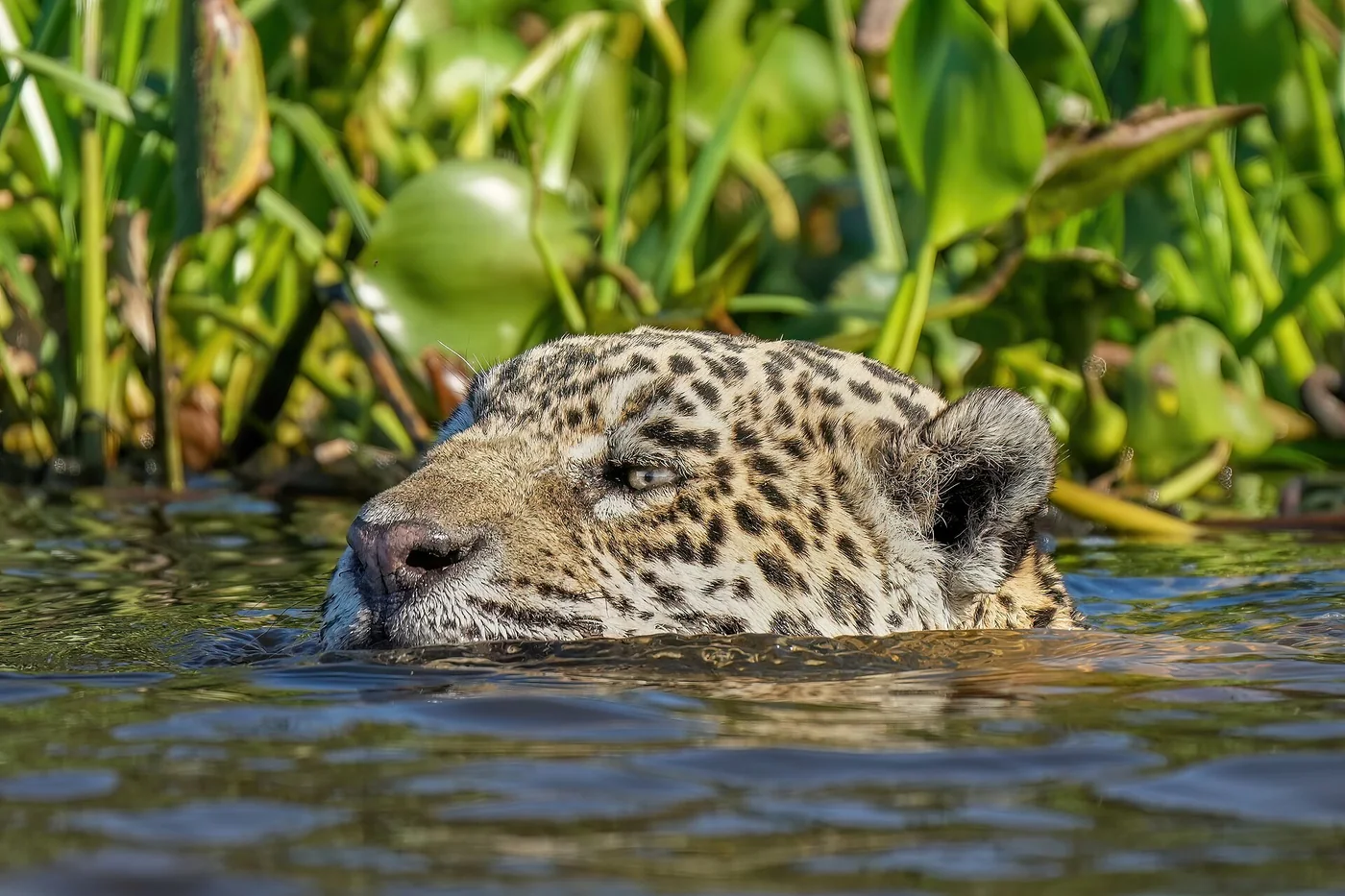
Adult jaguars are predominantly solitary, territorial ambush predators that patrol home ranges spanning 25–50 km² for females in prey-rich floodplains up to more than 400 km² for males in drier scrublands like the Gran Chaco. Unlike most felids that avoid deep water, jaguars share the tiger's strong affinity for aquatic habitats: they swim across wide Amazonian and Pantanal rivers, dive after fish and caimans, and rest on overhanging riverbank boughs during midday heat. Activity is cathemeral with strong peaks around dawn and dusk. Males advertise territory through claw-raked tree scrapes, scent spraying, and deep, repetitive guttural 'sawing' roars—resembling a hoarse cough—answered by receptive females.
Life Cycle
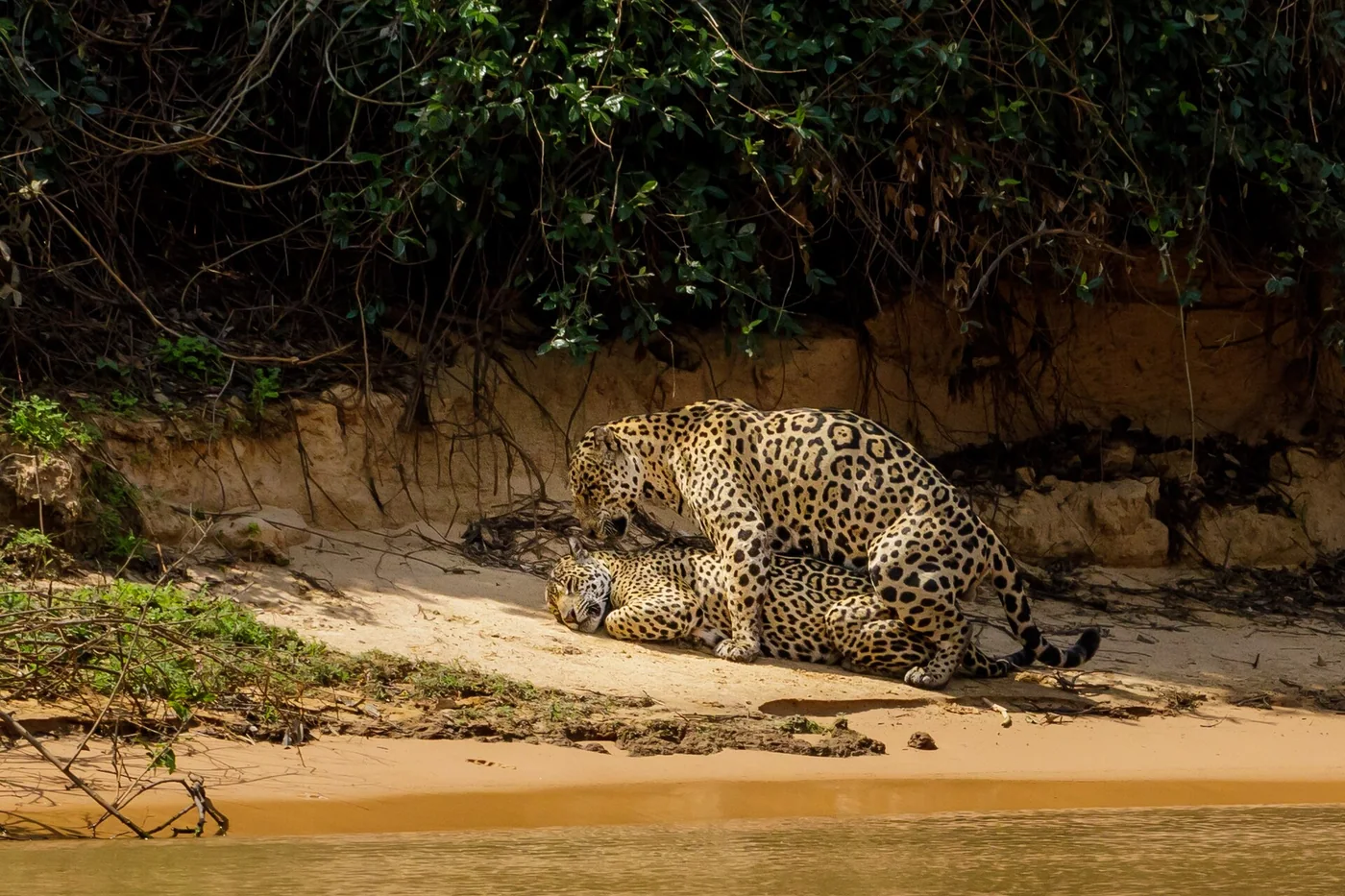
Jaguars have no strict breeding season, though births in seasonal floodplains often peak when prey concentrates along receding waters or lush wet-season growth. Following a brief courtship lasting several days—after which the male plays no role in parenting—gestation lasts 93 to 105 days. The mother selects a concealed den inside a hollow tree, riverbank cave, or dense thicket to deliver 1 to 4 blind, heavily spotted cubs weighing 700–900 grams each. Cubs open their eyes at two weeks, begin accompanying their mother on hunts around 5 to 6 months, and remain dependent on her for 18 to 24 months before dispersing to establish independent territories.
Role in the Ecosystem
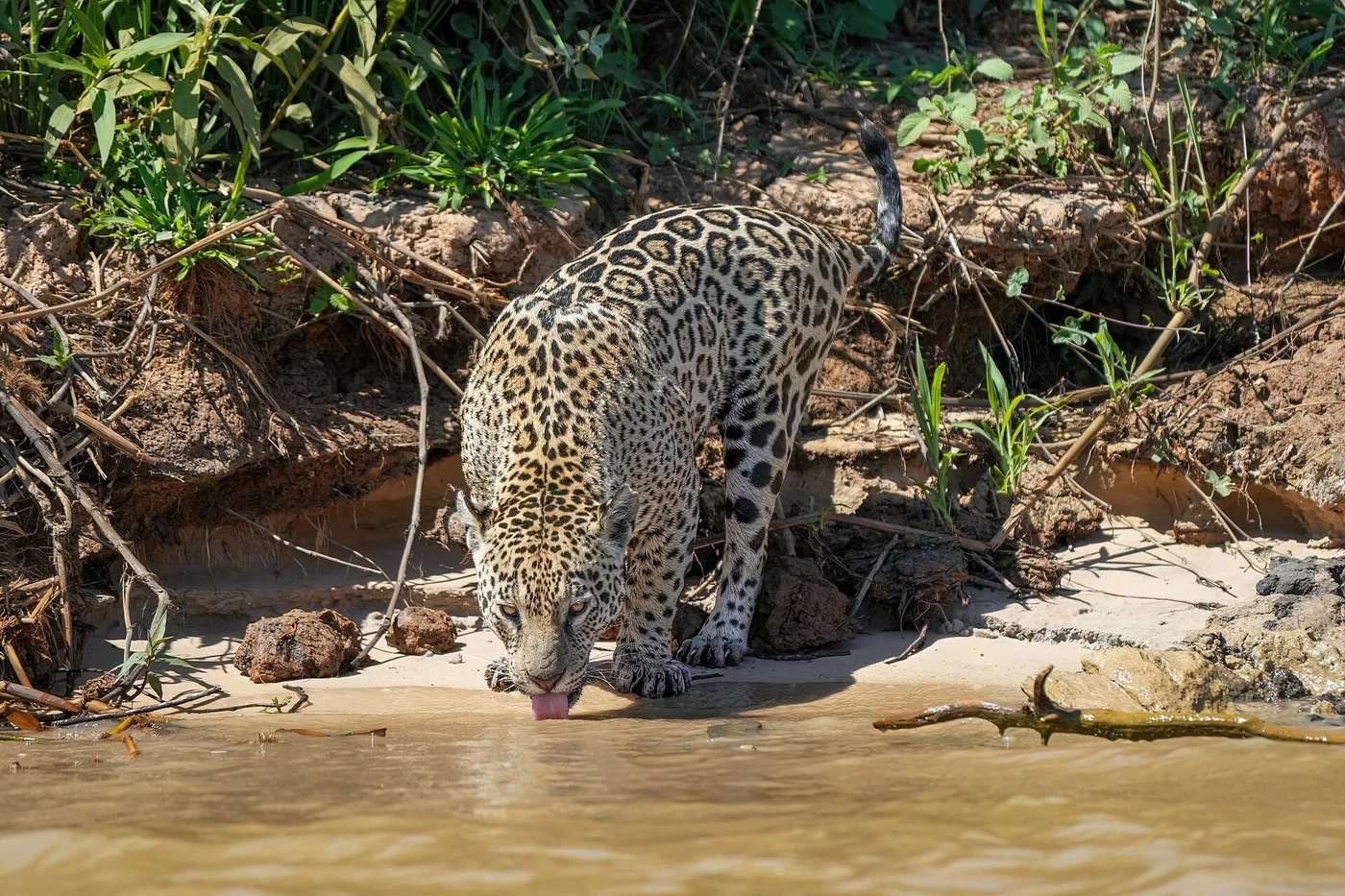
As the apex terrestrial and semi-aquatic predator of the Neotropics, the jaguar exerts top-down trophic control across rainforests, flooded savannas, and dry Chaco woodlands. By preying heavily on prolific medium-to-large seed predators and browsers—especially white-lipped peccaries, capybaras, agoutis, and deer—jaguars prevent localized overbrowsing of forest seedlings and safeguard plant diversity. Along Pantanal rivers, their intense predation on yacare caimans regulates reptile density and redistributes aquatic nutrients onto riverbanks.
Conservation Outlook
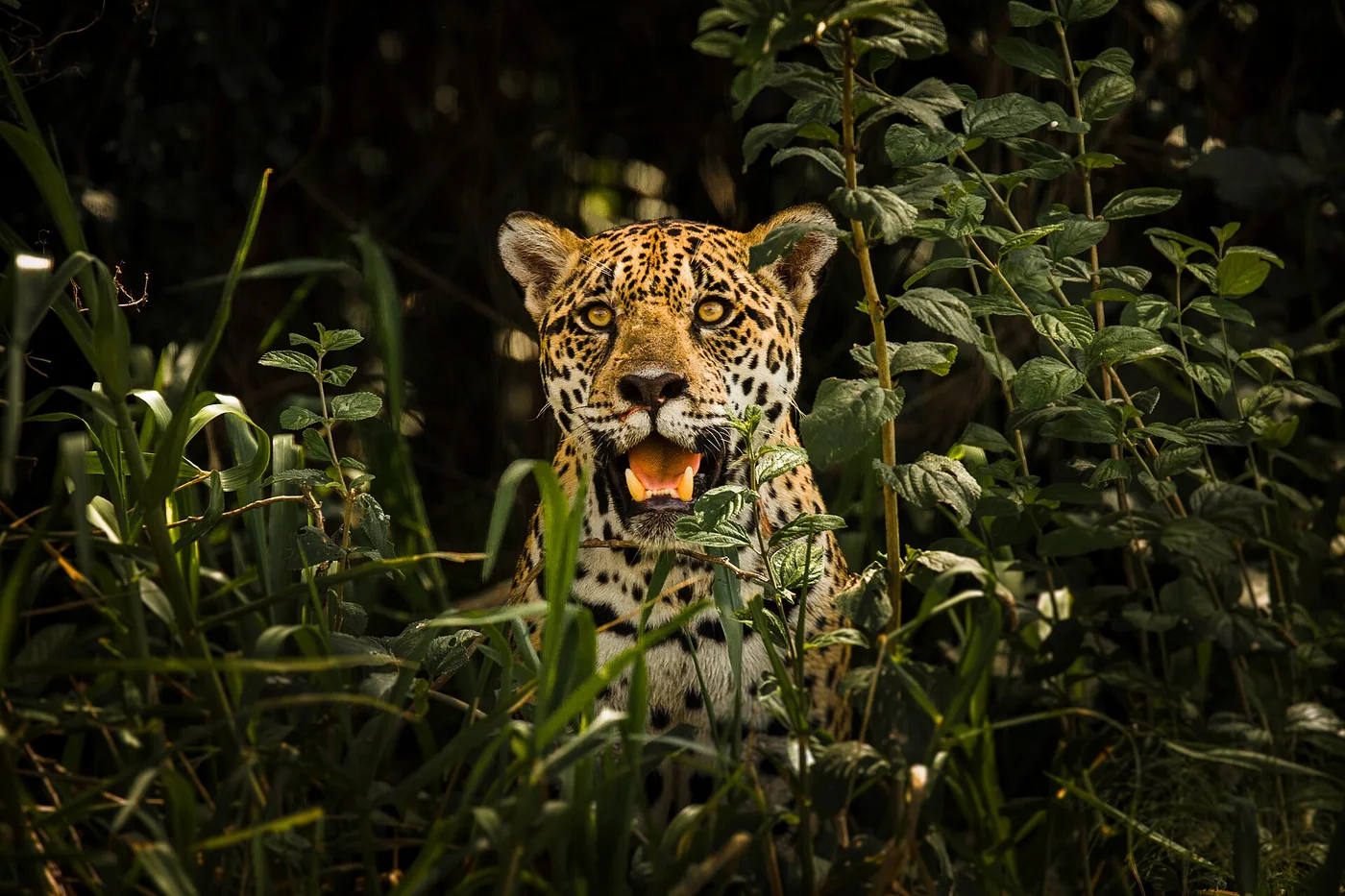
Assessed globally as Near Threatened (NT) on the IUCN Red List, the jaguar is already extinct in El Salvador and Uruguay, and most subpopulations outside the core Amazon Basin—such as those in the Brazilian Atlantic Forest and Argentine Gran Chaco—are Critically Endangered. Major threats include rapid deforestation for cattle ranching and soy agriculture, retaliatory shooting over livestock depredation, wildfires in the Pantanal, poaching for fangs and paste trafficked into illegal wildlife markets, and highway fragmentation. Landmark initiatives such as Panthera's 'Jaguar Corridor Initiative' (linking 18 range states along the Paseo del Jaguar), ecotourism-driven ranch coexistence in the Pantanal (Onçafari), and successful reintroduction into Iberá, Argentina, anchor modern recovery efforts.
Key Takeaways
- 1
Pound for pound, the jaguar has the strongest bite of any big cat, able to pierce a caiman's skull or crack hard river turtle shells.
- 2
Unlike leopards, a jaguar's large polygonal rosettes enclose smaller black spots inside them—an instant field identification clue.
- 3
The Indigenous Tupi-Guarani word 'yaguara' translates roughly to 'a beast that overcomes its prey in a single bound.'