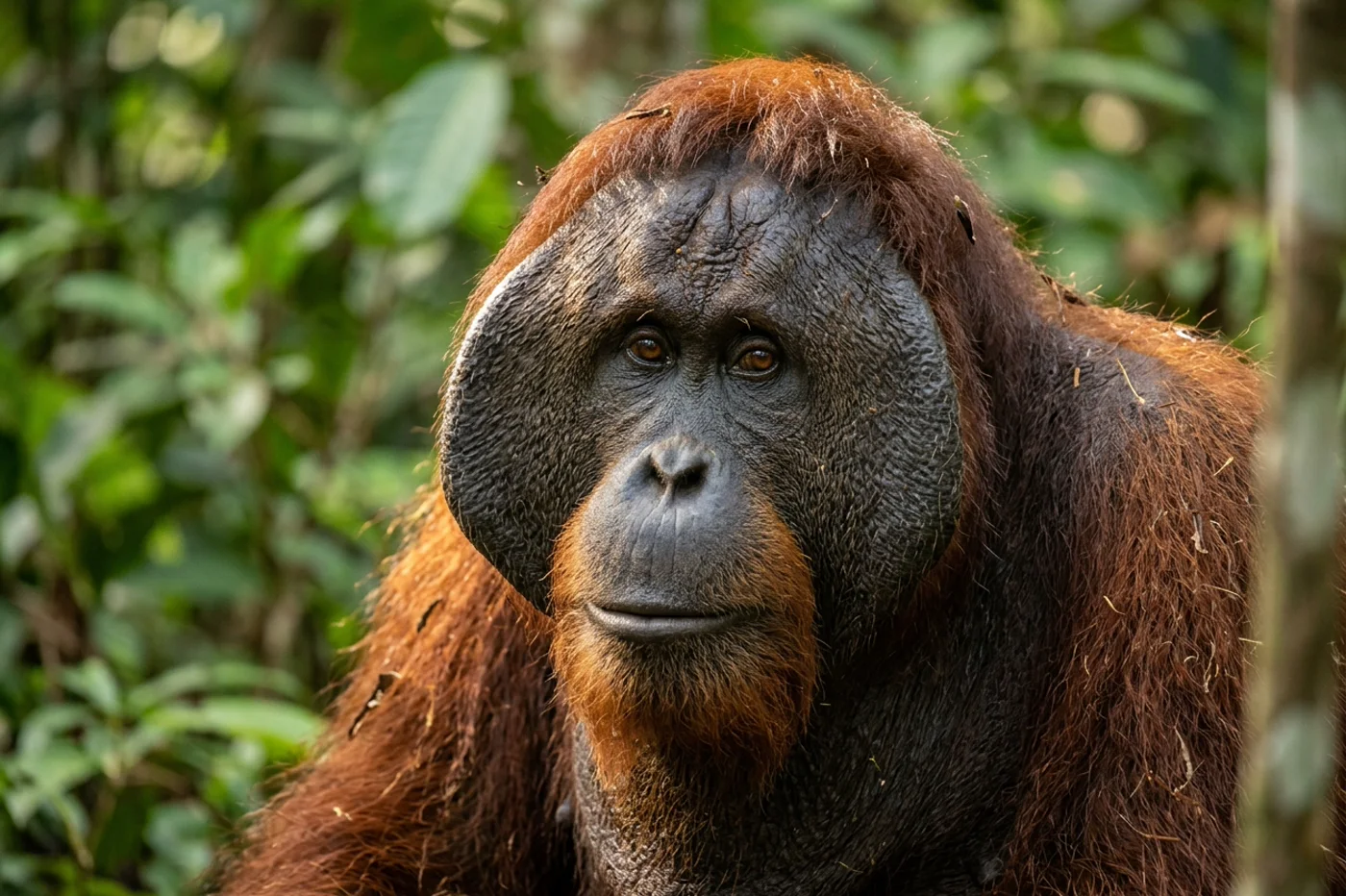
Bornean Orangutan
Pongo pygmaeus
Red-haired canopy architect and keystone seed disperser of Borneo's lowland rainforests
Quick Read
HominidaeOverview
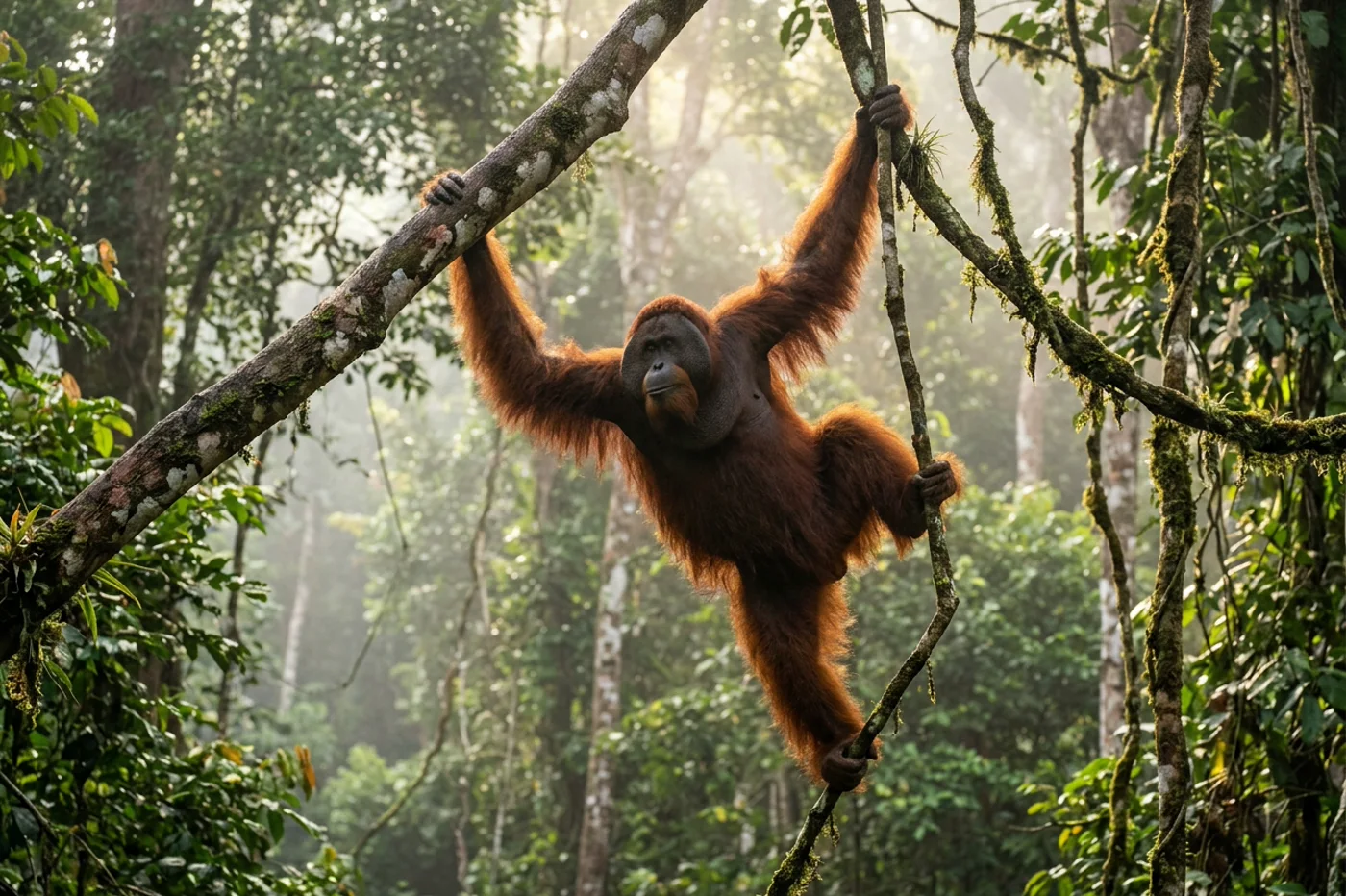
Endemic to the equatorial forests of Borneo as the world's largest arboreal mammal, the Bornean Orangutan (Pongo pygmaeus) spends over 90 percent of its life high in the rainforest canopy. Renowned for weaving a fresh treetop sleeping nest every evening, dispersing seeds from more than 500 plant species, and nurturing its single offspring for up to eight years, this Critically Endangered great ape faces severe habitat loss from palm oil expansion and peatland fires.
Habitat & Range
Endemic to the equatorial island of Borneo in Southeast Asia, the Bornean Orangutan (Pongo pygmaeus) occupies a fragmented distribution across Indonesian Kalimantan and the East Malaysian states of Sabah and Sarawak, while being largely absent from the island's southeastern corner. Three geographically distinct subspecies are recognized: the Northwest Bornean Orangutan (P. p. pygmaeus) in Sarawak and northwestern Kalimantan, the Northeast subspecies (P. p. morio) in Sabah and East Kalimantan north of the Mahakam River, and the populous Central or Southwest subspecies (P. p. wurmbii) across Central and West Kalimantan. Populations concentrate below 500 meters—and rarely above 1,000 meters—within alluvial riverine forests, nutrient-rich lowland peat-swamp forests, and hill dipterocarp rainforests bounded by major impassable rivers.
How to Identify It
As the world's largest arboreal mammal and the third-heaviest living nonhuman primate, the Bornean Orangutan displays pronounced sexual dimorphism and coarse, shaggy reddish-orange to maroon hair that is darker and sparser than that of its Sumatran relative. Adult males stand 97 to 150 centimeters upright, span 2.0 to 2.25 meters from fingertip to fingertip, and weigh 50 to 90 kilograms (averaging 87 kilograms), whereas adult females average 78 centimeters in height and 37 kilograms (range 30 to 50 kilograms). Mature males exhibit striking bimaturism: dominant flanged males develop broad fibrous cheek pads, a sagittal skull crest anchoring powerful temporalis muscles, and a pendulous throat sac, while sexually fertile unflanged males retain female-sized proportions for years.
Diet & Hunting
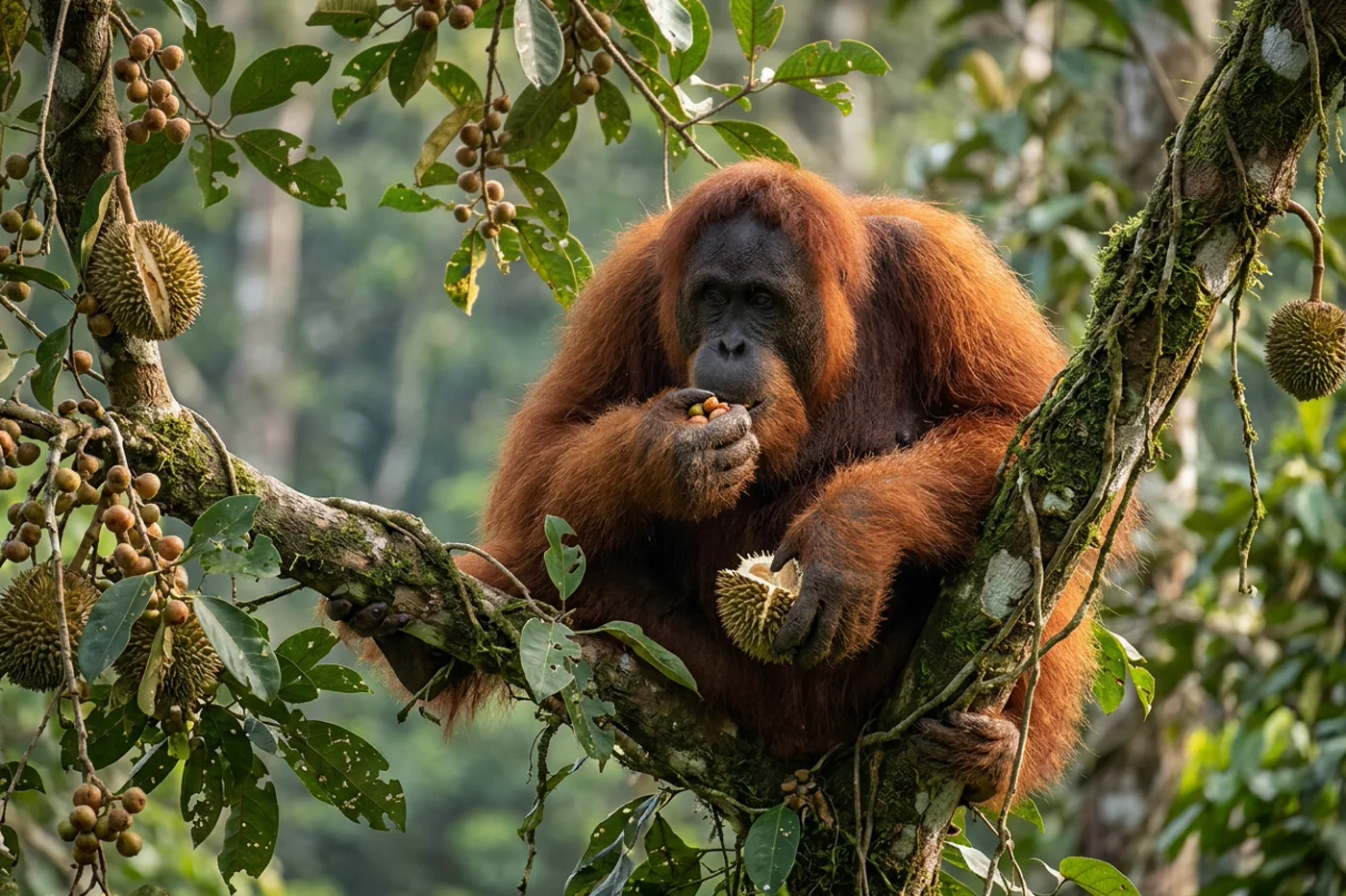
Bornean Orangutans are specialized canopy frugivores whose documented diet spans more than 500 plant species, with ripe wild figs (Ficus) and pungent spiny durians (Durio) accounting for over 60 percent of their total caloric intake. Adults forage avidly for two to three hours each morning, using mobile sensitive lips, opposable big toes, and powerful jaws to strip tough husks and crack hard seeds. During irregular inter-mast lean periods when fruiting trees are scarce, they subsist on young leaves, shoots, flowers, inner cambium bark, rattan stems, wild honey, termites, ants, bird eggs, and mineral-rich soil (geophagy) that neutralizes plant toxins, while metabolizing stored body fat via hepatic ketones and applying chewed Dracaena cantleyi leaf lather externally.
Behavior
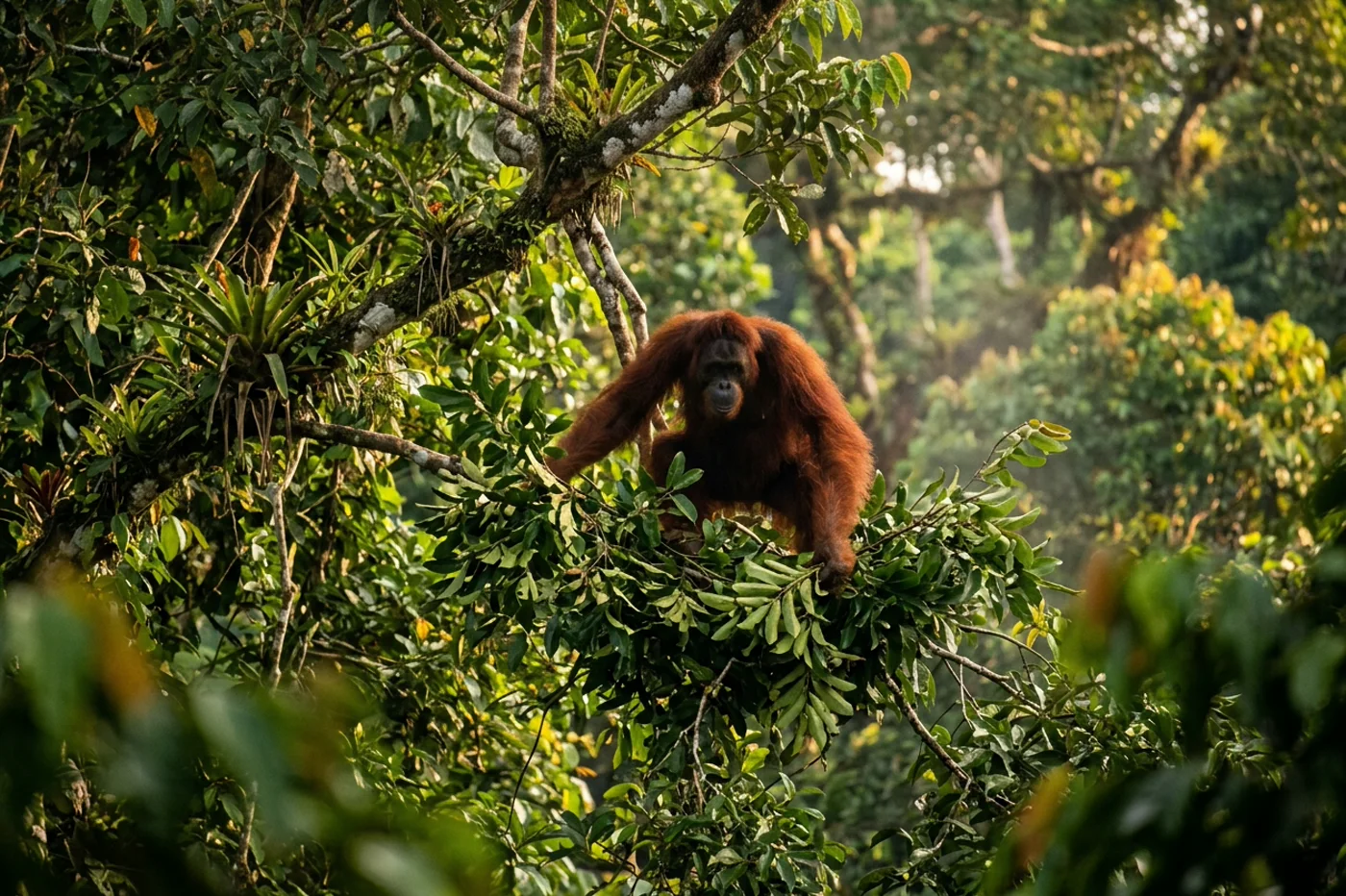
Spending over 90 percent of their lives in the forest canopy, Bornean Orangutans move by deliberate quadrumanous clambering and tree-swaying, gripping branches equally with long curved fingers and hook-like hands and feet. When descending to the forest floor—more frequently than Sumatran orangutans due to the historical absence of tigers on Borneo—they walk quadrupedally on clenched fists rather than knuckles. Predominantly semi-solitary, adult males patrol overlapping 2-to-6-square-kilometer home ranges and broadcast resonant one-to-two-minute long calls audible up to 1.6 kilometers away to repel rivals and attract receptive females. Every evening, each independent orangutan constructs a fresh ergonomic sleeping nest 12 to 18 meters high, adding leafy pillows, blankets, and rain roofs.
Life Cycle
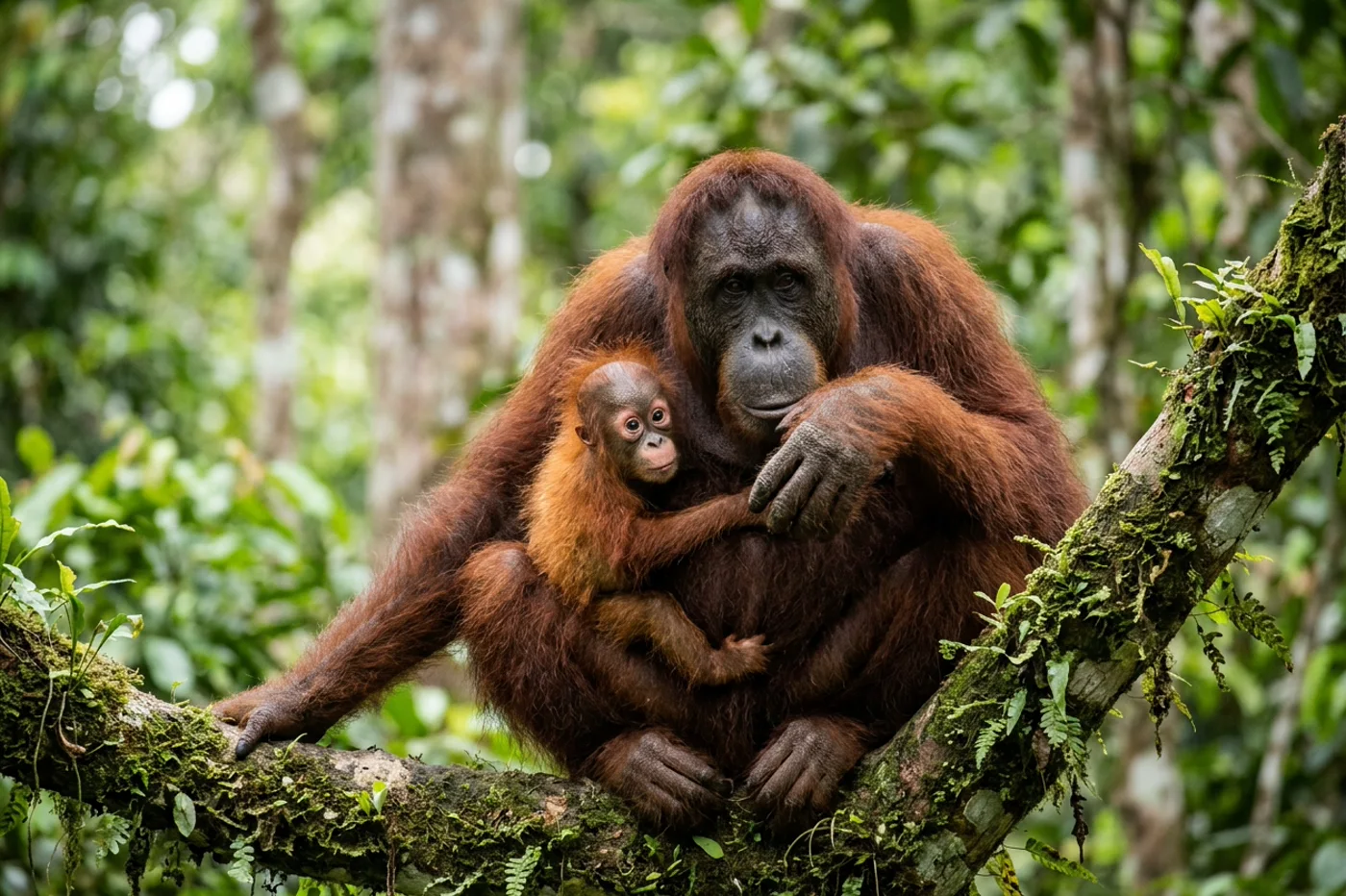
Bornean Orangutans have the slowest life history and longest interbirth interval of any terrestrial mammal, with wild females giving birth only once every 6 to 8 years and producing just four to five offspring across a lifetime. Females reach sexual maturity between 10 and 15 years of age and typically conceive during mast-fruiting peaks after seeking out resident flanged males. Following a gestation period of 233 to 263 days (averaging 245 days, or roughly eight months), the female delivers a single infant—rarely twins—high in the canopy. The infant clings continuously to its mother's ventral fur for the first four months, nurses for up to 6 to 7 years, practices juvenile nest-building from age five, and remains dependent for 7 to 9 years.
Role in the Ecosystem
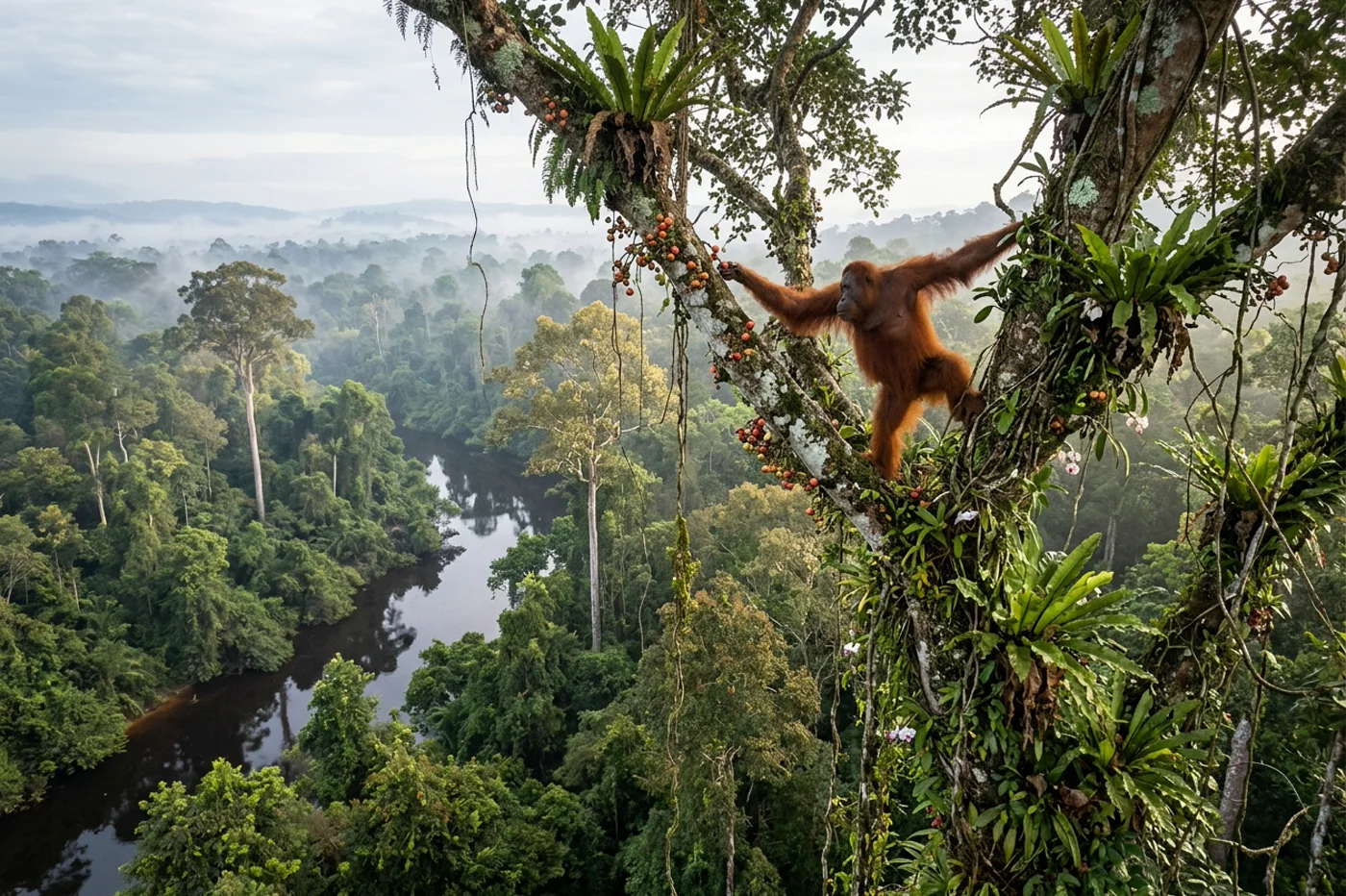
Widely celebrated by tropical ecologists as the keystone gardeners of Borneo's rainforests, Bornean Orangutans drive canopy regeneration by swallowing and transporting large-seeded tree species that smaller frugivorous birds and gibbons cannot process. Field researchers have recorded up to 828 intact seeds—some measuring 2.5 centimeters long—within a single fecal deposit, with gut passage and spatial dispersal across multi-kilometer home ranges significantly boosting germination success. Their daily pruning of branches during foraging and nightly nest construction also opens sunlit canopy gaps that stimulate understory seedling recruitment and sustain diverse dipterocarp and peat-swamp plant communities.
Conservation Outlook
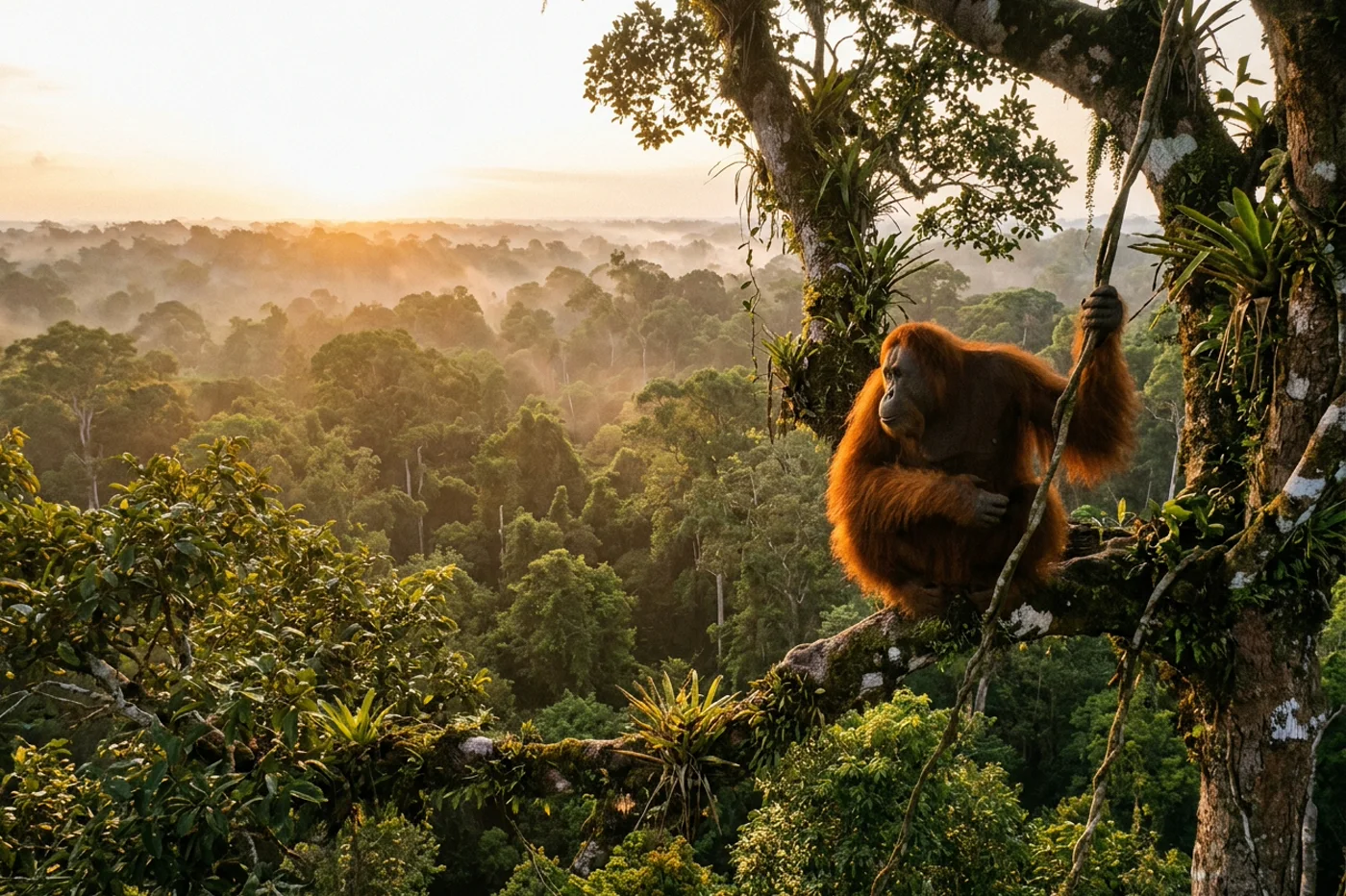
Uplisted to Critically Endangered (CR) on the IUCN Red List in 2016 and listed on CITES Appendix I, the Bornean Orangutan has lost more than 50 percent of its population over the past 60 years and at least 55 percent of its viable forest habitat in two decades, leaving roughly 104,700 individuals across fragmented strongholds. Primary drivers include industrial deforestation for oil palm plantations, illegal selective logging, coal mining, catastrophic peatland wildfires—such as the 1997–1998 Kalimantan fires that killed up to 8,000 orangutans—retaliatory agricultural killings, and the illegal pet trade claiming 200 to 500 infants annually. Conservation strategies center on safeguarding Tanjung Puting, Sebangau, Gunung Palung, Danum Valley, and Kinabatangan corridors while expanding Borneo Orangutan Survival Foundation rehabilitation releases.
Key Takeaways
- 1
Slowest-breeding mammal on Earth, with wild females giving birth only once every 6 to 8 years and nursing and mentoring each offspring for 7 to 9 years.
- 2
Every evening, each independent Bornean Orangutan weaves a brand-new treetop sleeping nest 12 to 18 meters high, complete with leafy pillows and rain shelters.
- 3
Known as the 'gardeners of the forest', they consume over 500 plant species and have been recorded carrying up to 828 intact seeds in a single fecal deposit.