Emperor Penguin
Aptenodytes forsteri
Deep-diving winter breeder enduring polar night across Antarctica's vanishing coastal fast ice
Quick Read
SpheniscidaeOverview
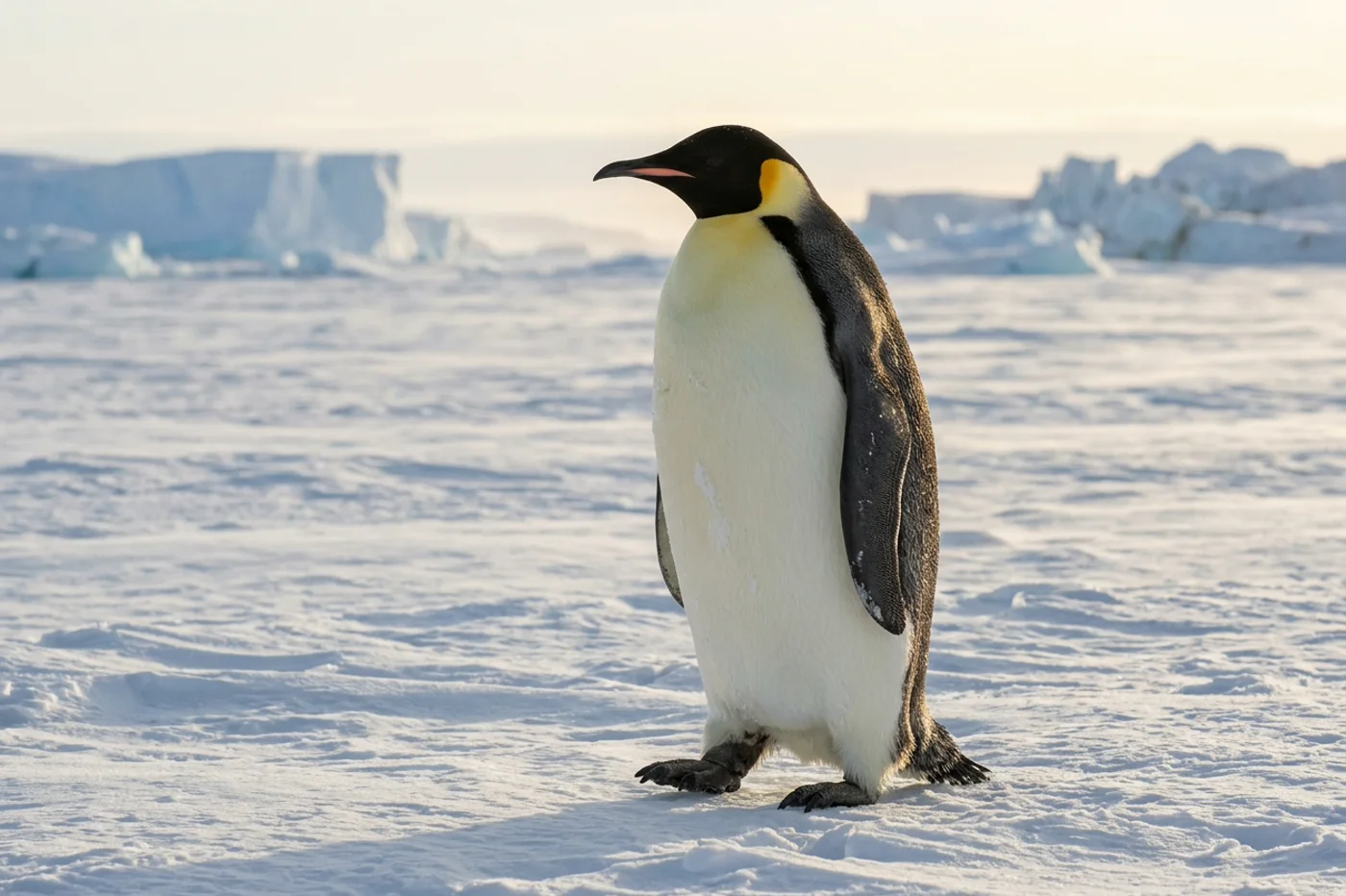
Standing over a meter tall as the largest living penguin, the Emperor Penguin (Aptenodytes forsteri) is the only animal on Earth to breed during the brutal Antarctic winter. Renowned for 565-meter ocean dives and cooperative huddling by fasting males through polar blizzards, this circumpolar sentinel was uplisted to Endangered by the IUCN in April 2026 as warming seas destabilize its fast-ice nurseries.
Habitat & Range
Endemic to the Southern Ocean and the Antarctic continent, the Emperor Penguin maintains a circumpolar distribution largely between 66°S and 78°S latitude, with rare vagrants reaching Tierra del Fuego, Islas de los Estados, and the Falkland Islands. More than 60 breeding colonies ring the Antarctic coastline from the Weddell Sea and Queen Maud Land east through Mawson Coast to Victoria Land and the Ross Sea, including major strongholds at Cape Washington and Coulman Island. From April through December, adults depend on stable land-fast sea ice locked between coastal headlands, ice shelves, and grounded icebergs that buffer crosswinds, whereas non-breeding and post-fledging birds disperse across seasonal pack-ice zones and open pelagic waters.
How to Identify It
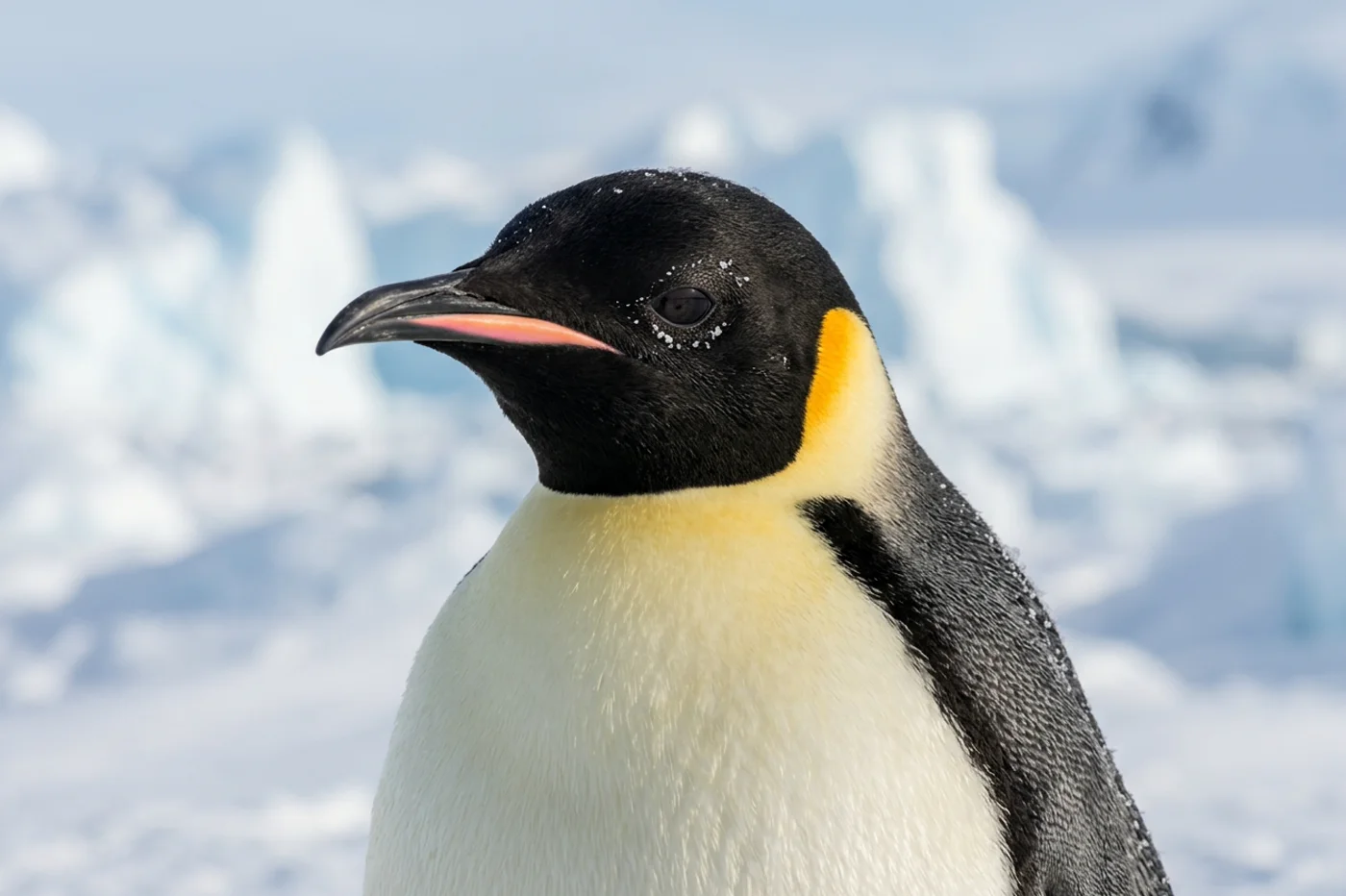
Standing 101 to 132 centimeters tall with a flipper span of 76 to 89 centimeters and a body mass fluctuating between 22 and 45 kilograms across the annual fasting cycle, the Emperor Penguin is the tallest and heaviest of all 18 living penguin species. Both sexes share identical plumage featuring a slate-black dorsal mantle, head, chin, and throat sharply demarcated from a white belly that washes pale lemon-yellow across the upper breast, accented by bright golden-orange auricular patches tapering toward the collar. Proportionally small stiff flippers, a decurved 8-centimeter black bill streaked pinkish-orange along the lower mandible, four layers of windproof scale-like feathers, and counter-current vascular heat exchangers minimize polar heat loss.
Diet & Hunting
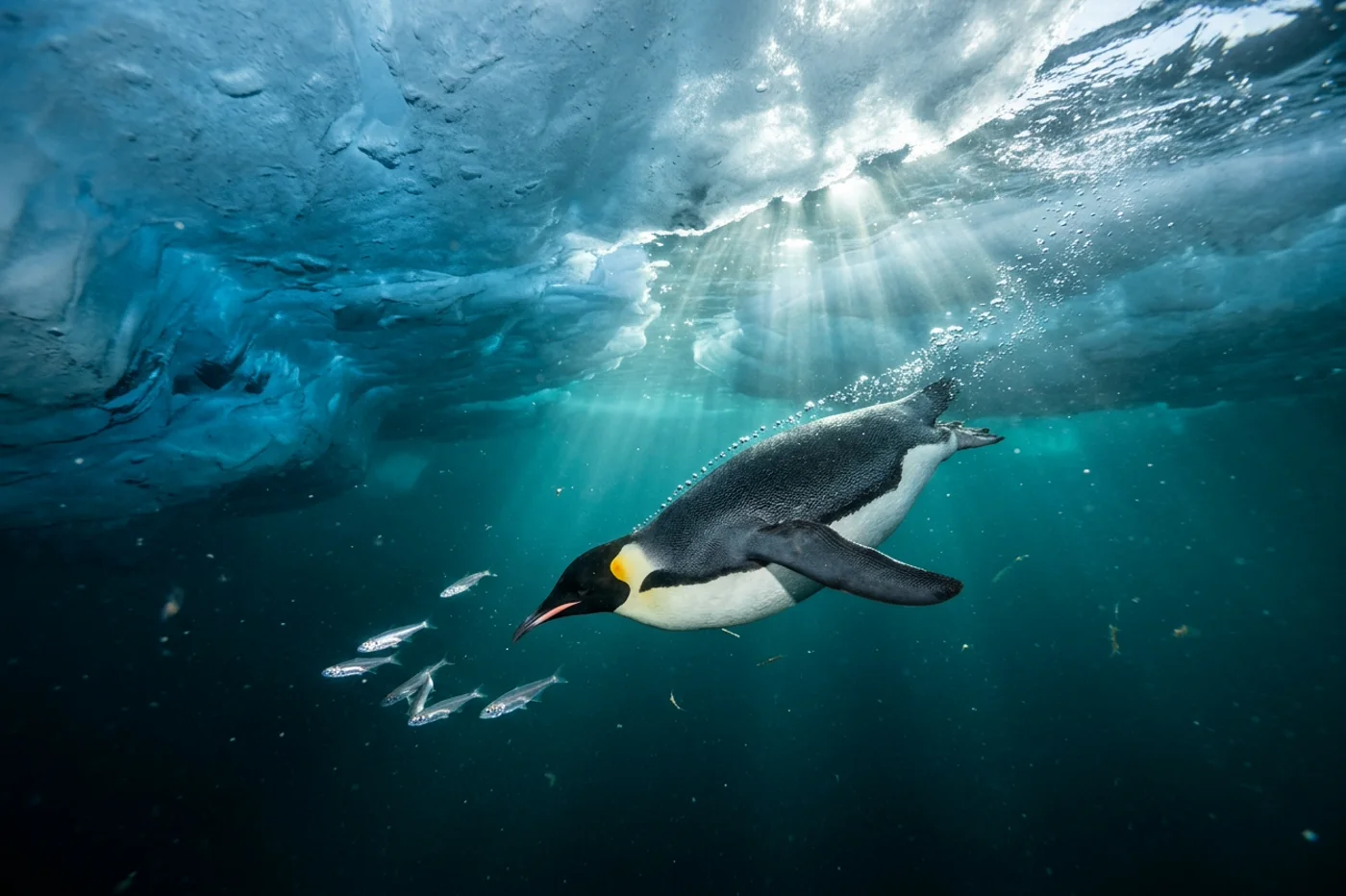
Emperor Penguins are apex avian divers of the Southern Ocean food web, feeding chiefly on pelagic fish, crustaceans, and cephalopods captured beneath pack ice and in coastal polynyas. Across much of East Antarctica and the Ross Sea, Antarctic silverfish (Pleuragramma antarcticum) and other nototheniid fishes form the dietary core, supplemented heavily by Antarctic krill (Euphausia superba), glacial squid (Psychroteuthis glacialis), and hooked squid (Kondakovia longimana), gripped securely by backward-pointing lingual papillae. Routine foraging dives reach 150 to 250 meters for 3 to 6 minutes, though biologgers have documented record dives to 565 meters and submergences lasting 22 minutes; adults consume 2 to 3 kilograms daily and up to 6 kilograms before fasting.
Behavior
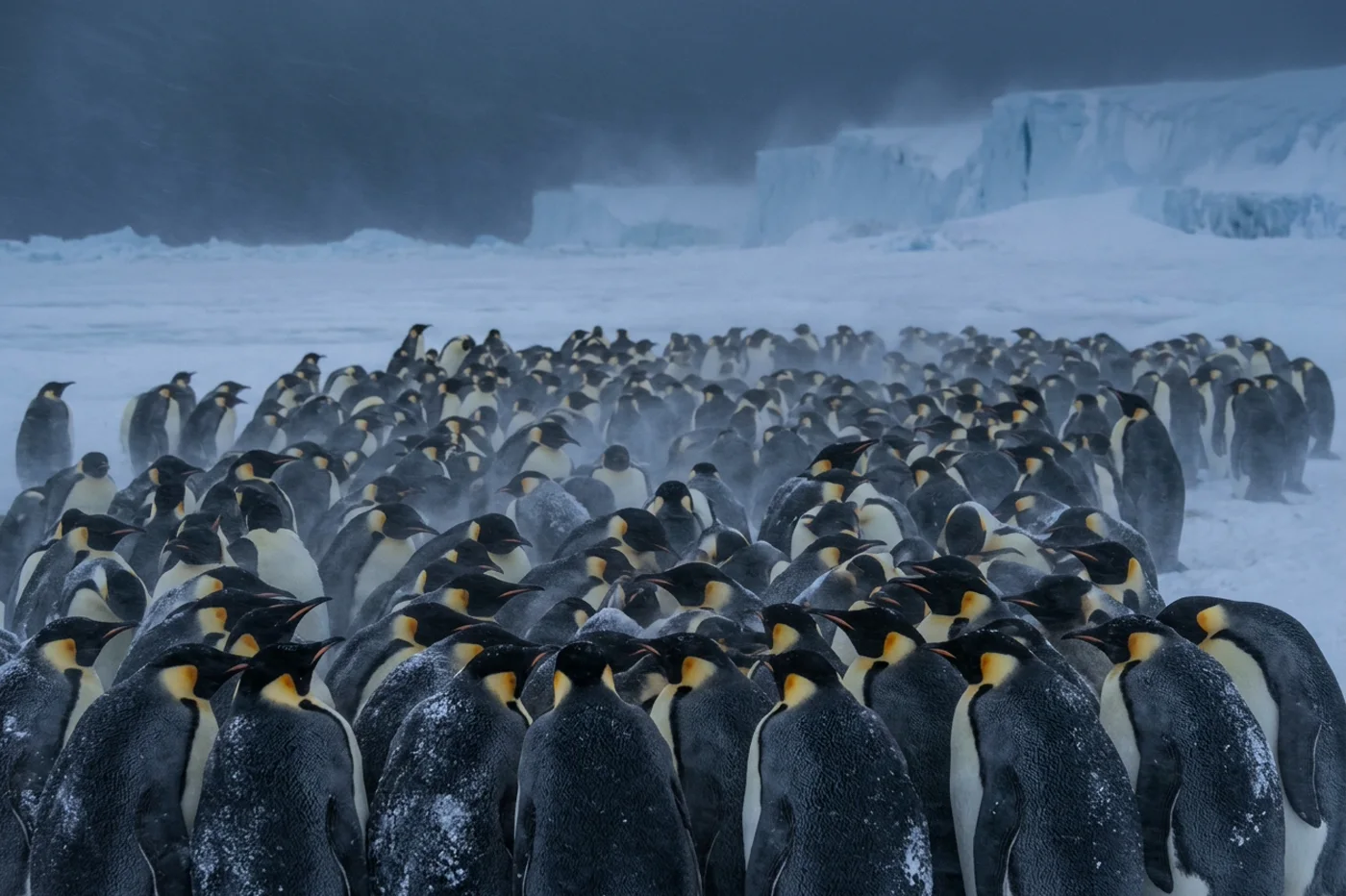
Uniquely among penguins, Emperor Penguins defend no nesting territory, relying instead on extreme social cooperation to survive katabatic blizzards of 200 km/h and ambient winter temperatures dropping below -40°C. Incubating males congregate in dynamic huddles numbering from a few hundred to 5,000 individuals—packing up to ten birds per square meter—which cuts metabolic heat loss by half and raises interior temperatures above +24°C as windward birds peel off and shuffle leeward. On ice, adults alternate upright waddling with energy-saving belly tobogganing and balance on heels and stiff tail feathers to reduce conductive contact, while underwater they cruise at 10 km/h and locate partners in clamor via dual-frequency syrinx calls.
Life Cycle
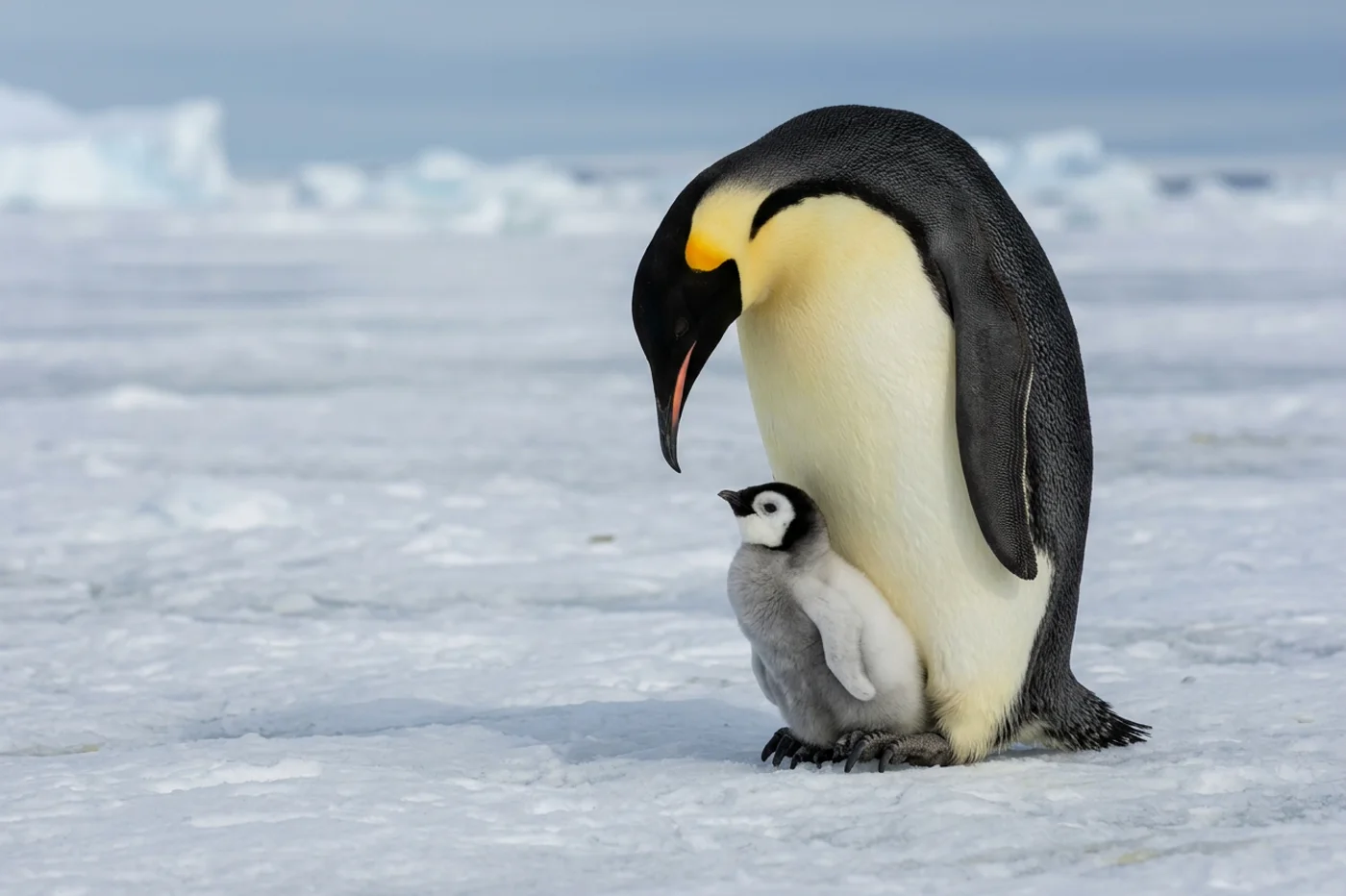
Emperor Penguins are the only animals that breed during the abyssal Antarctic winter, reaching sexual maturity at 4 to 6 years and forming seasonally monogamous pairs in March and April after marching 50 to 160 kilometers across newly frozen fast ice. In May or June, the female lays a single 450-gram egg and carefully transfers it onto the male's webbed feet beneath his vascularized abdominal brood pouch, which maintains roughly 38°C against polar gales while she treks back to sea. Males fast for approximately 65 days of incubation—totalling up to 115 fasting days since arrival—and feed newly hatched 315-gram chicks esophageal secretions until mothers return, before chicks crèche and fledge in December at five months.
Role in the Ecosystem
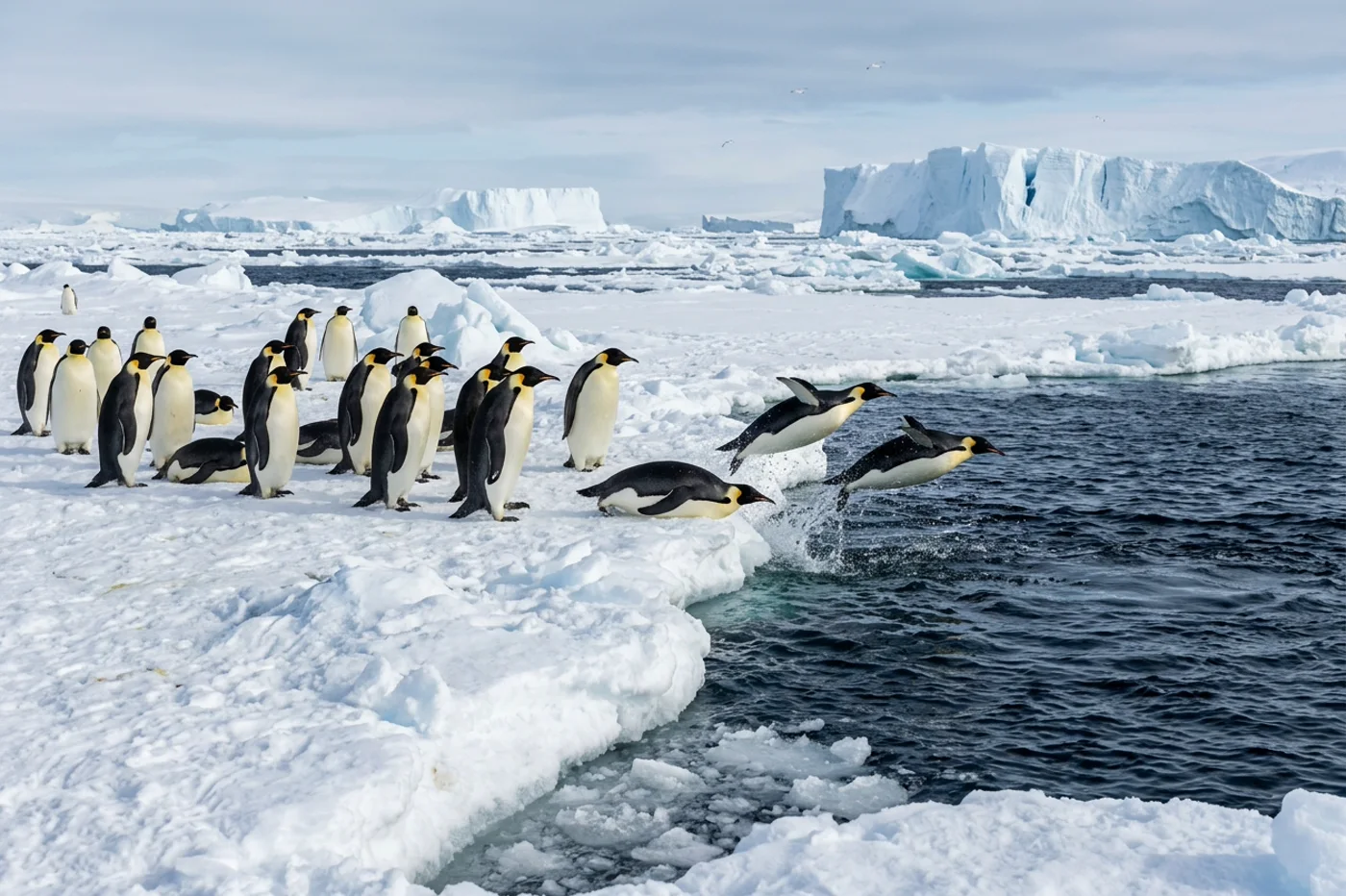
Operating near the top of the high-Antarctic marine trophic pyramid, Emperor Penguins channel vast quantities of epipelagic and mesopelagic biomass—each reared chick requiring roughly 84 kilograms of fish, krill, and squid delivered equally by both parents—between open coastal polynyas and land-fast sea-ice rookeries. Their dense colonies deposit iron- and nitrogen-rich guano stains clearly visible from orbital satellites that fertilize sea-ice microbial mats and under-ice algal communities, while dispersing juveniles, unhatched eggs, and commuting adults sustain apex Antarctic predators and scavengers including leopard seals (Hydrurga leptonyx), killer whales (Orcinus orca), and south polar skuas (Stercorarius maccormicki).
Conservation Outlook
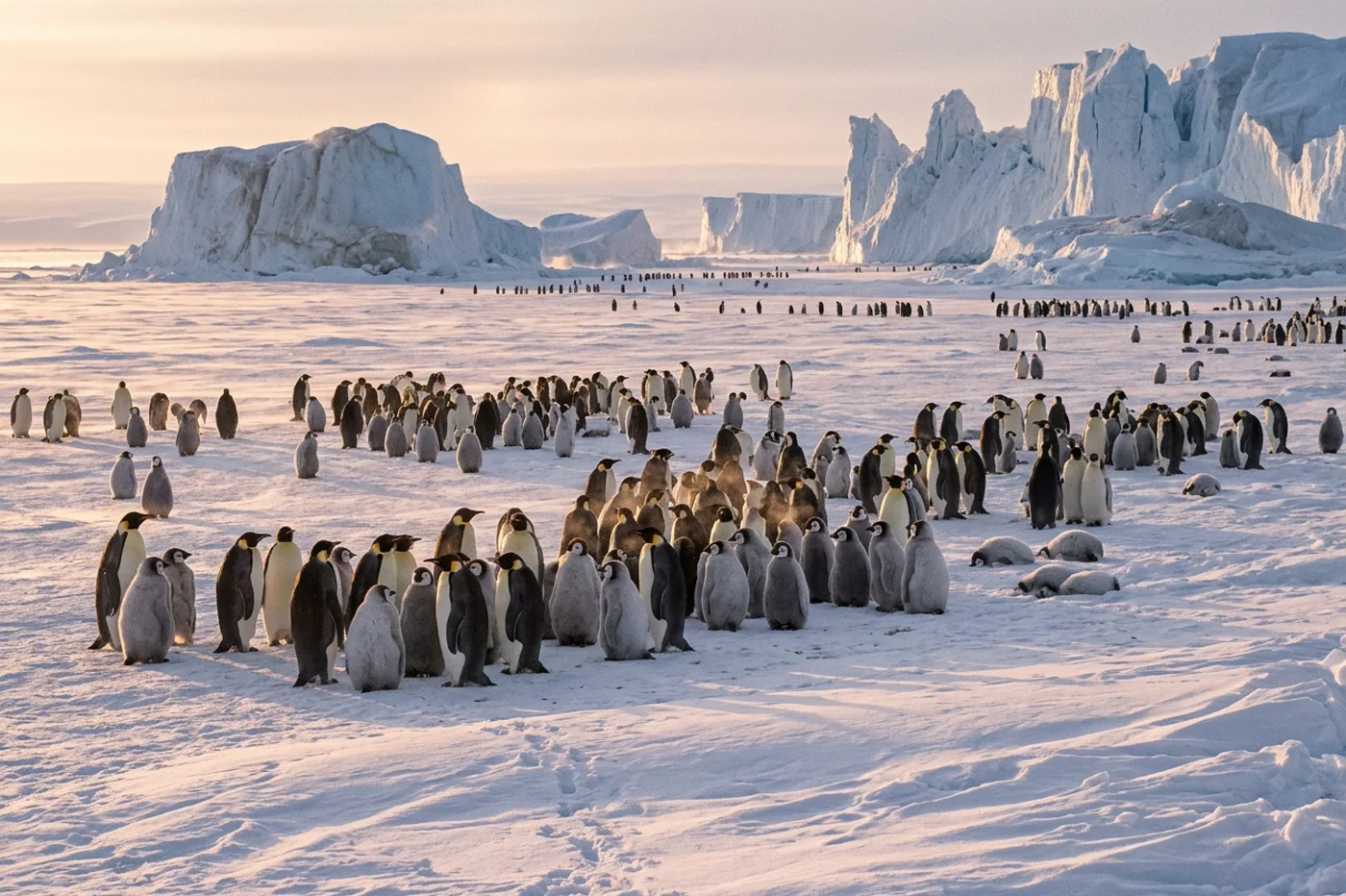
On April 9, 2026, the IUCN Red List—through BirdLife International and the IUCN SSC Penguin Specialist Group—officially uplisted the Emperor Penguin from Near Threatened to Endangered after satellite censuses revealed a ~10% global loss between 2009 and 2018, a 22% regional decline across the Antarctic Peninsula, Weddell, and Bellingshausen Seas from 2009 to 2024, and projections that global numbers will halve by the 2080s. Early spring fast-ice break-up since 2016 has drowned thousands of waterproof-lacking chicks in the Bellingshausen Sea and disrupted 30-to-40-day catastrophic summer moults off Marie Byrd Land. Conservation priorities focus on rapid global decarbonization, Southern Ocean marine protected areas, and designating the species as an Antarctic Specially Protected Species under the Antarctic Treaty.
Key Takeaways
- 1
Deepest-diving bird on Earth, reaching a recorded depth of 565 meters and holding its breath for up to 22 minutes while hunting Antarctic silverfish and squid.
- 2
Male Emperor Penguins incubate their single 450-gram egg alone on their feet for roughly 65 winter days without food, losing up to 40–50% of their body weight.
- 3
Cooperative winter huddles pack up to 10 penguins per square meter, cutting heat loss by 50% against 200 km/h katabatic blizzards and -60°C wind chills.