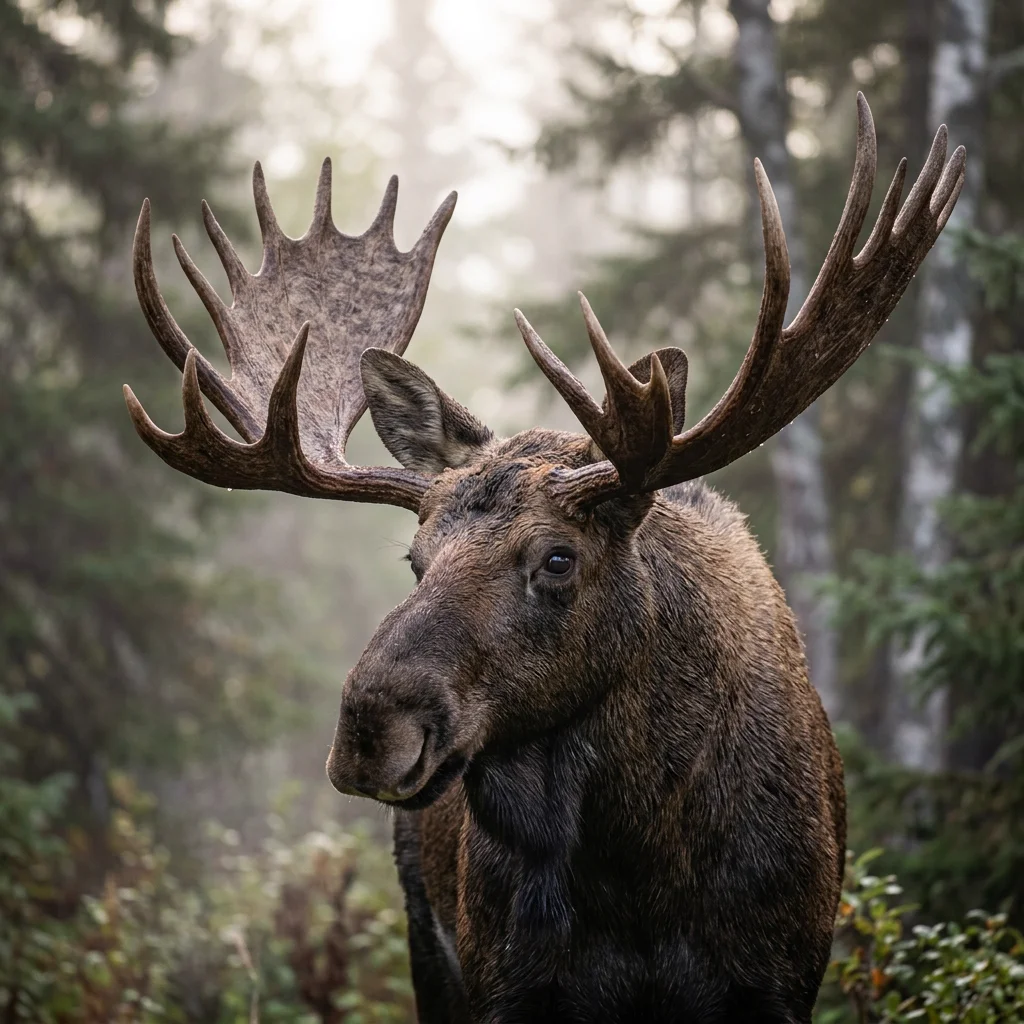
Moose
Alces alces
The towering browser of boreal forests and frozen wetlands
Quick Read
CervidaeOverview
The moose is the largest member of the deer family and one of the defining animals of the taiga. Its long legs, broad muzzle, and seasonal antlers are adaptations for moving through snow, feeding in wetlands, and surviving long northern winters.
Habitat & Range
Moose live across the northern boreal belt of North America and Eurasia, from Alaska and Canada to Scandinavia and Siberia. They favor cold forests, wetlands, river valleys, lake edges, and young woodland where shrubs and aquatic plants are close to cover.
How to Identify It
The moose is the largest living deer, with very long legs, a high shoulder hump, a long face, and a hanging throat bell. Adult bulls grow broad palmate antlers each year, while cows are antlerless and usually smaller.
Diet & Hunting
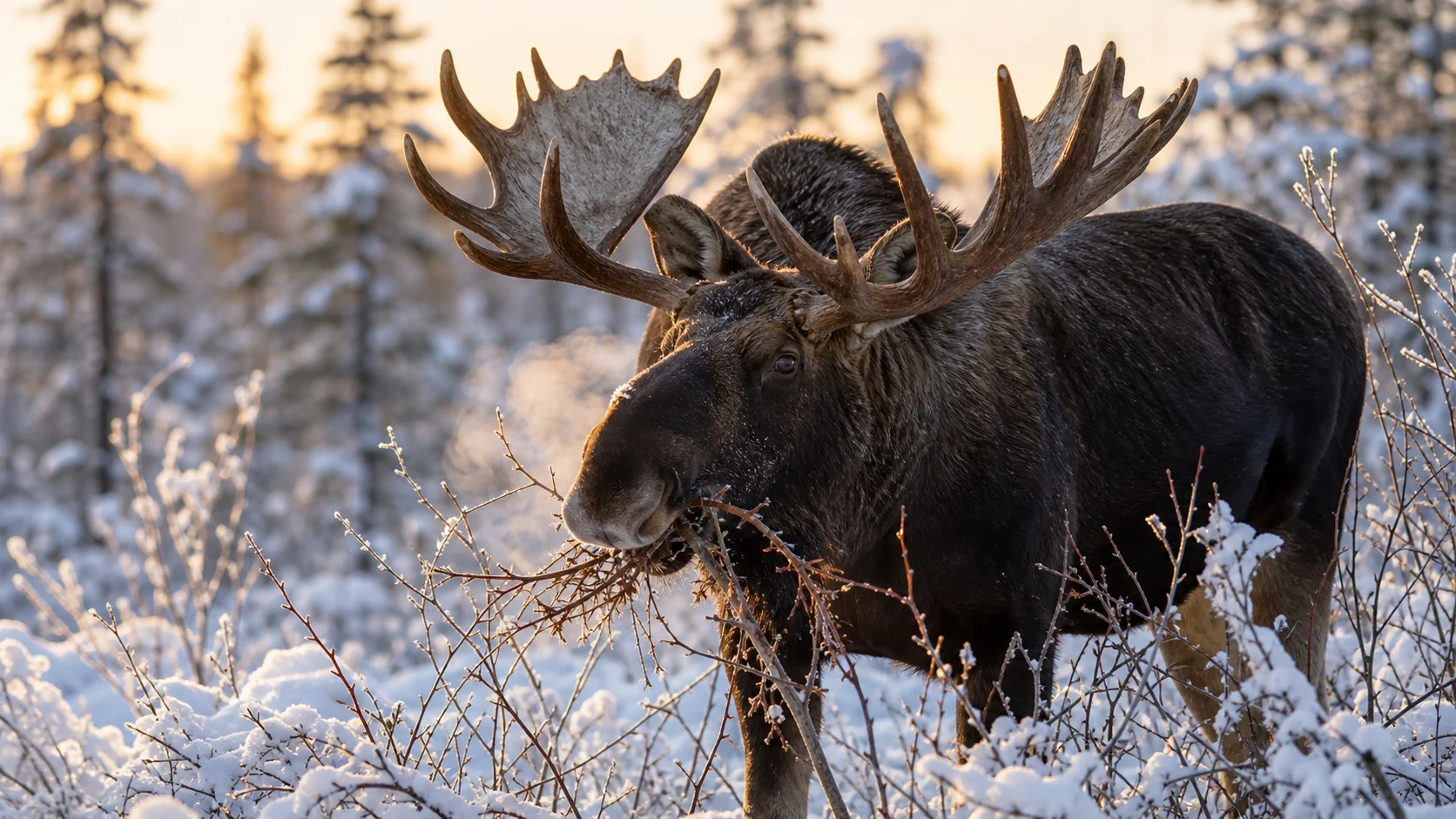
Moose browse woody plants such as willow, birch, aspen, and balsam fir, and they feed heavily on aquatic vegetation in warmer months. In winter they survive on twigs and bark, using height and a flexible muzzle to strip food above deep snow.
Behavior
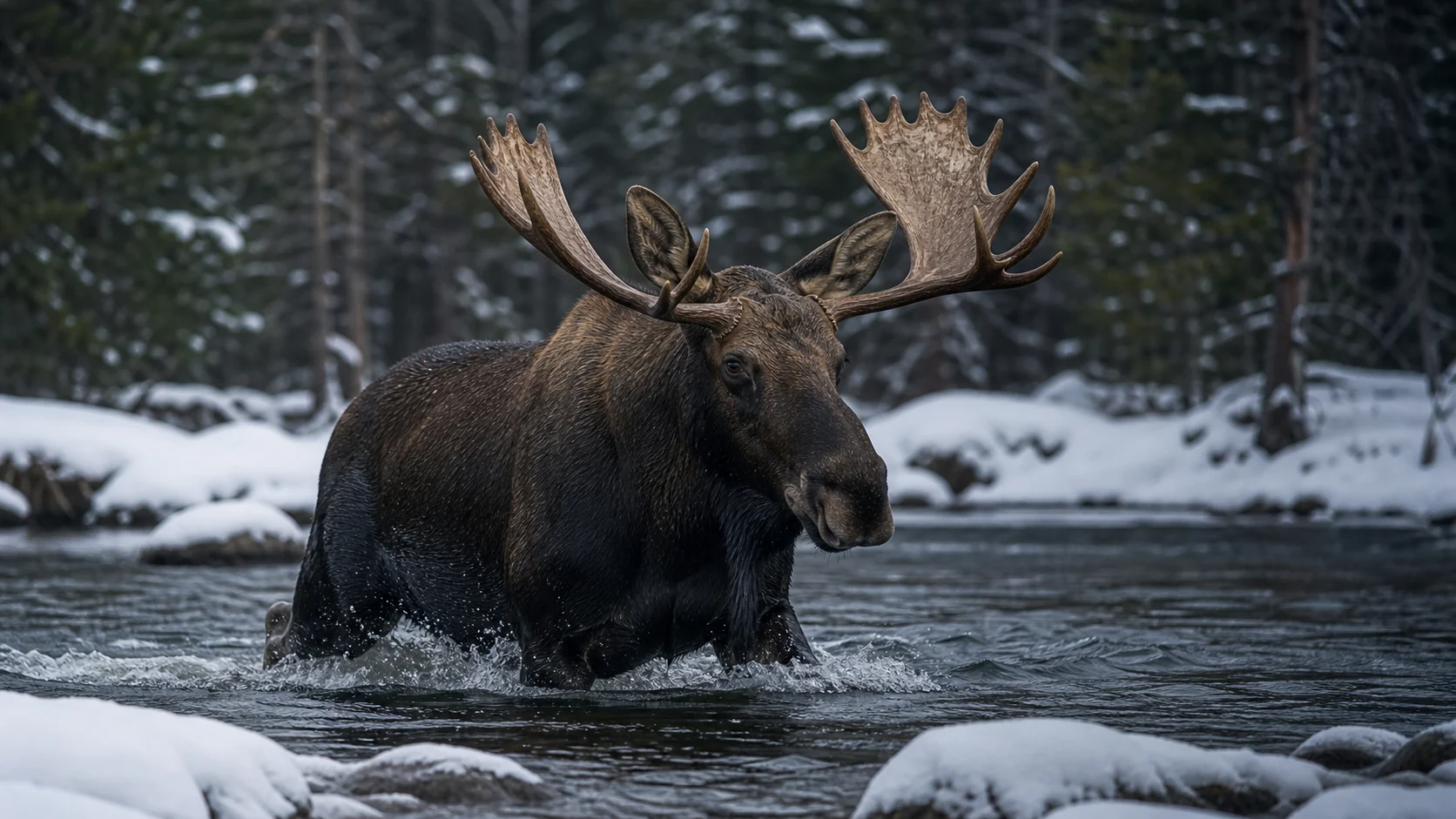
Most moose are solitary, although they may gather loosely in rich feeding areas. They move well through snow, swim strongly across lakes and rivers, and rely on smell and hearing more than speed when avoiding wolves, bears, and people.
Life Cycle
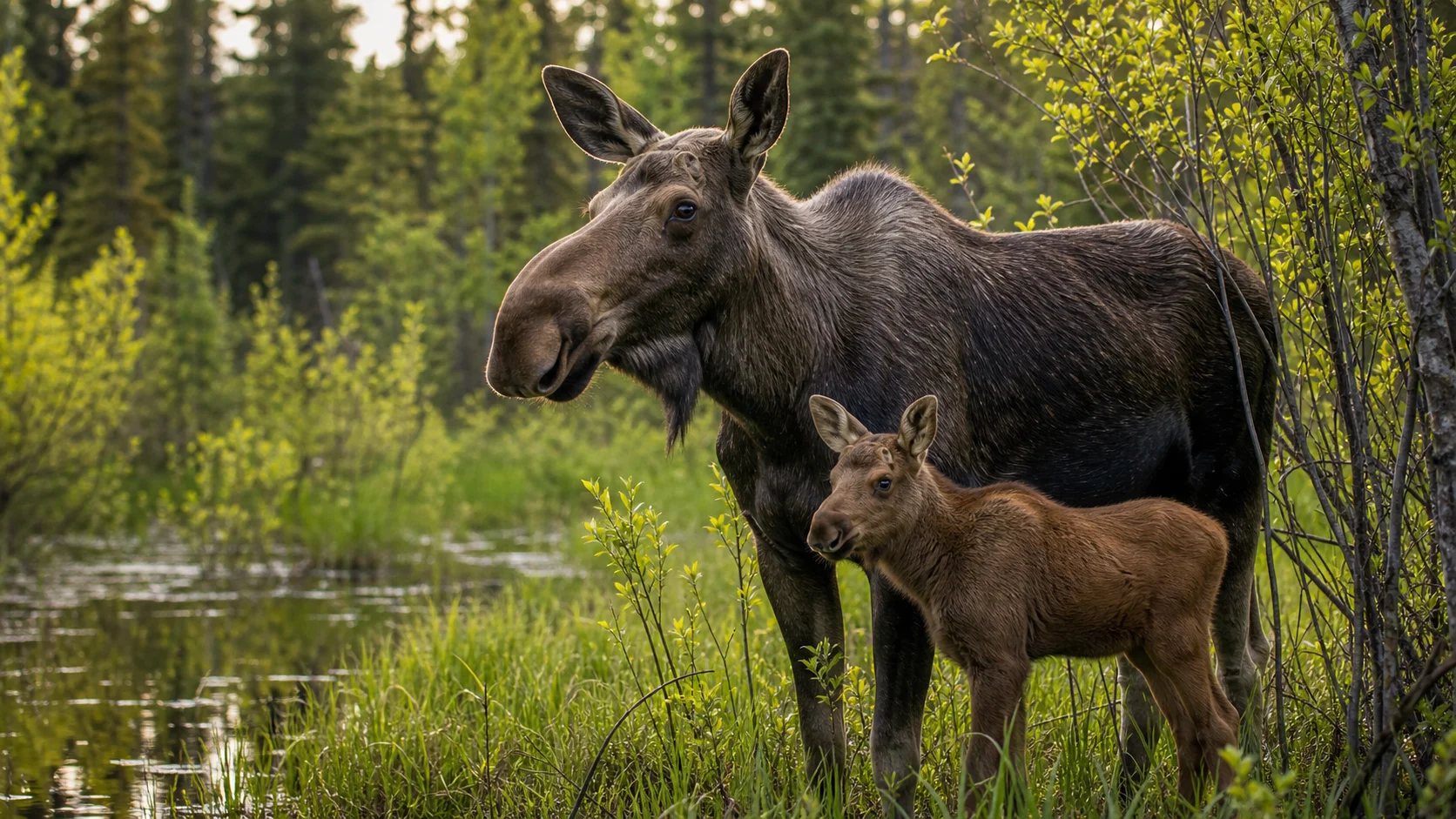
The rut occurs in autumn. Bulls compete with calls, scent, displays, and sometimes antler clashes; after a long gestation, cows usually give birth to one or two calves in spring when fresh plant growth improves milk production.
Role in the Ecosystem
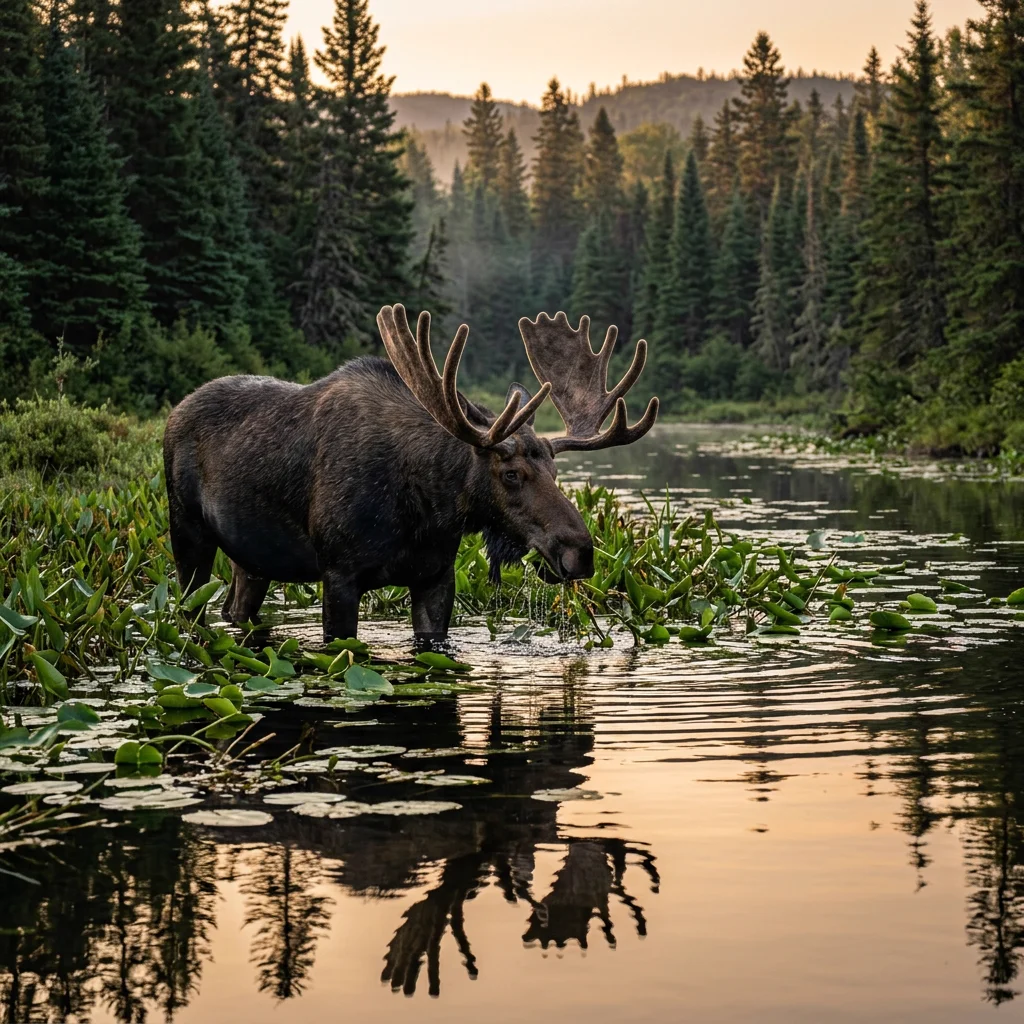
As heavy browsers, moose shape young forest growth, wetland edges, and nutrient flow between water and land. They are also major prey for wolves and bears, linking vegetation, predators, and scavengers in boreal ecosystems.
Conservation Outlook
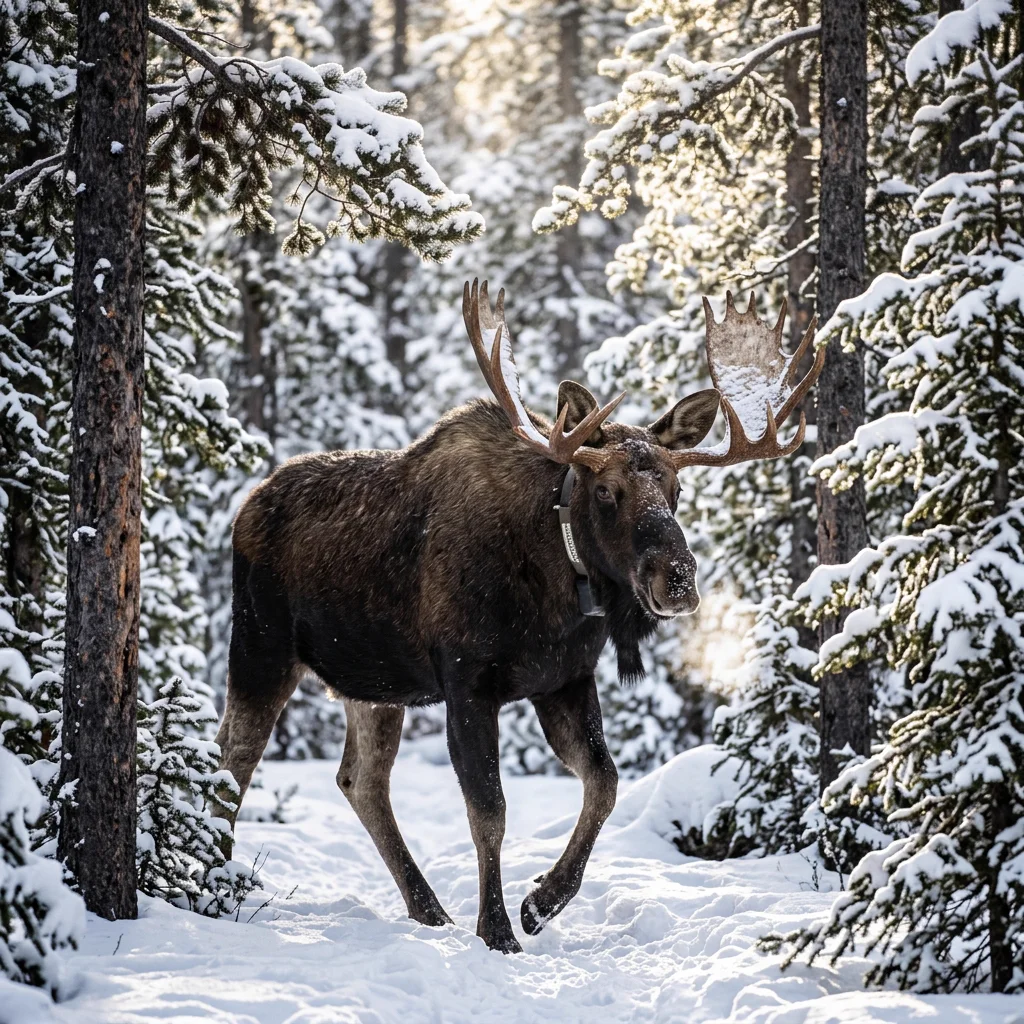
The species is globally listed as Least Concern, but local populations can decline from warming winters, parasites, ticks, habitat fragmentation, vehicle collisions, and overharvest. Good management depends on regional monitoring rather than a single global number.
Key Takeaways
- 1
Moose can dive underwater to pull up aquatic plants from lake and pond bottoms.
- 2
Bull moose shed and regrow their antlers every year.
- 3
Their long legs help them step through deep snow and wade through marshes.