Orca
Orcinus orca
Matrilineal cultural superpredator ruling every ocean from polar pack ice to tropical seas
Quick Read
DelphinidaeOverview
Spanning every ocean from polar pack ice to the equator, the Orca or Killer Whale (Orcinus orca) is the largest member of the dolphin family and the sea's undisputed apex predator. Celebrated for lifelong matrilineal pods led by post-menopausal grandmothers, pod-specific vocal dialects, and culturally transmitted hunting tactics ranging from wave-washing Antarctic seals to targeting Chinook salmon, this cosmopolitan cetacean numbers roughly 50,000 globally while facing critical declines in specialized coastal populations.
Habitat & Range
Possessing the most cosmopolitan distribution of any cetacean on Earth, the Orca or Killer Whale (Orcinus orca) inhabits every major ocean basin from the high-Arctic pack-ice edge and Norwegian fjords to tropical equatorial seas and the coastal polynyas of Antarctica. Although sighted across pelagic blue waters and enclosed seas such as the Mediterranean and Arabian Sea, densities peak in cold, nutrient-rich high-latitude continental shelf and coastal upwelling waters, including the eastern North Pacific from California to Alaska and Kamchatka, Iceland, Patagonia, New Zealand, and the Southern Ocean. Most pods occupy year-round multi-hundred-kilometer home ranges between surface waters and depths of 20 to 300 meters, tracking seasonal prey migrations.
How to Identify It
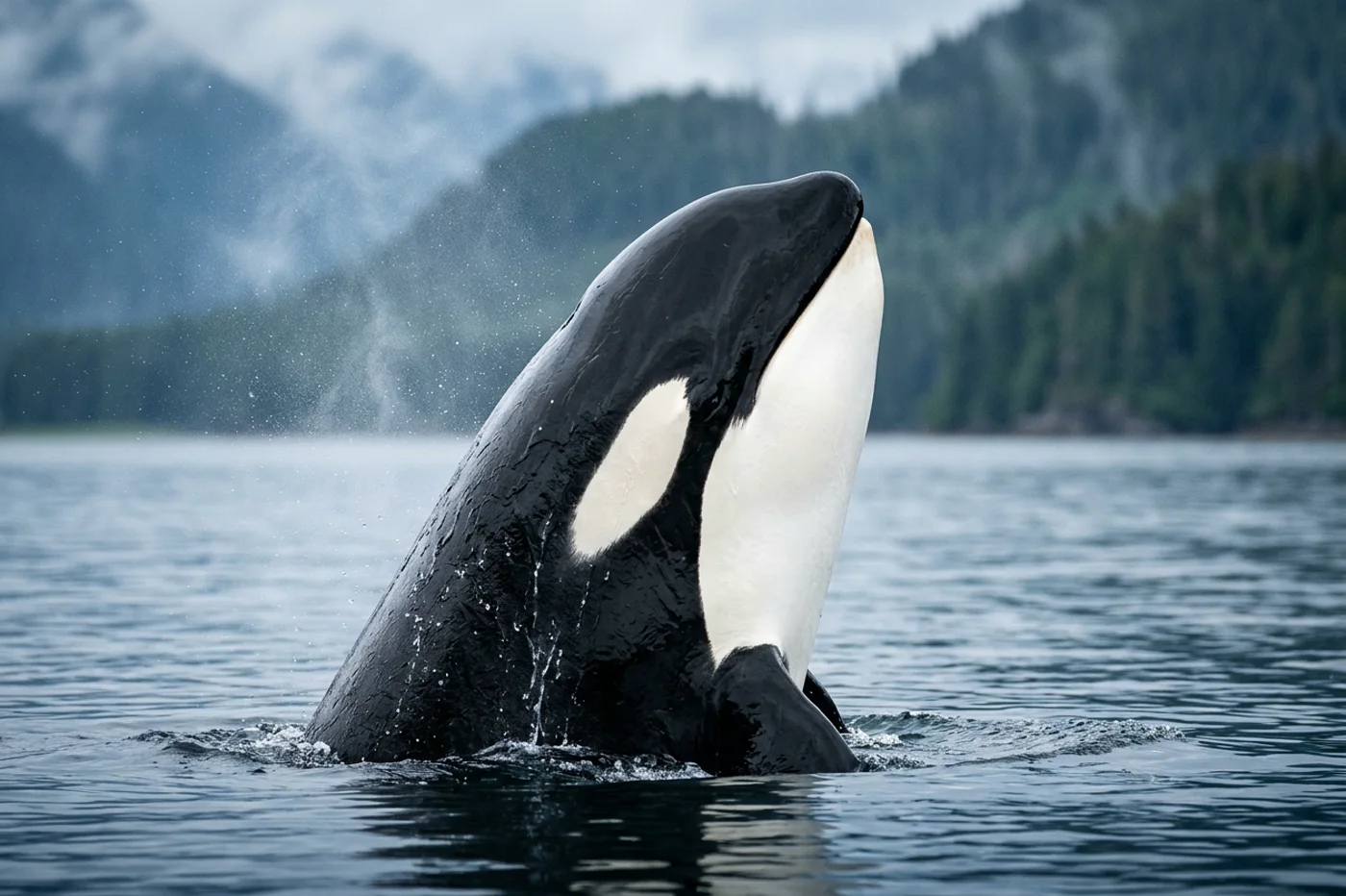
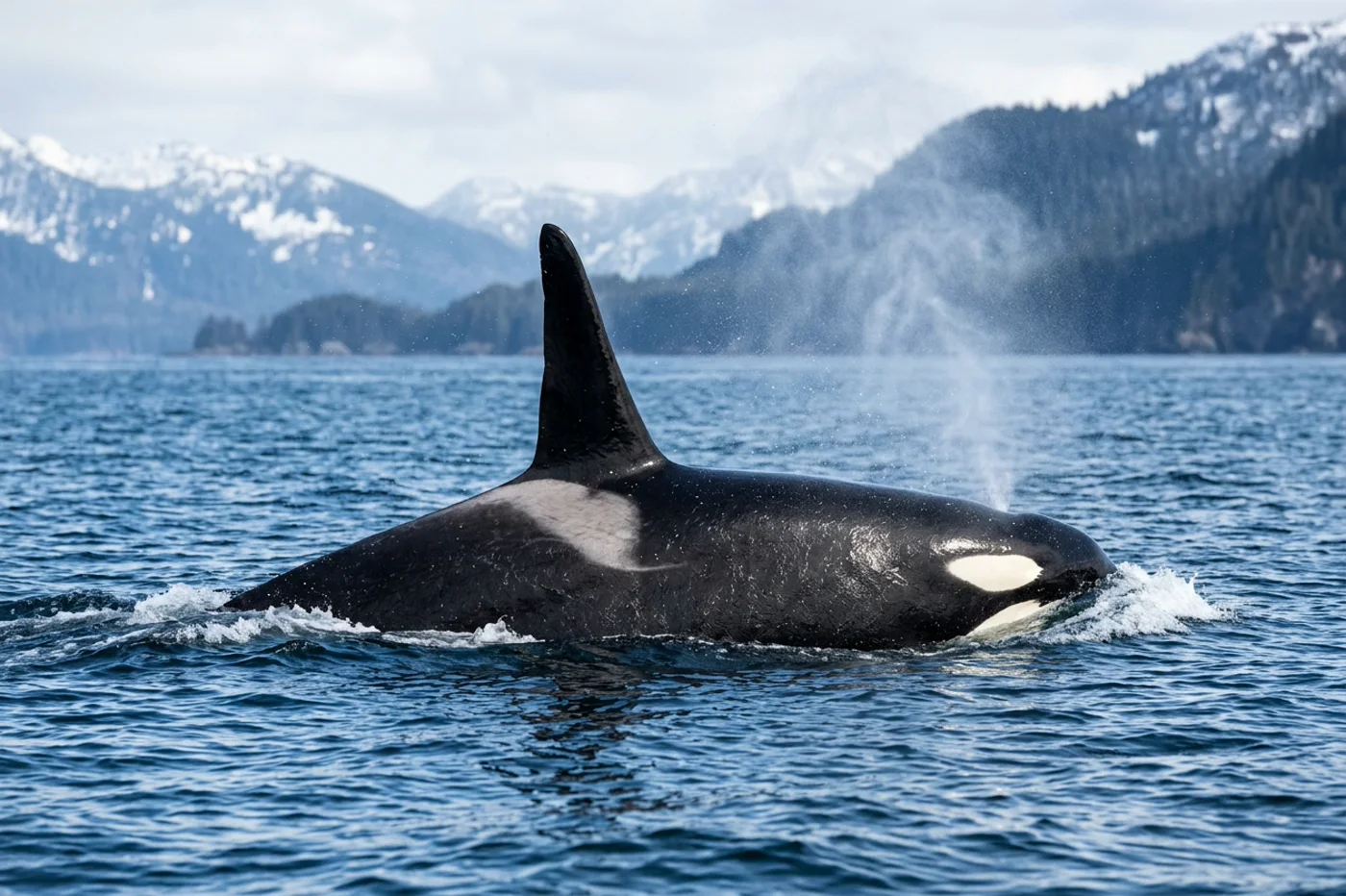
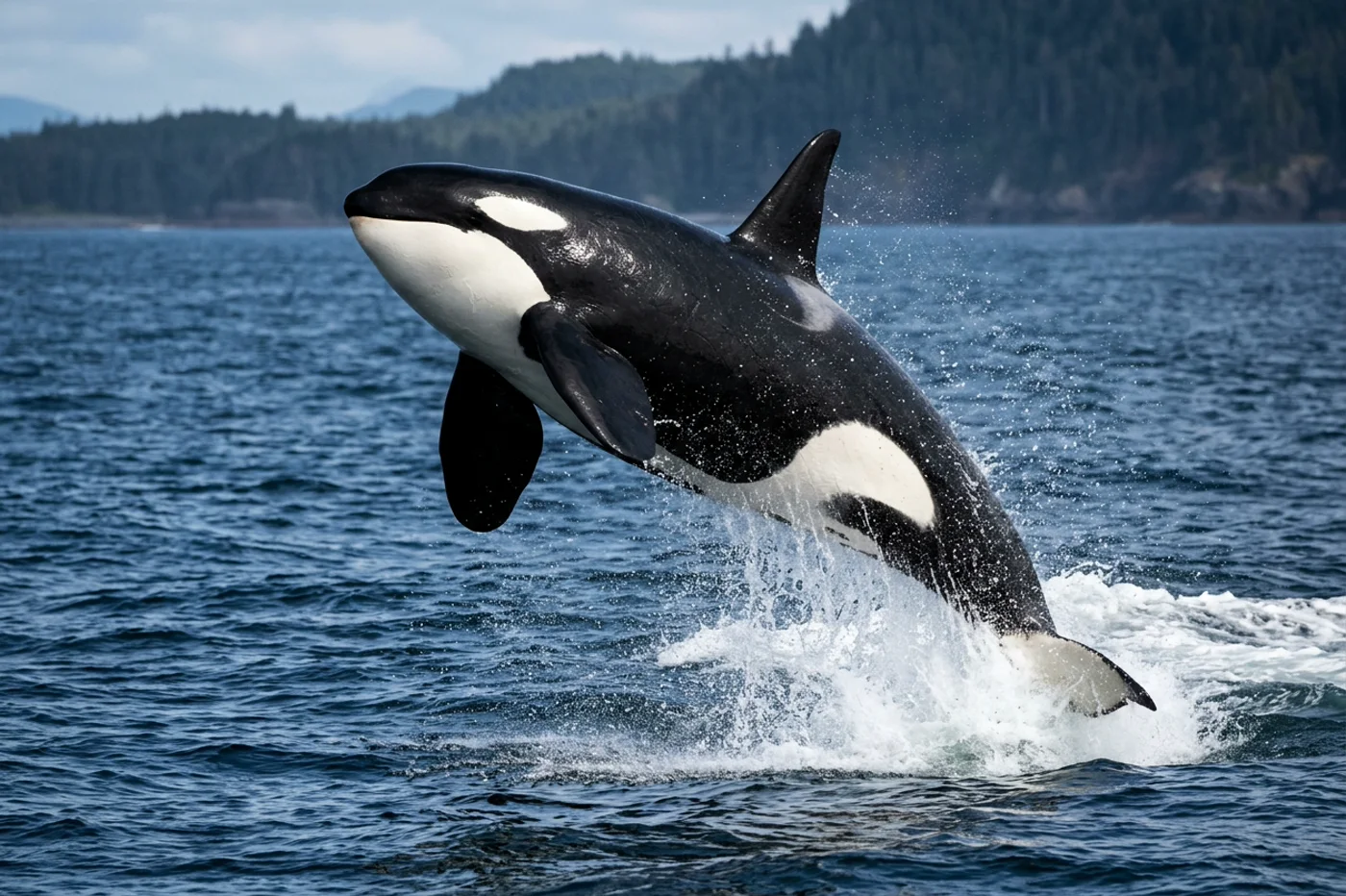
As the largest living member of the oceanic dolphin family Delphinidae, the Orca exhibits a powerful torpedo-shaped body marked by striking countershading: a jet-black dorsal mantle, a crisp white ventral field extending from the lower jaw to the urogenital slit and branching onto the flanks, a white post-ocular eye patch, and a variable gray-white saddle patch behind the dorsal fin. Sexual dimorphism is pronounced: adult males measure 6.0 to 9.75 meters long (averaging 8 meters) and weigh 6,000 to 10,000 kilograms (averaging 7,200 kilograms), developing an erect triangular dorsal fin up to 1.8 meters tall and massive paddle-like pectoral flippers, whereas females measure 5.0 to 8.5 meters, weigh 3,000 to 4,000 kilograms, and bear a 0.9-meter falcate dorsal fin.
Diet & Hunting
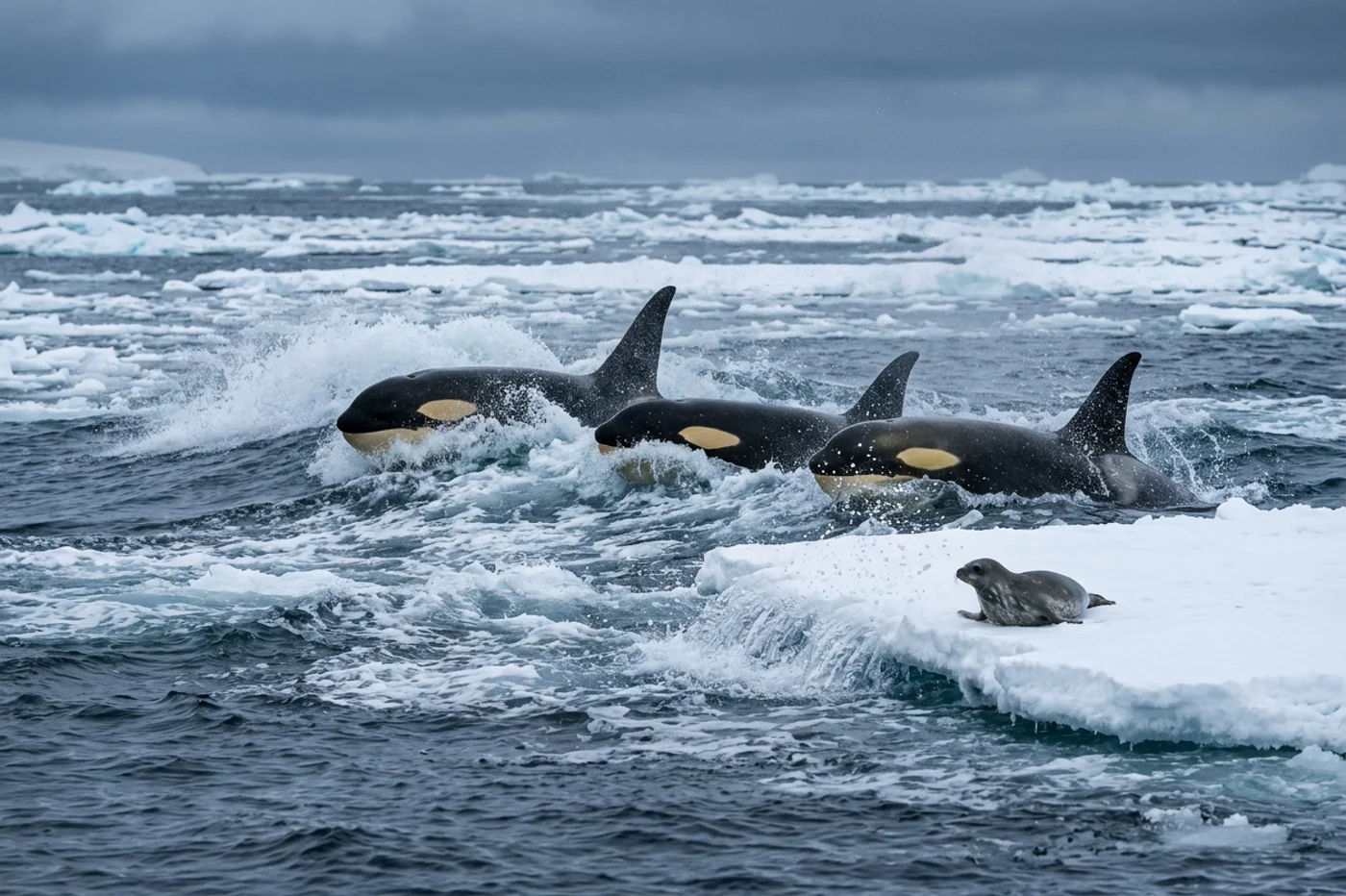
Consuming an average of 45 kilograms of prey daily, Orcas are the ocean's supreme apex predators, yet sympatric ecotypes maintain rigid, culturally transmitted dietary specializations that rarely overlap. In the North Pacific, Resident pods feed almost exclusively on fish—especially Chinook and chum salmon—while Transient (Bigg's) pods hunt marine mammals including harbor seals, sea lions, porpoises, and gray whale calves, and Offshore pods target schooling fishes and Pacific sleeper sharks. Elsewhere, Norwegian pods herd herring into tight carousel bait-balls stunned with tail slaps, Patagonian pods intentionally strand on shingle beaches to snatch sea lion pups, Antarctic Type B pods wave-wash seals off ice floes, and South African pairs surgically extract lipid-rich livers from great white sharks.
Behavior
Orcas live in some of the most stable matrilineal societies in the animal kingdom, where neither sons nor daughters disperse from their mother's natal pod across four generations. Basic matrilines of 2 to 20 closely related whales travel within 100 meters of one another, frequently uniting into larger clans and temporary superpods of over 50 individuals while swimming up to 160 kilometers per day. Pods coordinate hunts and maintain social cohesion through three acoustic categories focused through the forehead melon and received via the lower-jaw auditory bulla: high-frequency echolocation clicks, close-range whistles, and pod-specific pulsed call dialects preserved across six generations. Because breathing is voluntary, they practice unihemispheric slow-wave sleep, resting one brain hemisphere at a time with the opposite eye open.
Life Cycle
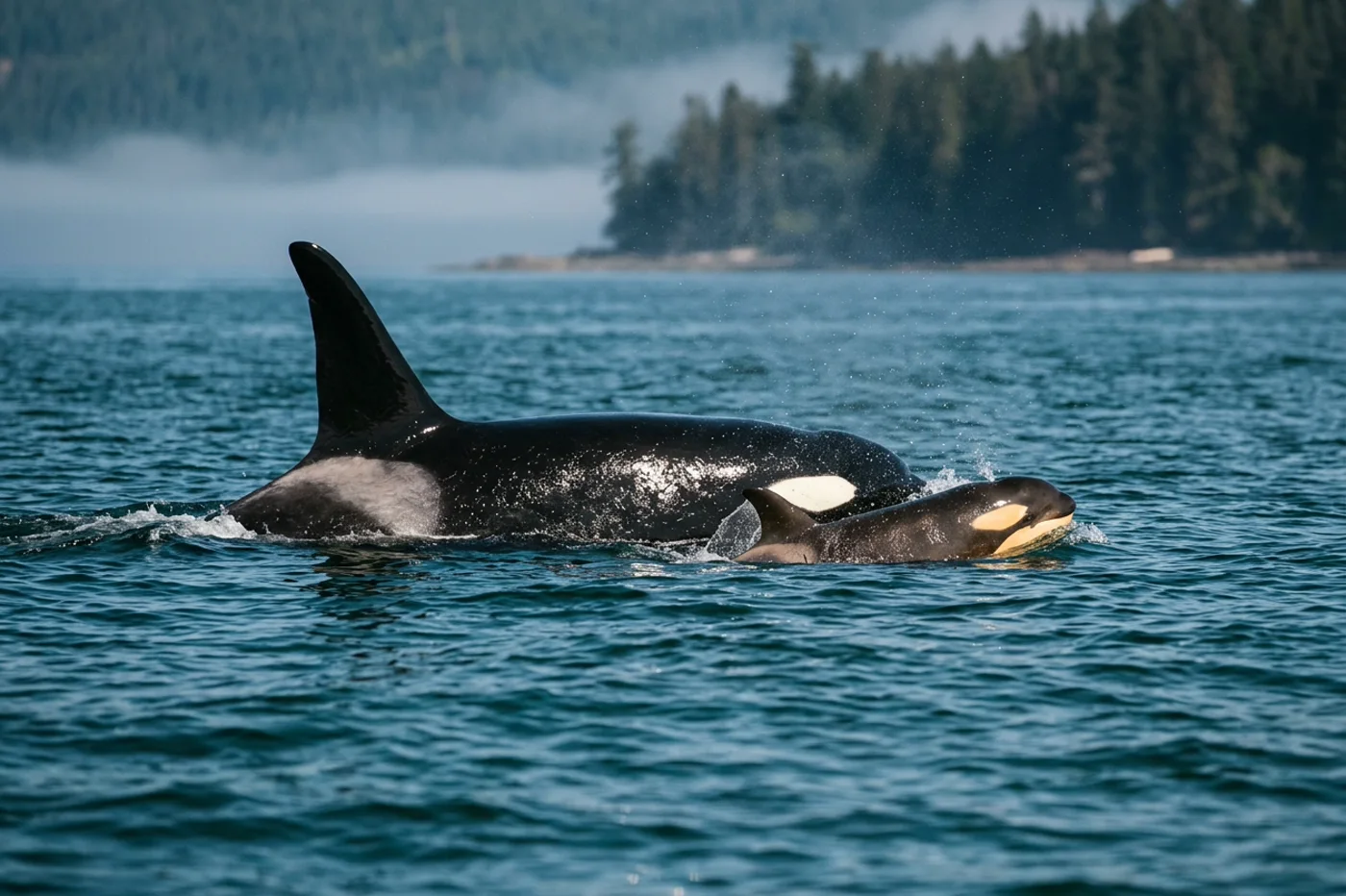
Orcas are polygynandrous breeders that mate strictly outside their natal pod during multi-pod social aggregations—primarily in summer—to avoid inbreeding. Females reach sexual maturity between 10 and 13 years of age (with first calving typically around 14 to 15 years), whereas males mature between 10 and 13 years and attain full physical size after 20. Following a gestation of 15 to 18 months (averaging 17 months, with a recorded captive maximum of 539 days), females give birth year-round to a single precocial calf measuring 2.0 to 2.4 meters and weighing 136 to 180 kilograms. Calves nurse for 12 to 24 months and are spaced 5 to 10 years apart until females enter menopause around age 40, surviving into their 80s or 90s as ecological matriarchs.
Role in the Ecosystem
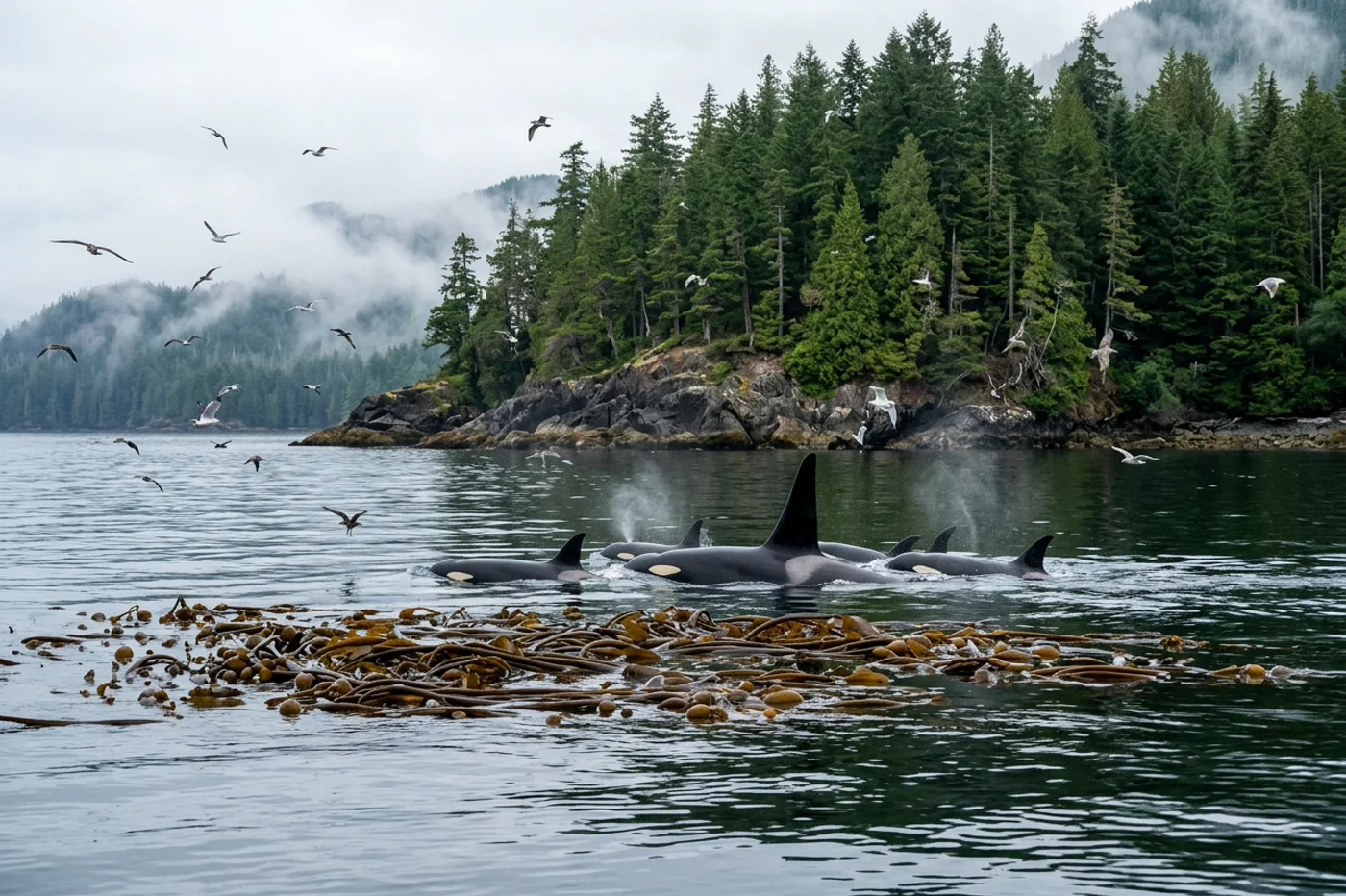
Occupying the pinnacle of marine food webs with no natural predators as adults, Orcas exert top-down trophic control across global oceans by regulating populations of pinnipeds, small cetaceans, mesopelagic fishes, and apex sharks. Their predation and landscape-of-fear effects alter prey foraging behavior and spatial distribution—such as driving great white sharks from South African coastal rookeries or shifting Aleutian sea otter abundance—while food-sharing by hunting pods provisions surface-feeding seabirds and deep-sea scavengers. Because their thick blubber and multi-decade lifespans bioaccumulate marine pollutants, Orcas also serve as sensitive biological sentinels of ocean chemical health.
Conservation Outlook
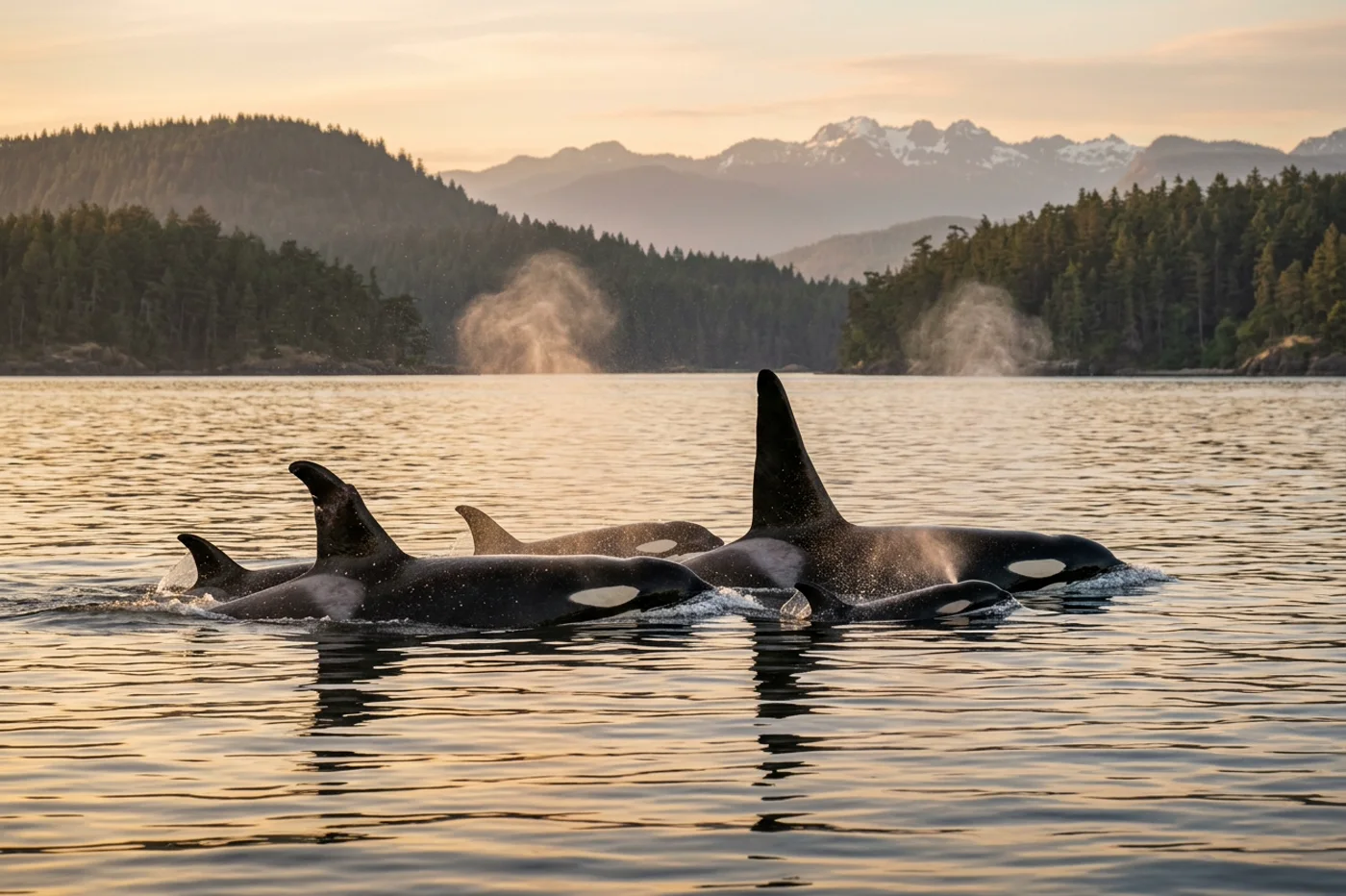
Listed under CITES Appendix II and assessed globally as Data Deficient (historically Least Concern prior to taxonomic split reviews) on the IUCN Red List due to likelihood that distinct ecotypes represent separate subspecies or species, Orcas number roughly 50,000 individuals worldwide. However, specialized coastal lineages face acute extinction risk: the Southern Resident population in the Salish Sea numbered only 74 whales in the July 2025 NOAA census and is listed as Endangered under the U.S. Endangered Species Act, the Strait of Gibraltar subpopulation is IUCN Critically Endangered, and Alaska's AT1 Transient stock shrank from 22 to 6–7 whales after the 1989 Exxon Valdez oil spill. Conservation focuses on Chinook salmon restoration, PCB pollutant remediation, fishing-gear bycatch reduction, and vessel-noise slowdown zones.
Key Takeaways
- 1
Largest member of the oceanic dolphin family (Delphinidae), with mature males reaching up to 9.75 meters in length, 10,000 kilograms in weight, and sporting a 1.8-meter dorsal fin.
- 2
One of the very few mammal species—alongside humans and several toothed whales—where females undergo menopause around age 40 and live up to 90 years as wisdom-keeping matriarchs.
- 3
Distinct ecotypes pass down specialized hunting cultures across generations, from synchronized wave-washing of seals off Antarctic ice floes to surgical extraction of great white shark livers.