Polar Bear
Ursus maritimus
Apex marine bear roaming the shifting pack ice of the circumpolar Arctic
Quick Read
UrsidaeOverview
The polar bear is Earth's largest land-lineage carnivore and a true marine mammal engineered for life atop Arctic sea ice. Insulated by pigment-free translucent fur, heat-absorbing black skin, and thick marine blubber, it stalks ringed and bearded seals across vast drifting icescapes now rapidly shrinking under polar warming.
Habitat & Range
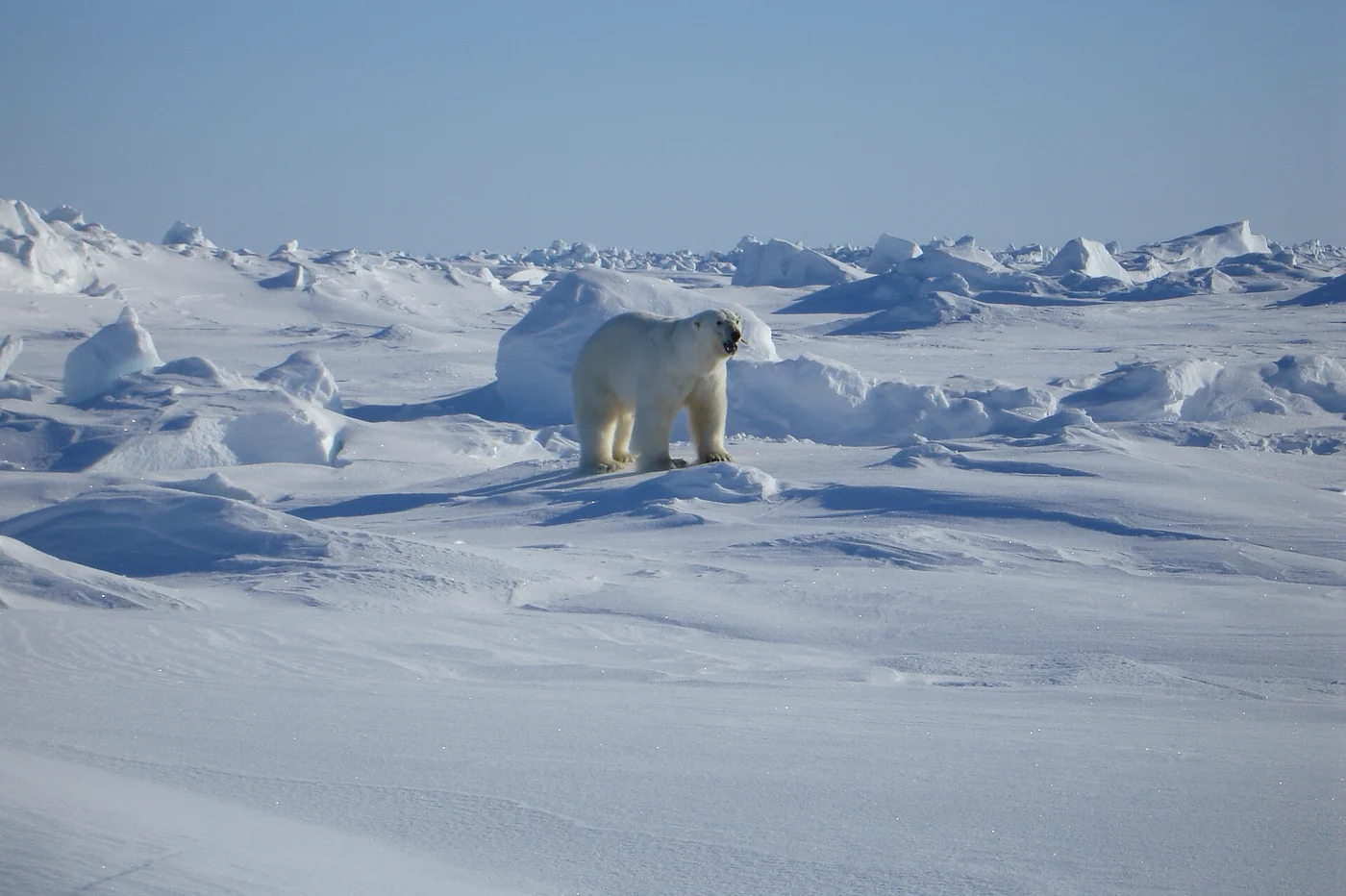
The polar bear (Ursus maritimus) inhabits the circumpolar Arctic across 19 recognized subpopulations spanning five range nations: Canada (home to roughly 60% of the global population), Greenland (Kingdom of Denmark), Norway (primarily the Svalbard archipelago), Russia, and the United States (northern and western Alaska). Rather than occupying the barren central polar cap year-round, polar bears concentrate over biologically productive continental shelves where annual pack ice freezes, cracks into leads, and opens wind-swept polynyas—from Hudson Bay and Baffin Bay to the Beaufort, Chukchi, Kara, and Barents seas. Because they rely on sea ice as a hunting platform, travel corridor, and mating arena, scientists classify Ursus maritimus as a true marine mammal.
How to Identify It
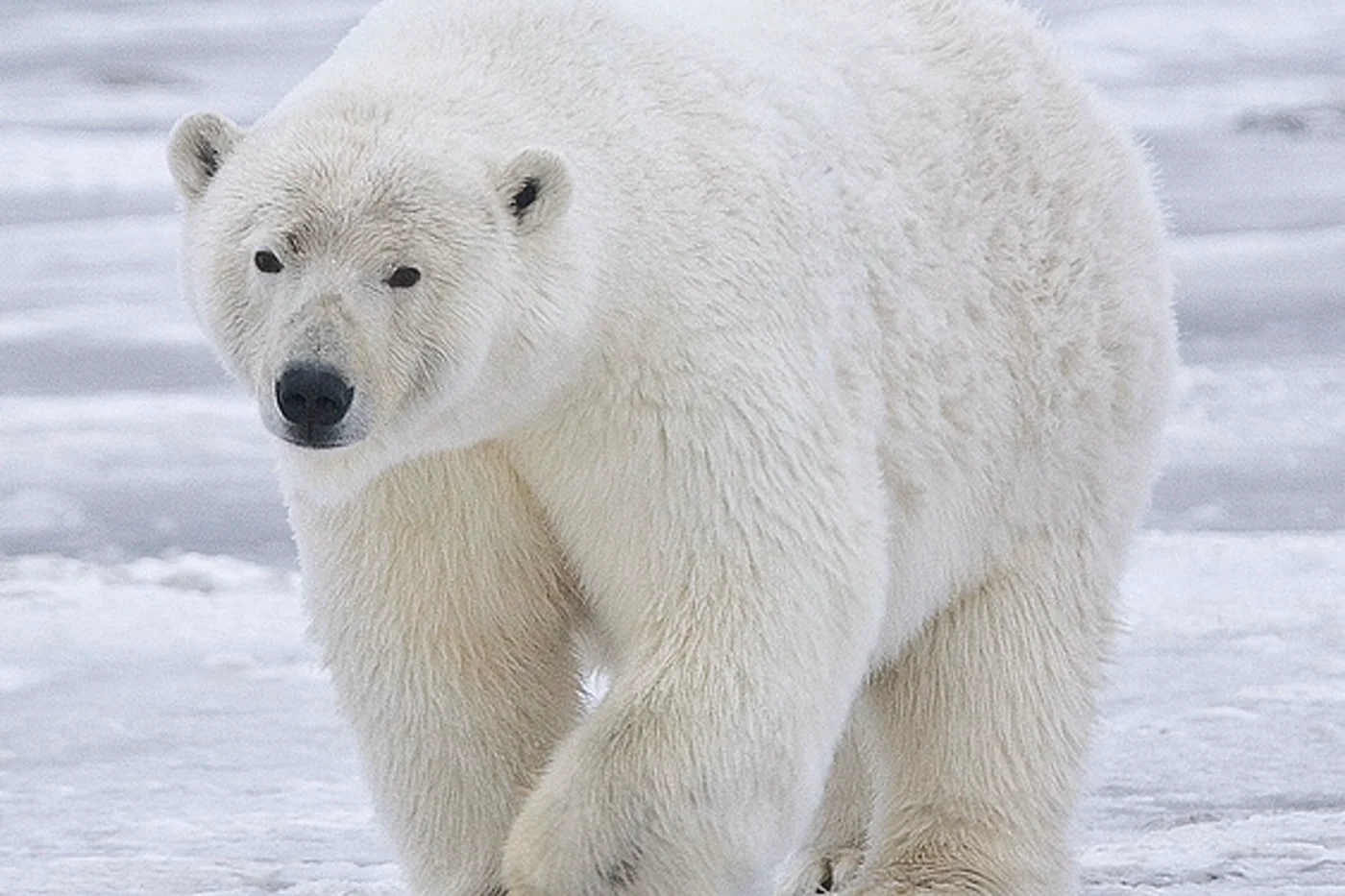
Built as Earth's largest extant terrestrial-lineage carnivore—rivaled in mass only by the Kodiak brown bear—adult male polar bears measure 2.4 to 3.0 meters long and weigh 350 to 700 kg (with exceptional boars surpassing 800 kg), roughly twice the mass of adult females (150 to 300 kg). Compared with their closest ancestor, the brown bear (Ursus arctos), polar bears have a longer neck, a narrower streamlined skull for reaching into seal breathing holes, smaller furred ears, and a lower shoulder profile. Their dense two-layered coat consists of a woolly underfur beneath hollow, pigment-free transparent guard hairs that scatter visible light to look snow-white, concealing heat-absorbing black skin and an insulating subcutaneous blubber blanket up to 11 cm thick. Papillae-studded footpads and 30 cm wide partially webbed forepaws provide traction on slick ice and snowshoe buoyancy across thin crusts.
Diet & Hunting
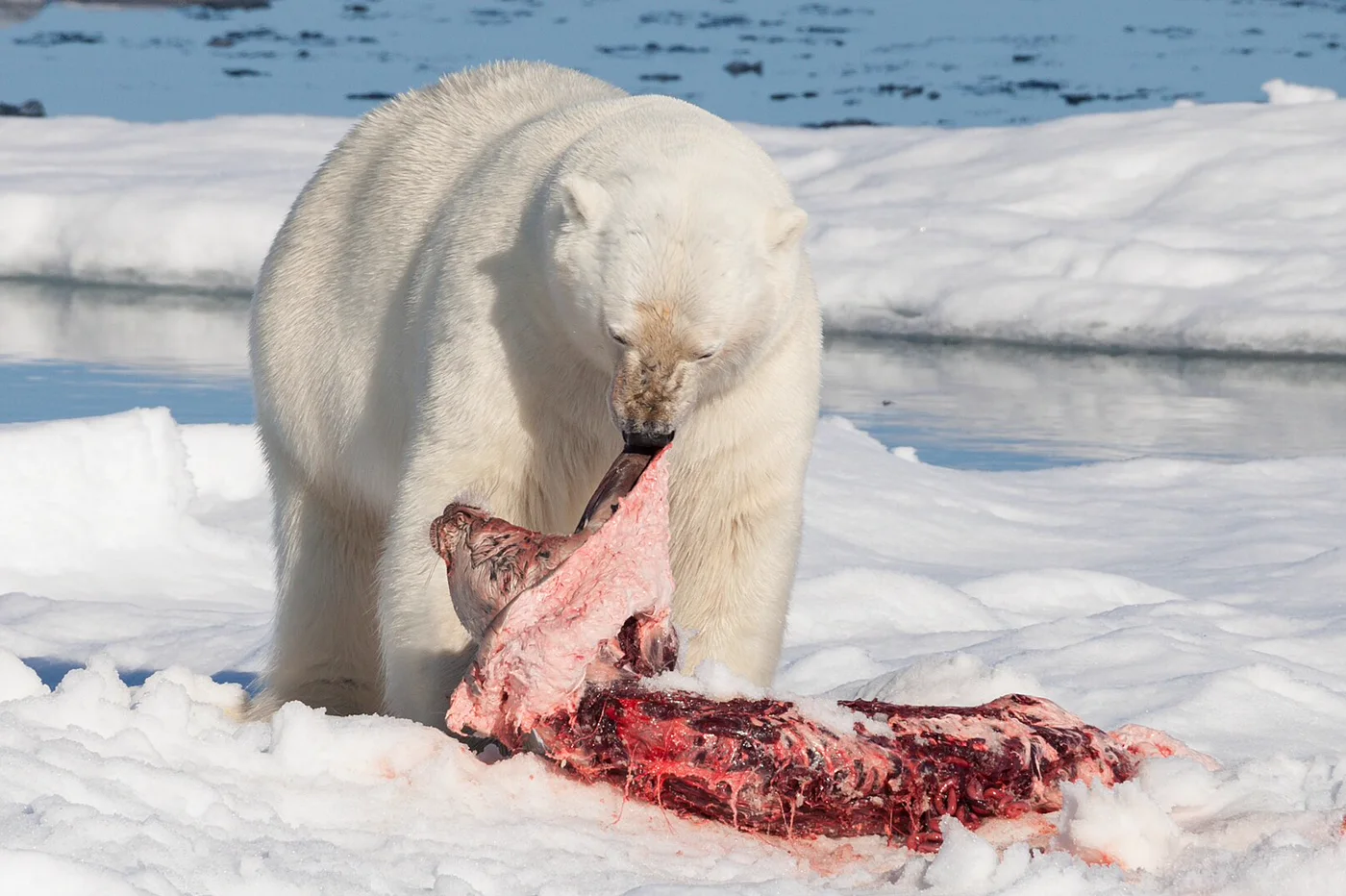
Polar bears are the most hypercarnivorous members of the bear family, deriving more than 90% of their caloric intake from marine mammals—above all ringed seals (Pusa hispida) and larger bearded seals (Erignathus barbatus), supplemented regionally by harp seals, hooded seals, walrus calves, belugas, narwhals, and stranded bowhead or gray whale carcasses. Their signature hunting method is still-hunting: waiting motionless beside a seal's conical breathing hole (aglu) in the ice for hours until prey surfaces, then striking with explosive forepaw force and gripping with 5 cm canines. Because digesting lean protein requires freshwater—which is locked away as salt ice—polar bears preferentially strip energy-dense seal blubber, able to assimilate up to 97% of ingested fat and consume 45 kg of blubber in a single sitting. On ice-free summer shores they opportunistically eat kelp, berries, and seabird eggs, though terrestrial foods cannot offset lost marine lipids.
Behavior
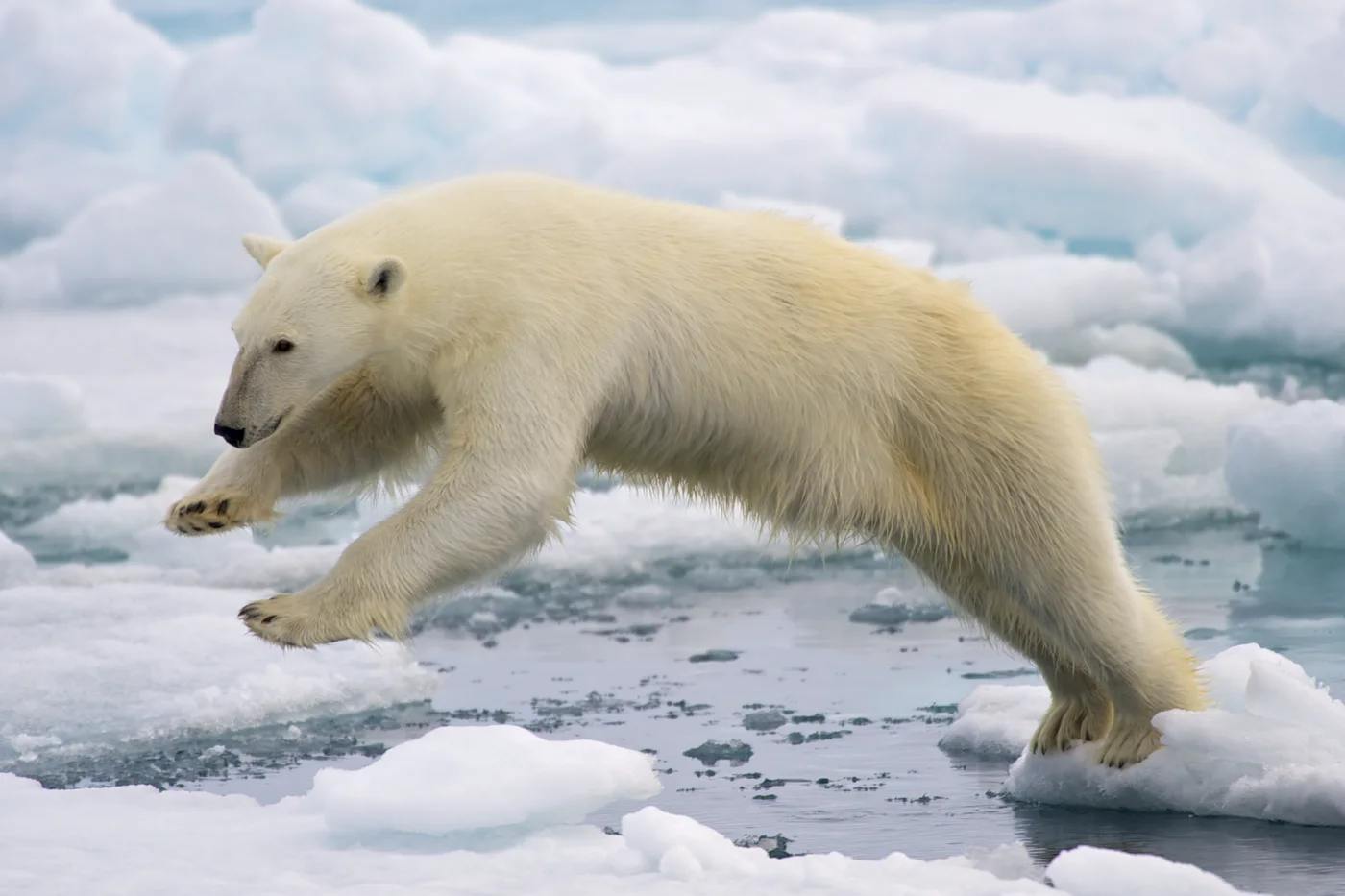
Outside breeding pairs, mothers with dependent cubs, and temporary aggregations of 20 to 60 bears peacefully sharing a beached whale carcass, adult polar bears lead solitary, nomadic lives dictated by seasonal sea-ice drift. Satellite-collared females routinely log annual home ranges between 50,000 and 350,000 square kilometers, walking briskly at 5.5 km/h against drifting ice streams so they stay over productive shelf waters. Strong, buoyant swimmers, they dog-paddle with giant front paws at up to 10 km/h while trailing hind legs as rudders; researchers documented one Beaufort Sea female swimming 687 km nonstop over nine days in frigid open water. Unlike temperate bears, non-pregnant polar bears never hibernate in winter—instead remaining active hunters through polar darkness while conserving energy during summer ice-free fasts through lowered heart rates and fat-burning 'walking hibernation.'
Life Cycle
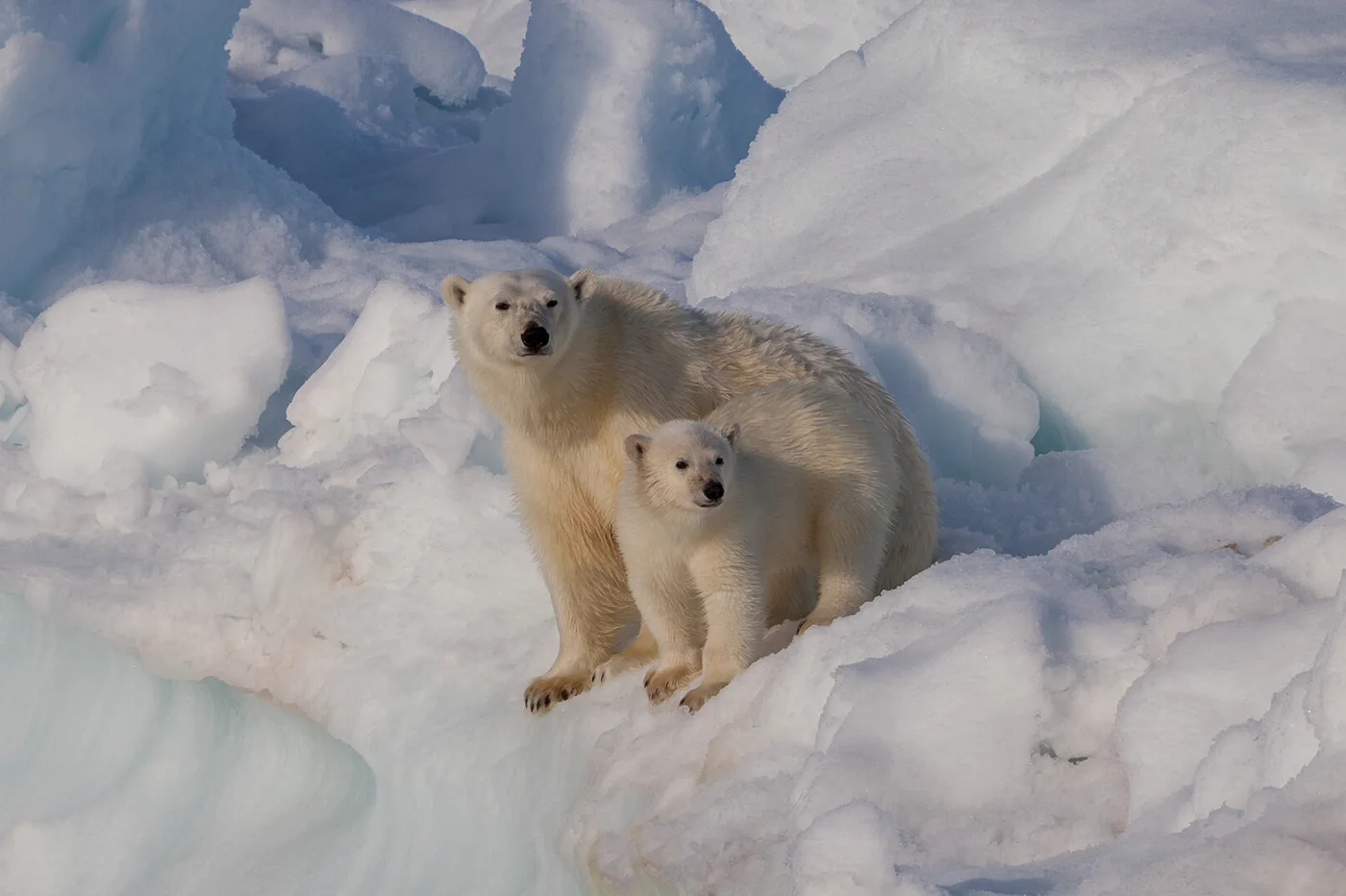
Courtship and mating unfold out on the sea ice between April and June, when adult males follow scent trails left by receptive females' footprints for more than 100 km and compete fiercely in scarred dominance battles. Fertilized eggs enter embryonic diapause (delayed implantation) until autumn, implanting only if the female has accumulated at least ~200 kg of body mass and thick fat reserves. In October or November, pregnant mothers excavate multi-chambered maternity dens in coastal snowdrifts—or on sea ice in parts of the Beaufort Sea—entering a true winter dormancy without eating, drinking, or defecating for up to eight months. Between November and January she births one to three (most commonly twin) blind, lightly furred cubs weighing just 600 to 700 grams, nursing them on 31%-fat milk until they emerge in March or April at 10 to 15 kg and stay beside her for 2.3 to 2.5 years.
Role in the Ecosystem
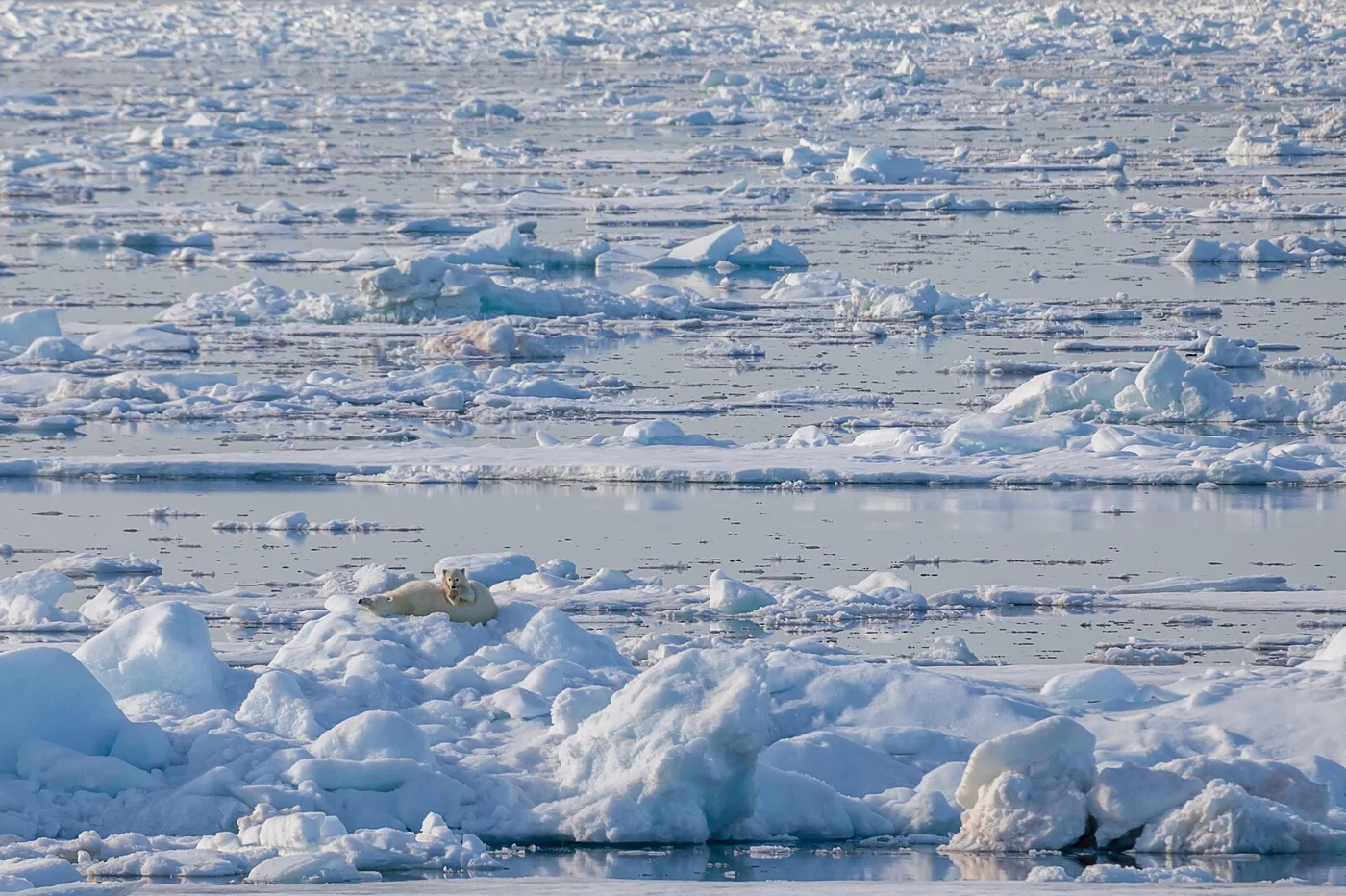
Sitting at the apex of the sympagic (ice-associated) Arctic food web, polar bears regulate pinniped abundance, haul-out vigilance, and pupping site selection across millions of square kilometers of frozen ocean. Because well-fed adult bears frequently strip only the blubber and skin from ringed or bearded seal kills, the remaining protein-rich meat and viscera provide life-saving winter carrion subsidies for Arctic foxes (Vulpes lagopus), glaucous gulls, ravens, and the Threatened ivory gull (Pagophila eburnea), which shadows hunting bears across pack ice. Polar bears also serve as sentinel bioindicators of pan-Arctic ecosystem health, bioaccumulating persistent organic pollutants (POPs) and mercury transported northward by ocean and atmospheric currents.
Conservation Outlook
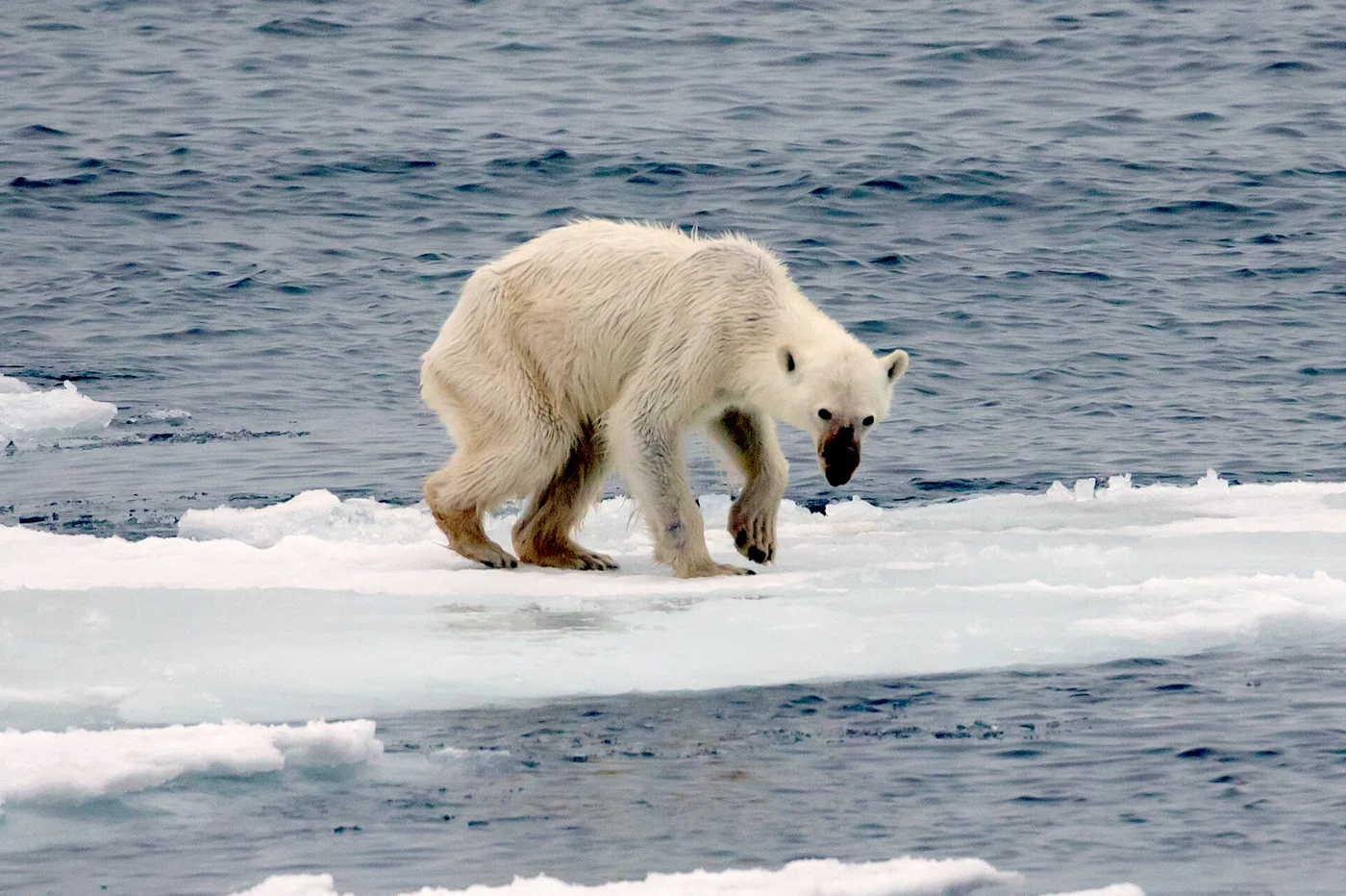
Listed as Vulnerable (VU) on the IUCN Red List with an estimated 26,000 wild individuals (95% confidence interval: 22,000–31,000), the polar bear faces a projected >30% global decline over three generations (~35 years) driven primarily by anthropogenic climate warming. Because the Arctic is warming three to four times faster than the global average, spring sea-ice breakup arrives earlier and autumn freeze-up forms later—forcing bears in subpopulations such as Western Hudson Bay and the Southern Beaufort Sea ashore for 120 to 180+ fasting days, lowering maternal body mass and cub survival. Additional pressures include expanding Arctic shipping lanes, offshore hydrocarbon exploration, toxic bioaccumulation, and rising human–polar bear encounters in coastal towns as hungry bears come ashore. Conservation relies on global greenhouse-gas reductions alongside the landmark 1973 five-nation Agreement on the Conservation of Polar Bears, Indigenous co-management quotas, radar bear-deterrence patrols in communities like Churchill and Kaktovik, and protection of High Arctic 'Last Ice Area' refugia.
Key Takeaways
- 1
Polar bear fur is not actually white—each hollow, transparent hair scatters sunlight over jet-black skin and up to 11 cm of insulating blubber.
- 2
Satellite tracking documented a wild female polar bear swimming 687 km nonstop over nine days across icy Beaufort Sea waters.
- 3
Newborn cubs weigh barely 600 to 700 grams—less than one-five-hundredth of their mother's weight—inside winter snow dens.